
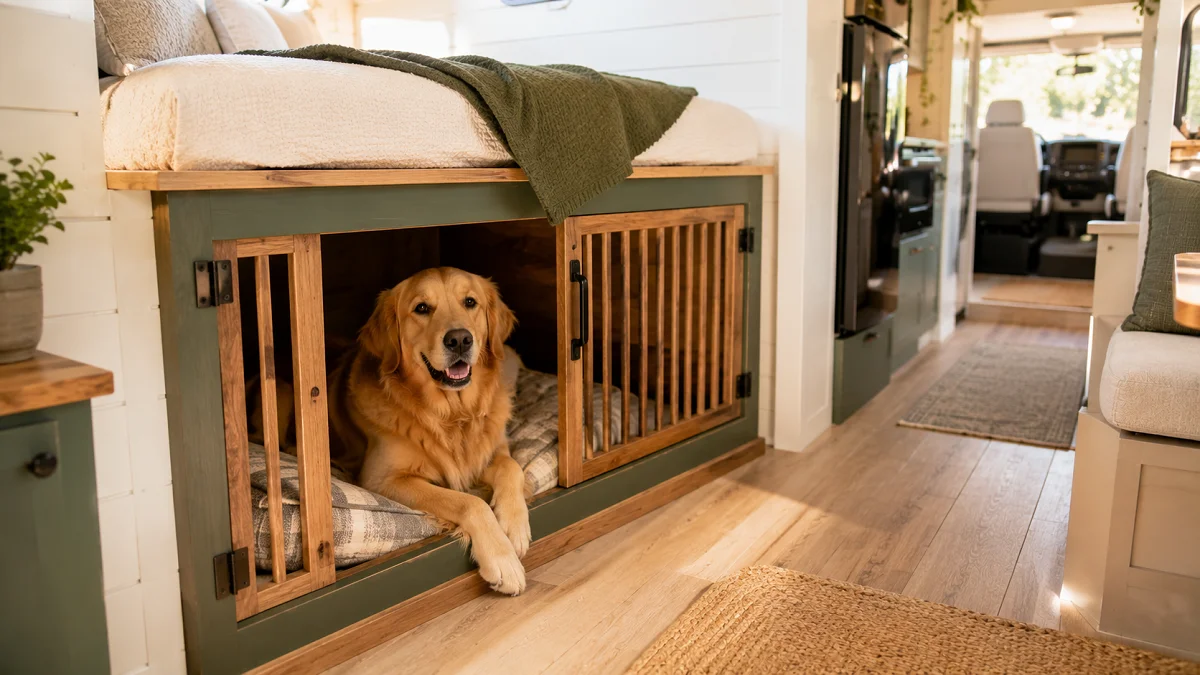
Traveling with your dog is one of the best parts of the camper life, but figuring out where they sleep without tripping over a metal cage every two minutes is a real challenge. Most factory floor plans leave zero dedicated room for pet gear, so standard wire kennels end up blocking walkways, sliding doors, or the bathroom entrance.
Setting up a functional space takes a little creativity and an eye for unused corners. With the right rv dog crate ideas, you can give your pup a secure den that blends directly into your layout, frees up high-traffic floor space, and keeps everyone comfortable on rainy camp days.
1. Convert the Dead Space Under the Master Bed Lift
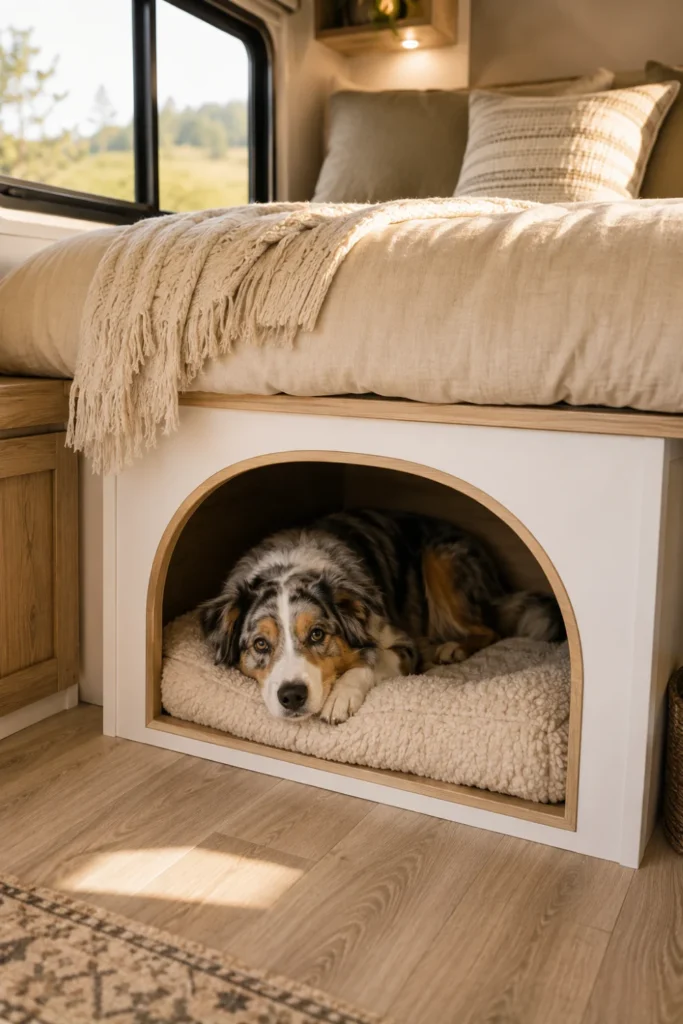
The hollow cavity under your RV mattress is prime real estate. Most travel trailers feature a gas-strut lift bed with a massive, half-empty plywood box underneath. By cutting a framed entry hole into the foot or side of the bed base, you create a private bedroom that keeps the central aisle completely clear.
- Keep your hydraulic struts functional so you can still lift the mattress for deep cleaning.
- Line the interior floor with peel-and-stick vinyl tiles to protect the raw wood from muddy paws.
- Install decorative metal HVAC floor grates on the side walls to ensure cross-ventilation.
Clunky wire crate wedged between the bed and closet, blocking dresser drawers.
Built-in sleeping cavern hidden inside the bed base with zero lost walking room.
2. Replace One Dinette Bench with an Integrated Wire Kennel
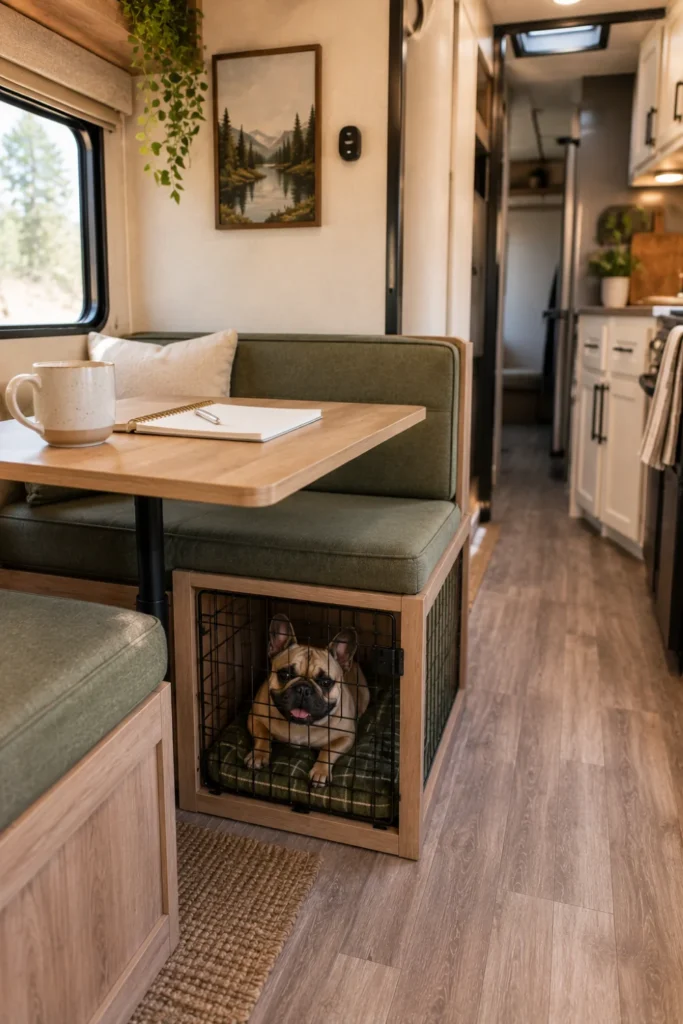
Booth dinettes take up substantial floor area, and the storage under those benches often turns into a disorganized junk drawer. Removing the thin factory plywood face on one bench lets you drop in a custom-fit wire pen or decorative metal gate.
Your dog stays close to the kitchen hub while remaining safely out from under your feet while cooking.
💡 Pro Installation Tip
Check for furnace ducting, water pumps, or electrical wiring running through the dinette bench frame before you saw into the front panel.
3. Build a Slide-Out Crate Drawer Beneath the Sofa
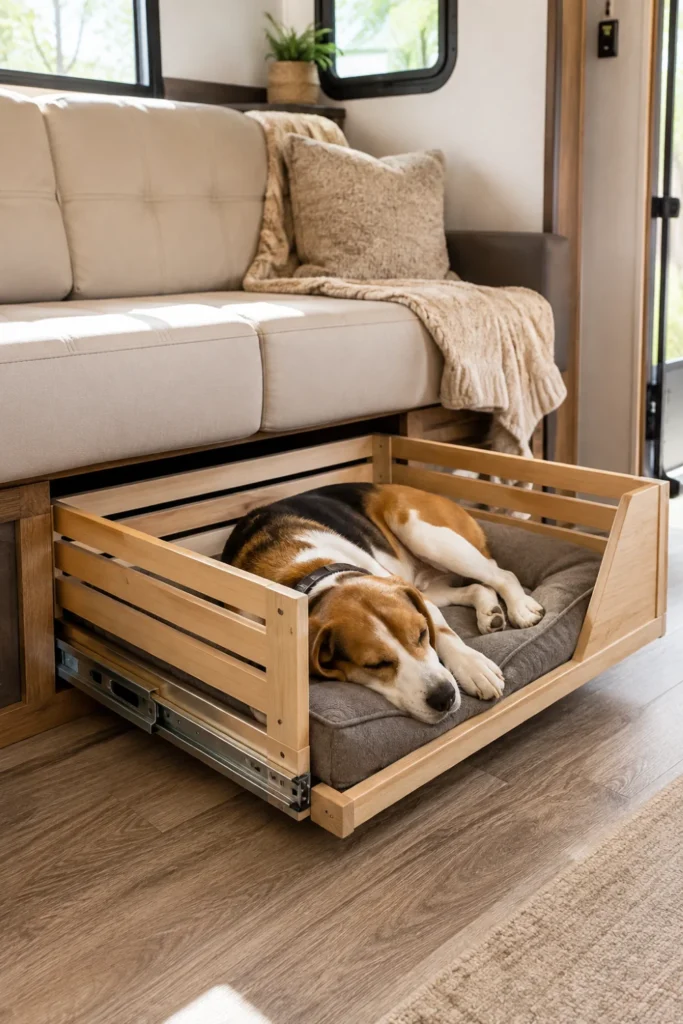
Standard camper sleeper sofas and jackknife couches usually have a hollow cavity beneath the seat frame. You can build a heavy-duty sliding tray equipped with 150-pound drawer slides and breathable wire mesh sides that rolls away seamlessly during daytime travel.
When it is bedtime, pull the drawer out into the living space. In the morning, slide the entire bed unit back inside the sofa base to reclaim your walking area.
4. Install a Retractable Mesh Gate Across a Bunk Bed
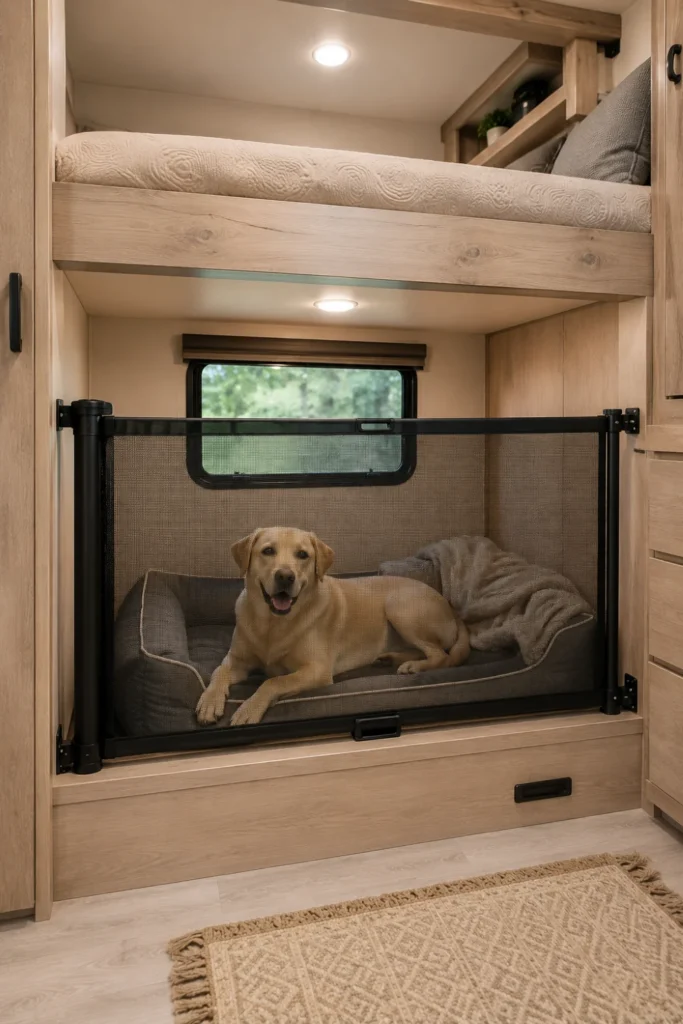
If you travel without kids, the bottom bunk is the easiest area to convert into a large canine room. A retractable fabric mesh pet barrier mounts directly to the wall studs without requiring permanent wood modifications.
This keeps larger breeds comfortable while preserving the upper bunk for bulky camping gear, extra totes, and winter bedding storage.
Quick Bunk Conversion Checklist
5. Drop the Bottom Drawer Stack for a Kitchen Island Dog Den
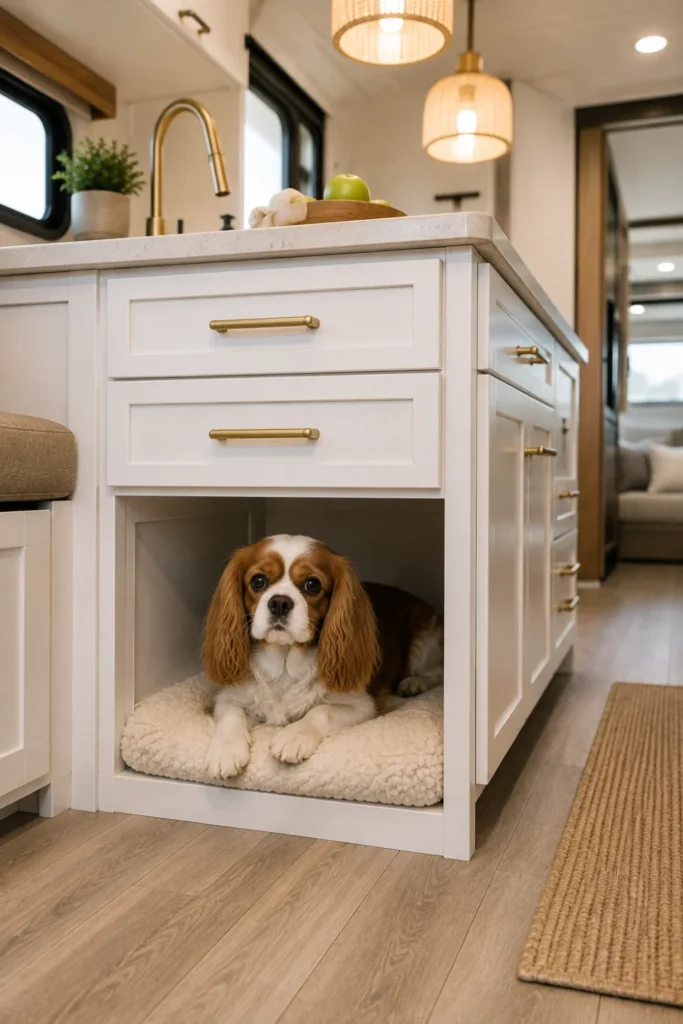
Many mid-profile fifth wheels and travel trailers feature deep kitchen islands with lower drawers that gather excess plastic containers. Removing two lower drawers leaves a spacious open bay perfect for small to medium dogs.
- Measure the interior opening depth before removing the structural drawer rails.
- Trim out the exposed rough cabinet edges with matching self-adhesive edge banding.
- Add a battery-operated motion light on the interior ceiling for late-night visibility.
6. Swap the Factory Nightstand for an End Table Crate
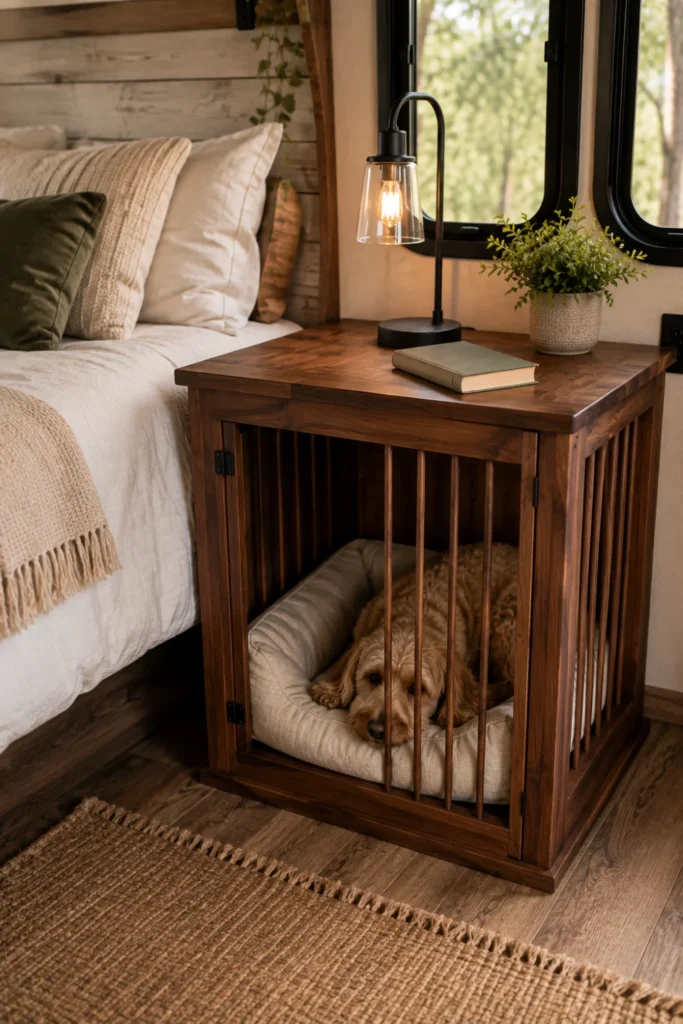
Factory bedside tables in travel trailers are notoriously small and flimsy. Swapping one out for a dual-purpose wooden end-table crate gives your dog an anchor spot near your bed while keeping a solid tabletop for your phone, water, and reading lamp.
| Feature | Standard Wire Crate | End Table Furniture Crate |
| Aesthetic Quality | Industrial, metallic, bare | Decorative woodgrain finish |
| Top Usability | Cannot hold tabletop items | Solid surface for lamps and drinks |
| Portability | Folds flat in seconds | Heavier, stays permanently in place |
| Feature | Standard Wire Crate | Furniture End Table |
|---|---|---|
| Surface Utility | Zero usable top storage | Holds lamps, books, and phones |
| Rig Fit | Rattles on rough roads | Anchors solidly against the wall |
7. Dedicate the Garage Floor in a Toy Hauler with Modular Fencing
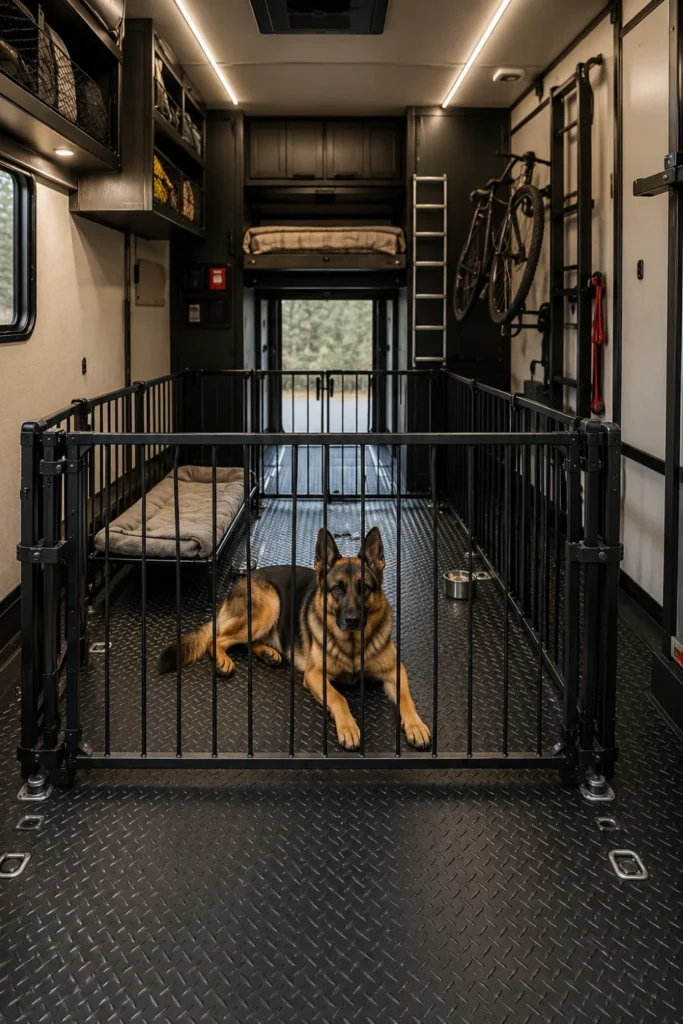
Toy hauler garages provide durable rubberized flooring and flush tie-down D-rings. Using modular aluminum puppy-playpen panels secured to those factory tie-downs lets you configure a roomy enclosure that adapts around your dirt bikes or kayaks.
It provides large dogs ample stretching room while ensuring they do not chew on gear strapping or tire valves while left alone.
Use carabiner clips to link modular fence sections directly into your floor D-rings so the crate never slides during transit.
8. Use a Soft-Sided Collapsible Kennel on the Front Passenger Seat
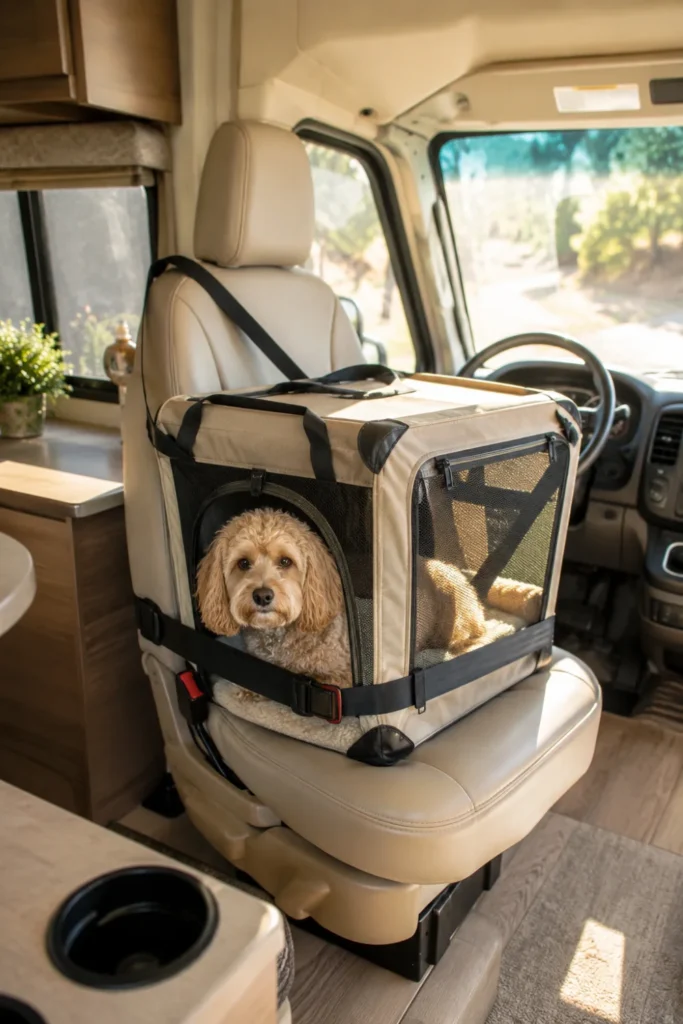
In Class A and Class C motorhomes, the swiveling passenger captain chair often sits unused at camp. A rigid-frame, soft-sided canvas crate fits neatly across the seat base, anchored by the seatbelt webbing through rear loops.
- Swivel the passenger chair completely toward the living area.
- Thread the vehicle lap belt through the kennel anchor straps.
- Zip open the top and side mesh panels so your dog can maintain eye contact with the room.
Rotate the cab seat 180 degrees to face inboard.
Route the vehicle seatbelt through the crate spine slots.
Drop in an orthopedic cushion to level out the seat contour.
9. Transform the Bottom Bunk into an Enclosed Slatted Bedroom
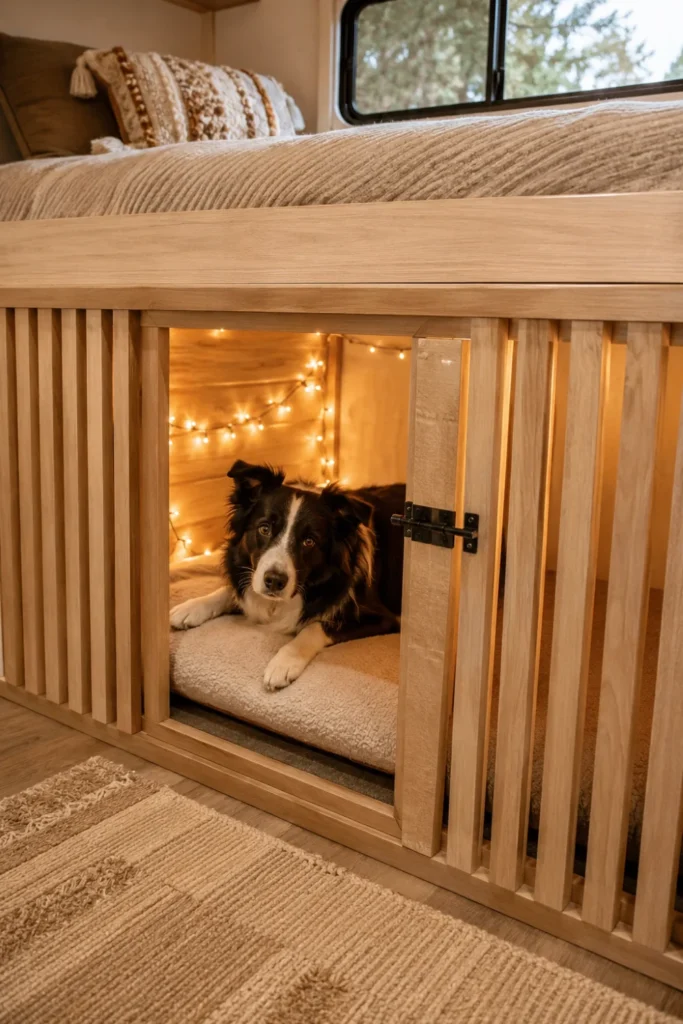
For a permanent and visually appealing look, frame the face of an unused bottom bunk using lightweight poplar wood slats. Spacing the slats two inches apart creates an airy, modern aesthetic that feels like intentional custom cabinetry rather than an afterthought.
Use lightweight poplar or pine slats to prevent adding excess hitch weight.
Install a barrel slide latch that locks firmly from the outside.
Do not use solid plywood fronts that choke off interior airflow.
Avoid weak magnetic catches that pop open if a dog leans on the door.
10. Tuck a Low-Profile Wire Crate Inside the Exterior Pass-Through Hatch
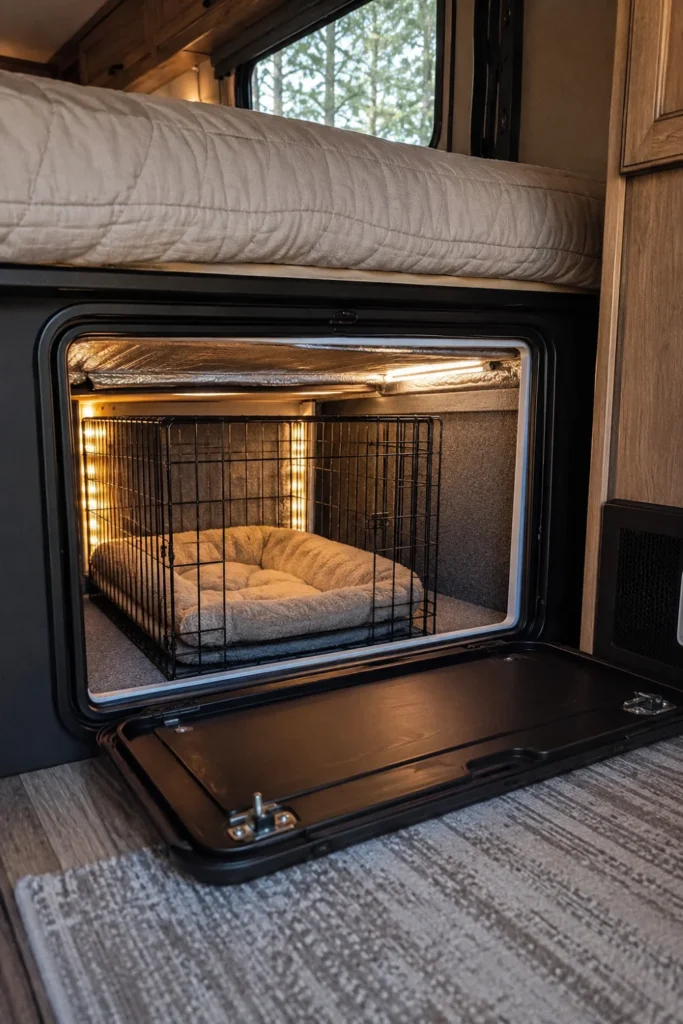
Some RV layouts allow access to the pass-through exterior storage hold from an interior access door located under the master bed or hallway steps. Installing a wire divider wall creates an integrated kennel accessible directly from inside the camper.
⚠️ Climate Control Warning
Only use pass-through basement areas if your RV has a heated underbelly and active heat ducting connected to the main HVAC system.
11. Mount a Custom Barn-Door Sliding Panel Over a Hallway Nook
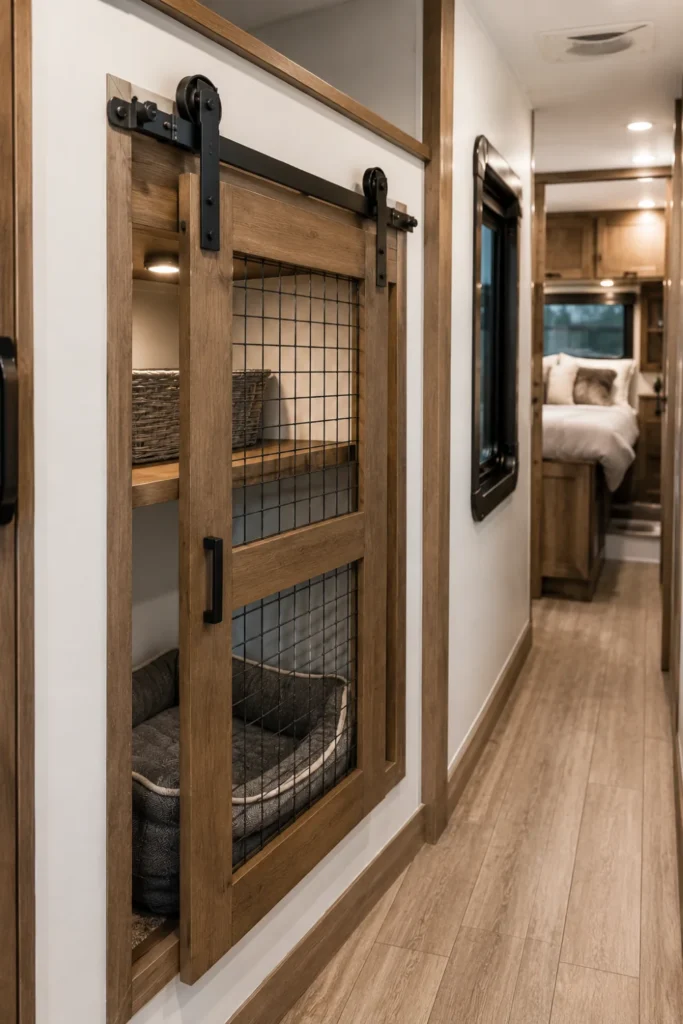
Swinging crate doors require a wide clearance arc that often blocks tight camper hallways. A mini sliding barn door mounted on lightweight top-track rollers glides flush against the cabinetry wall, saving every inch of floor clearance.
Blocks the entire center hallway whenever open, hitting shin bones in the dark.
Glides sideways tight against the cabinet, leaving the hallway completely open.
12. Set Up a Quick-Fold Canvas Pop-Up in the Slide-Out Floor Gap
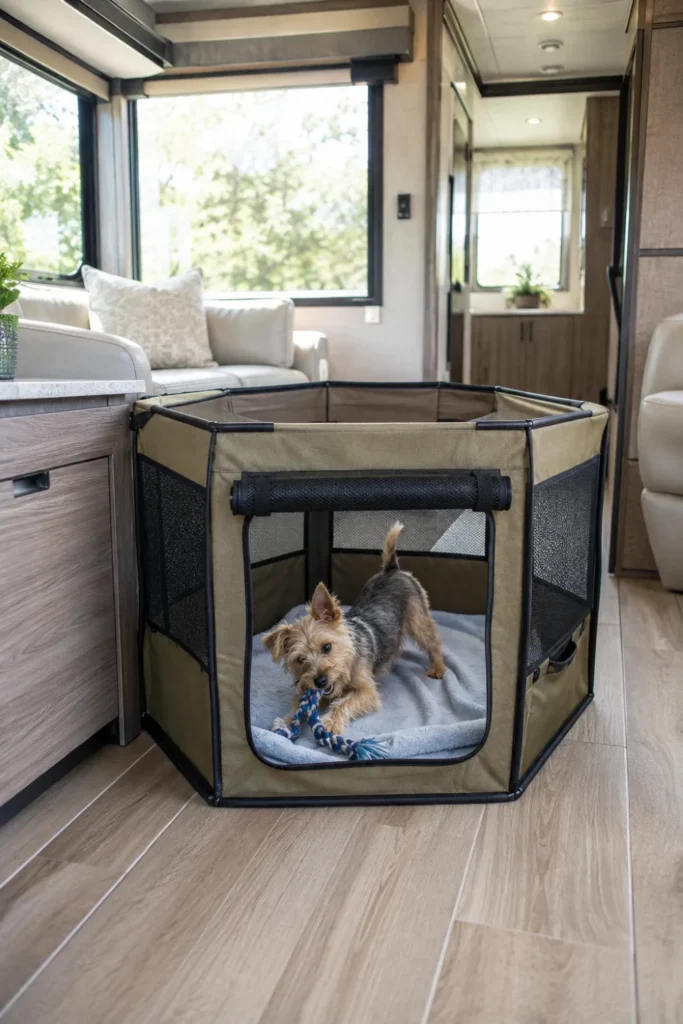
When your RV slide-outs extend at camp, you often gain an extra three to four feet of open floor. An octagonal soft-sided folding pop-up kennel opens in seconds on this fresh floor space and folds down flat for travel days.
- Pops open with an integrated steel spring frame in less than thirty seconds.
- Packs into a flat zippered travel tote that slides beneath the couch during road trips.
- Features rubberized bottom feet that protect delicate linoleum floors from scratches.
- ▸Setup speed: Pops up instantly with no tools or heavy lifting required.
- ▸Transit storage: Folds down flat to two inches thick under your sofa cushion.
- ▸Ventilation: 360-degree durable mesh panels maximize cool breezes from your AC vents.
13. Fit a Double Dog Divider Crate in the Rear Bunkhouse Area
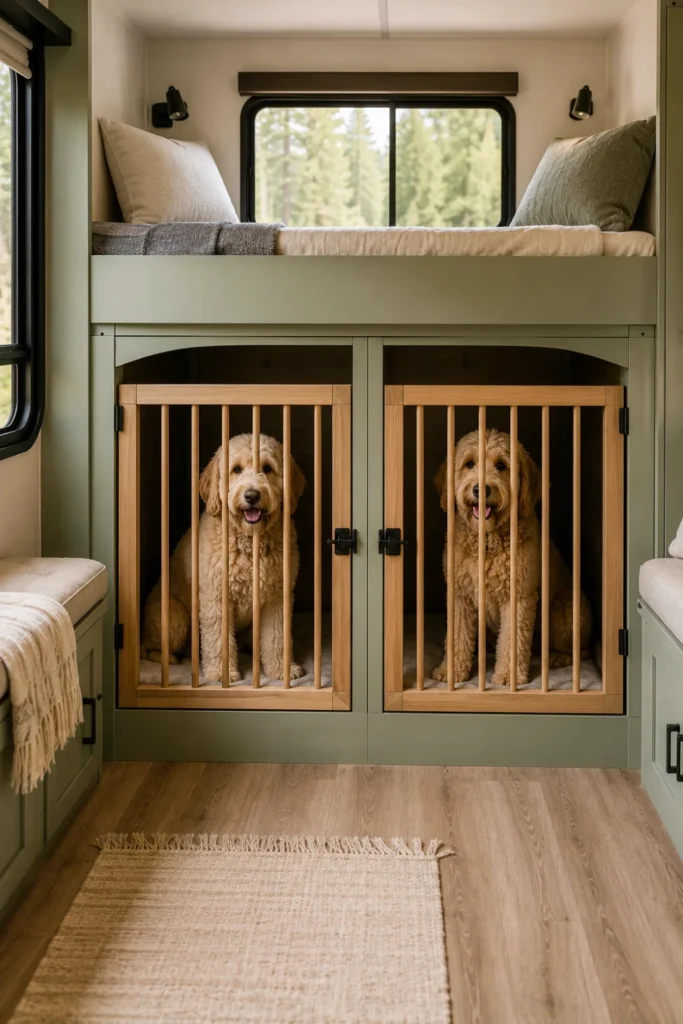
Traveling with multiple pets requires separating them during feeding times or while towing. A custom dual-stall enclosure across the rear back wall gives each animal their own secure bedroom while maintaining a shared footprint.
14. Use Under-Cabinet Recessed Nooks with Removable Farmhouse Grates
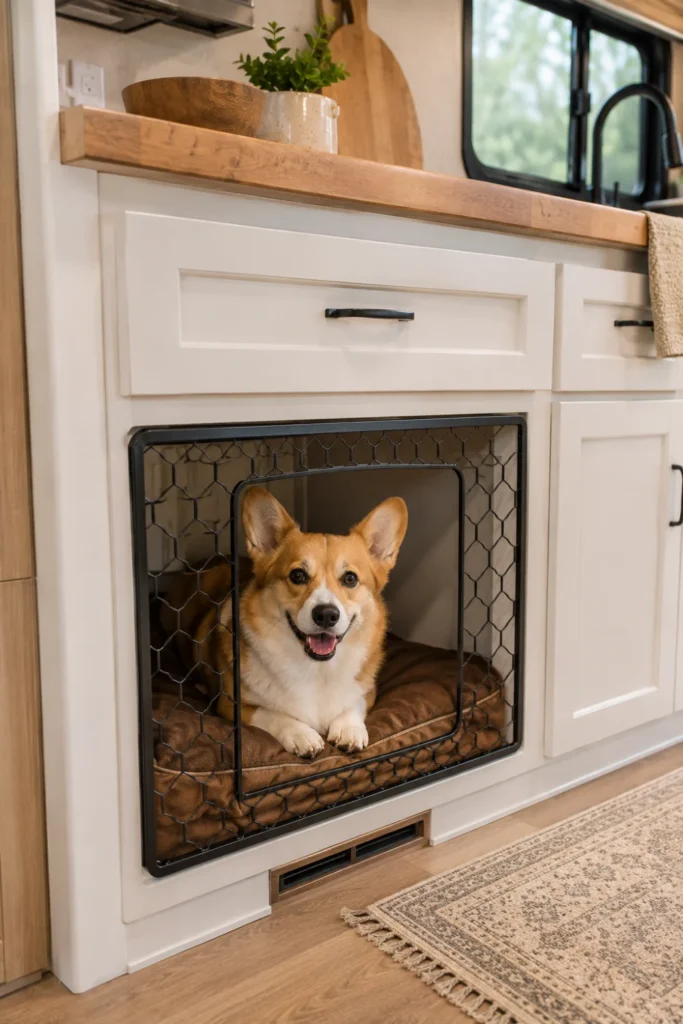
Lower kitchen base cabinets frequently feature dead empty cavities near plumbing chases. Framing out an alcove with decorative metal wire inserts matches modern farmhouse camper interiors while keeping food prep areas organized.
Cabinet Modification Steps
15. Anchor a Heavy-Duty Crash-Tested Aluminum Kennel Behind the Cab
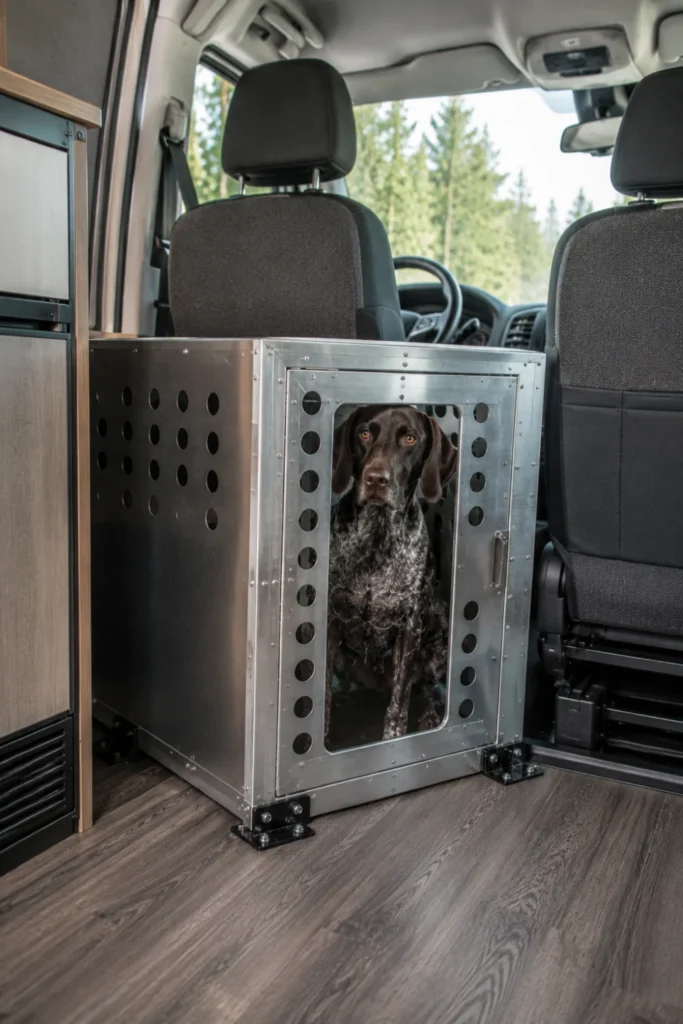
If pet safety while driving is your top priority, lightweight decorative solutions will not cut it. Heavy-duty aluminum kennels anchored to factory chassis seatbelt bolts keep your dog completely protected in the event of an emergency stop.
16. Build an Entryway Bench That Doubles as an Air-Flow Crate
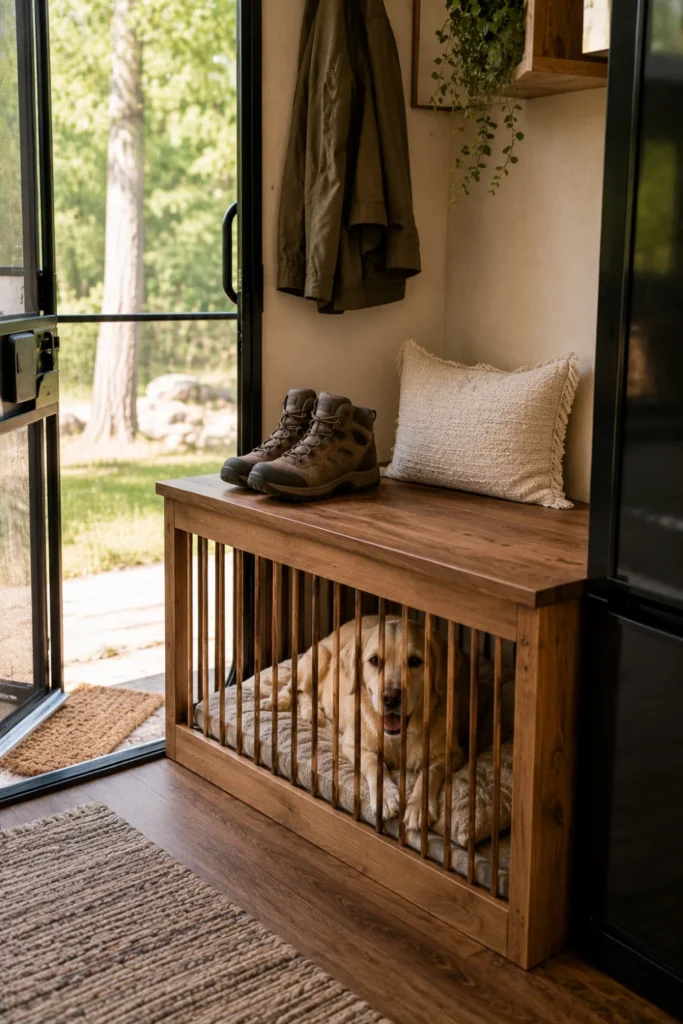
The area right next to your camper entrance door is the natural spot to take off hiking boots. Building an open-slat wooden bench creates a mudroom drop zone on top with a comfortable dog crate built directly into the bottom frame.
| Element | Custom Entryway Bench | Commercial Wire Kennel |
| Footwear Storage | Top bench surface holds shoes and gear | Cannot support any top weight |
| Airflow Access | Direct cross-breeze from the open screen door | Limited by surrounding furniture |
| Interior Integration | Built to match your RV wall trim | Clunky free-standing metal wire |
| Feature | Entryway Bench Crate | Standard Loose Kennel |
|---|---|---|
| Mudroom Utility | Acts as a shoe-changing bench | Zero sitting or shoe capability |
| Door Clearance | Custom sized flush to wall | Frequently trips people at door |
17. Install a Hanging Canvas Barrier for the Cab Footwell
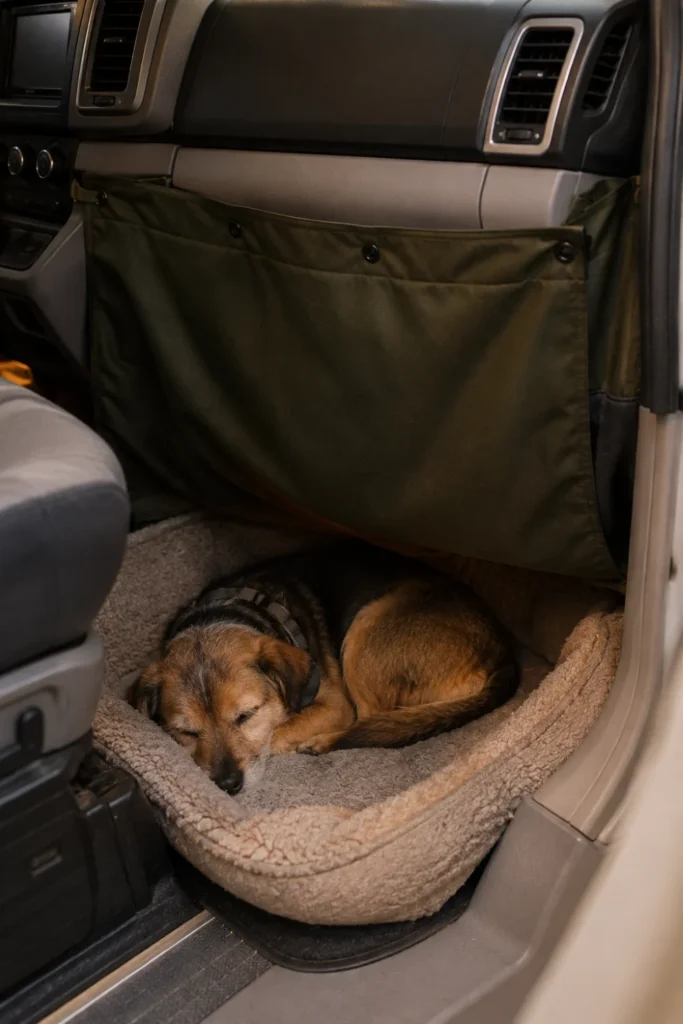
In campervans and Class C rigs, the front passenger footwell is a deep, recessed cavity that sits empty all evening. Hanging a heavy-duty padded canvas curtain across the seat pedestal turns the lower floor step into an ultra-cozy, dark den for anxious dogs.
- Suspends easily using adjustable tension rods wedged under the dashboard lip.
- Uses existing dash heater vents to keep cold drafts away from the cab floor.
- Rolls up neatly during the day and fastens with hook-and-loop straps.
The insulated front cab footwell naturally dampens outside campground noises and thunder, creating a secure sanctuary for nervous dogs.
Creating a dedicated, comfortable spot for your dog does not mean sacrificing your camper’s walking aisles or living space. Whether you repurpose dead space under the bed, convert a dinette bench, or frame out a custom bunk nook, these rv dog crate ideas help your entire rig feel organized and peaceful.
Be sure to pin this list to your RV living and pet travel boards so you have these layout ideas ready for your next camper upgrade.