
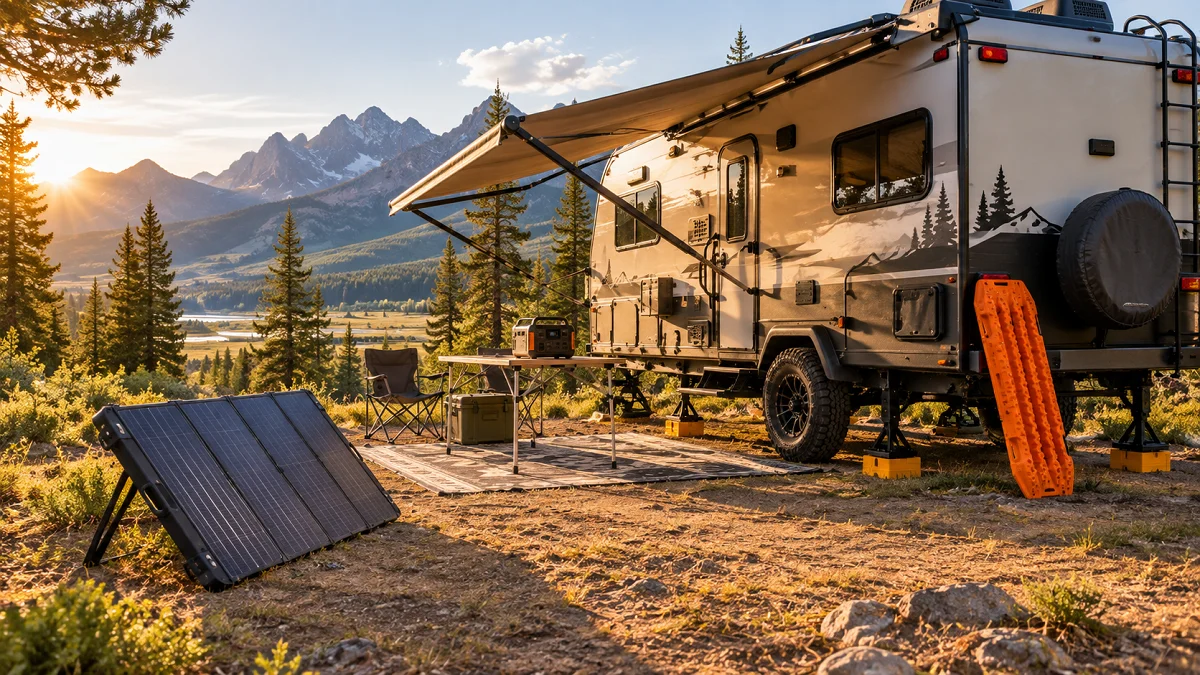
Camping away from crowded parks gives you quiet mornings, open views, and total privacy. The tradeoff is simple: you bring your own power, fresh water, and waste management. When those systems run dry or cut out unexpectedly, a peaceful weekend turns into an early drive home.
Most stock campers are built for full-hookup campsites. Their tank sensors misread after two days, their factory lights pull unnecessary battery amps, and their water pumps quickly drain fresh supplies.
A reliable off-grid stay comes down to simple, field-tested gear that protects your resources. Having the right rv boondocking essentials lets you run your equipment smoothly, monitor your levels without guessing, and stay out longer with complete peace of mind.
1. Dedicated Battery Monitor with a Real Shunt
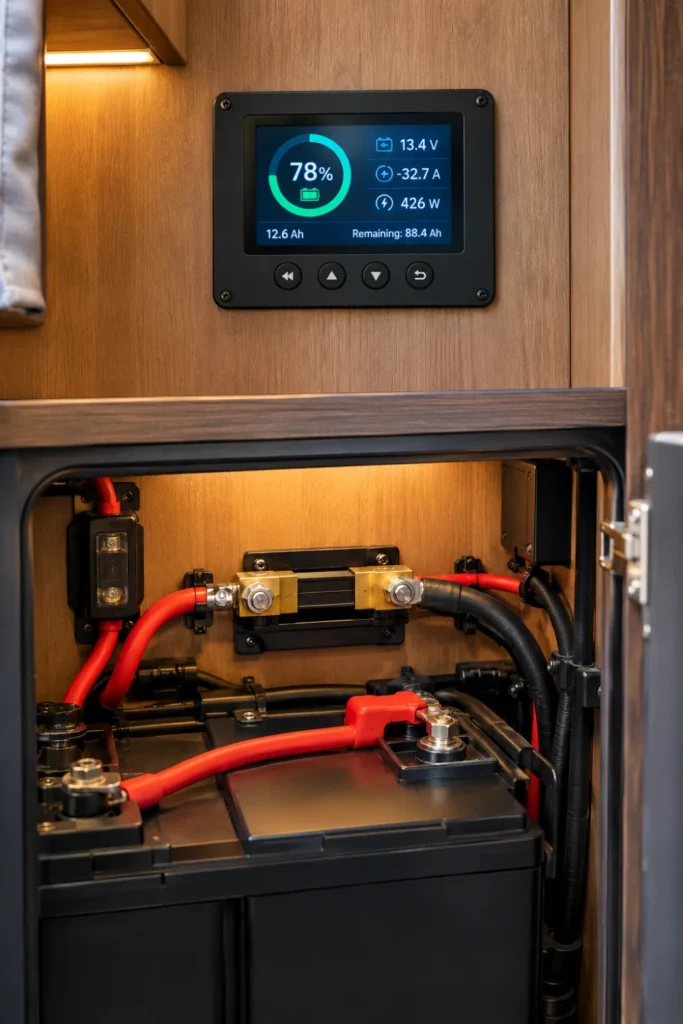
Factory tank-and-battery panels only measure surface voltage. Turn on a single water pump or vent fan, and the reading drops instantly to show a drained battery, even when plenty of capacity remains.
A shunt-based battery monitor installs directly on your negative battery terminal. It acts like a fuel gauge, tracking every amp that enters or exits your battery bank in real time.
- Precise state of charge: Shows remaining amp-hours as an exact percentage.
- Instant draw tracking: Lets you see exactly how many amps each light or appliance pulls.
- Solar input check: Confirms right away whether your solar panels are producing expected charge.
2. Portable Drinking-Water Bladder and 12V Transfer Pump
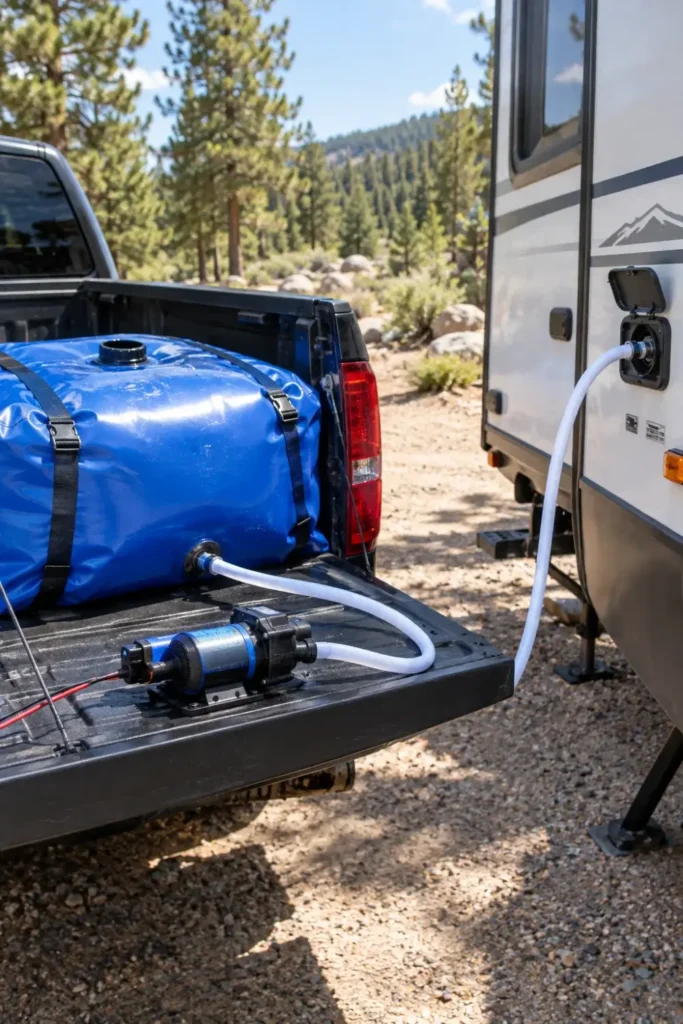
Packing up your entire campsite just to tow the trailer to a water spigot wastes hours of daylight. A collapsible 30- to 60-gallon food-grade water bladder folds flat in your truck bed until you need it.
When your freshwater tank runs low, fill the bladder in town, drive back, and hook it up to an external 12V transfer pump to refill your onboard tank without moving your camper an inch.
💡 Clean Transfer Tip
Always dedicate a drinking-water-safe white hose strictly for your bladder pump, and run a small inline sediment filter during every fill.
3. Compact Portable Solar Suitcase with Built-In Controller
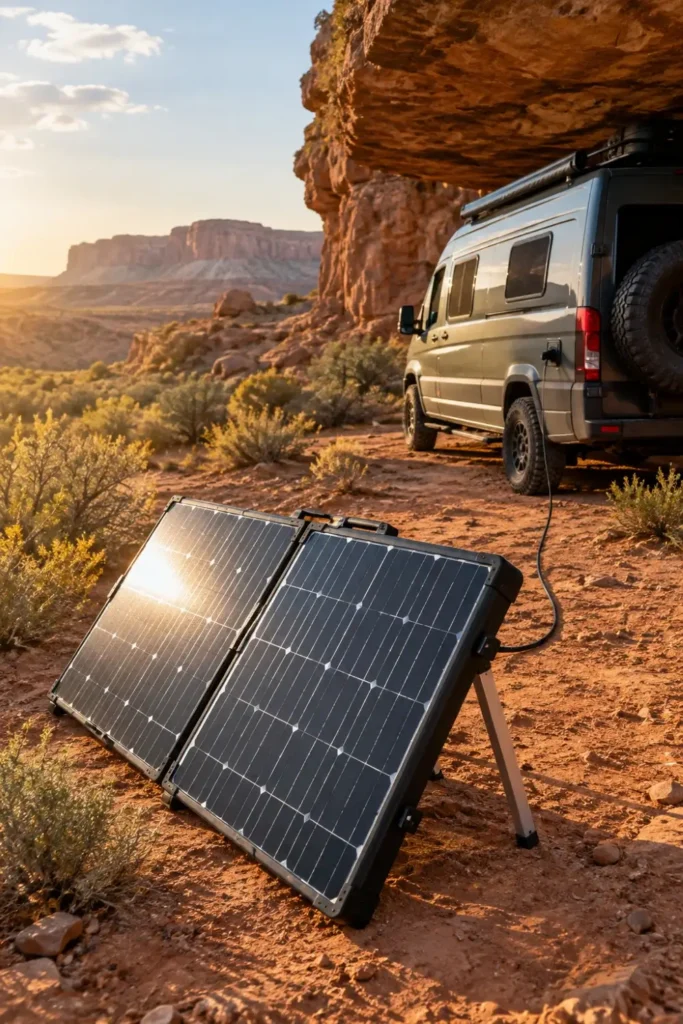
Rooftop solar is convenient, but parking an RV in full summer sun turns the interior into an oven. A folding solar suitcase lets you park your rig under shade trees while placing the panels 20 feet away directly in sunlight.
These units come pre-wired with adjustable kickstands, an inline charge controller, and quick-connect clamps that attach straight to your battery box.
Reposition panels twice a day to follow the sun angle.
Use short 10-gauge extension cables to prevent voltage drop.
Leaving panels flat on the ground all afternoon.
Connecting a second controller to a line already regulated by your roof setup.
4. High-Efficiency Low-Flow Aerating Shower Head
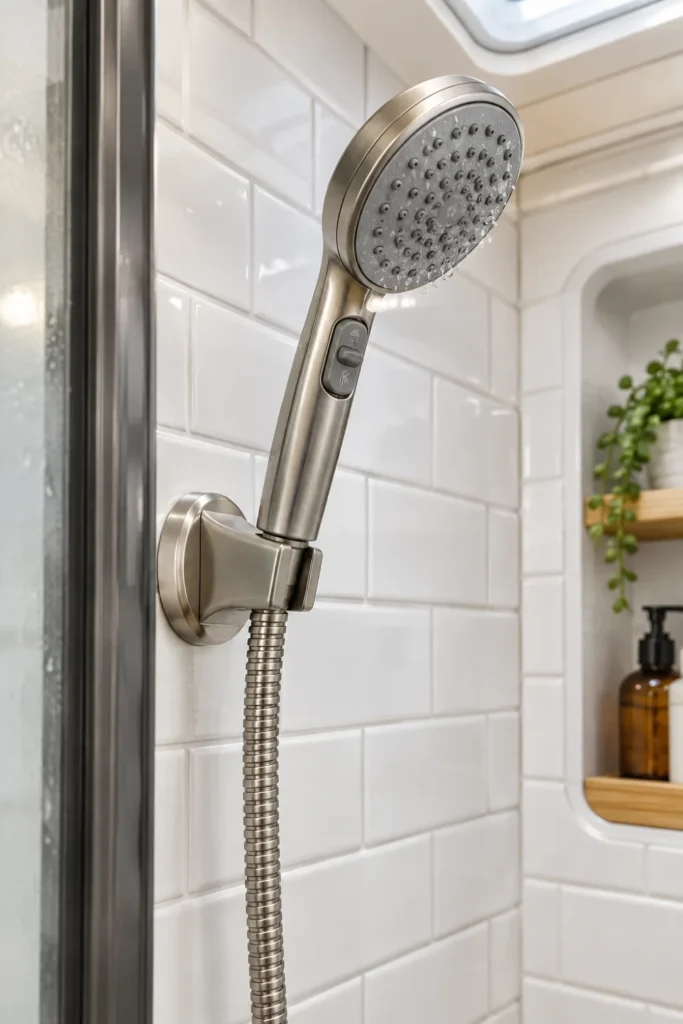
A standard factory RV shower head can dump over two gallons of water each minute. That rate will fill a small 30-gallon grey tank in less than three quick showers.
Aerating shower heads mix air into the stream to boost spray pressure while cutting flow down to roughly one gallon per minute. A built-in shut-off valve holds your temperature setting while you lather up.
Shower Upgrade Checklist
5. 12-Volt Compression Refrigerator or Cooler
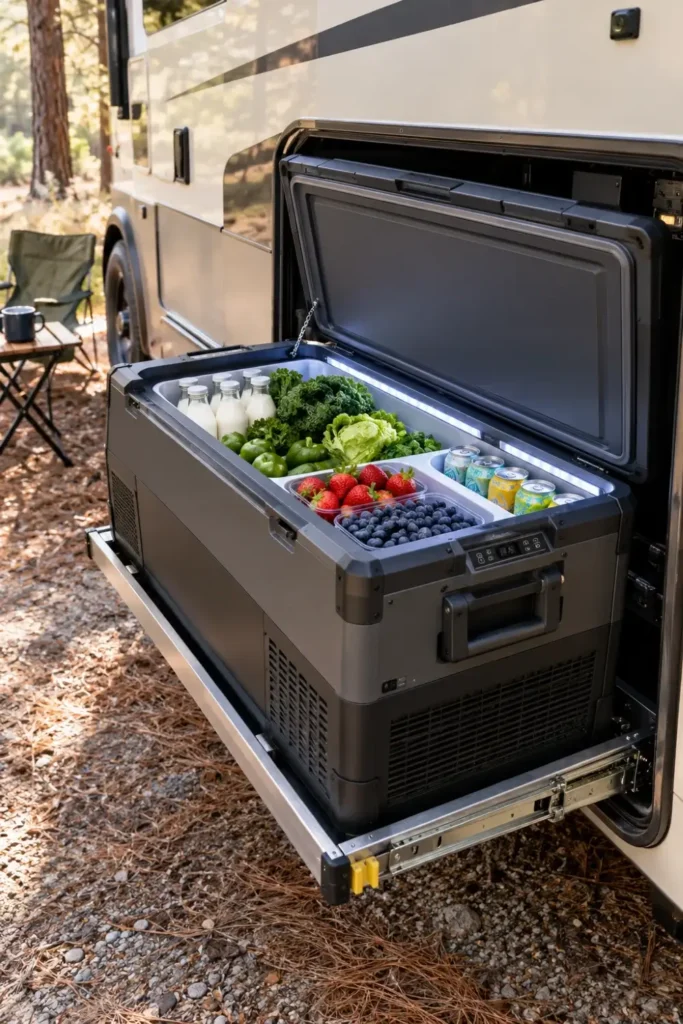
Traditional RV absorption fridges run on propane, but they struggle in high ambient heat and require your rig to sit completely level to function without damaging cooling coils.
A 12V portable compressor fridge operates efficiently on off-camber ground, cools down in thirty minutes, and draws very little power from your solar battery bank.
Takes 8 to 12 hours to cool, requires strict leveling, and uses continuous propane fuel.
Cooled to temp in under an hour, runs at angles up to 30 degrees, and operates straight off your battery bank.
6. Heavy-Duty Leveling Blocks and Chock Kit
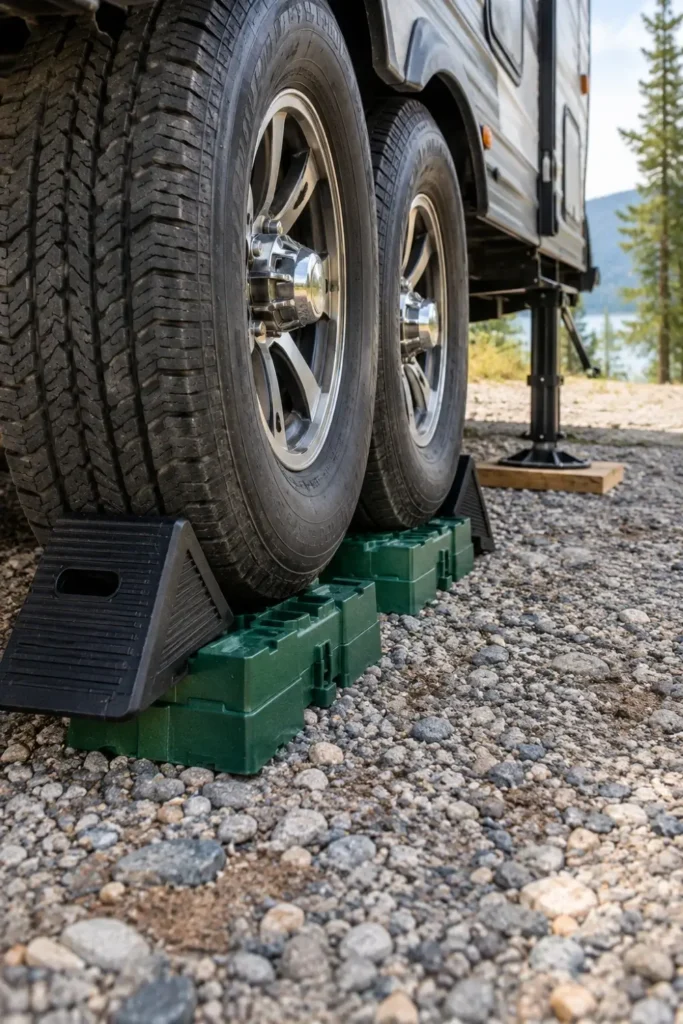
Public dispersed campsites are rarely flat. Getting your tires level keeps interior plumbing draining smoothly and stops slide-outs from binding along their tracks.
Interlocking camper leveling blocks create custom ramps beneath your low-side tires, giving you stable footing on loose dirt, gravel, or soft pine needles.
Place interlocking blocks in a tiered stair-step ramp in front of low tires.
Pull forward slowly until your bubble levels sit centered.
Seat heavy chocks tightly against both sides of the opposite wheels before unhitching.
7. Cell Signal Booster or Directional Antenna Kit
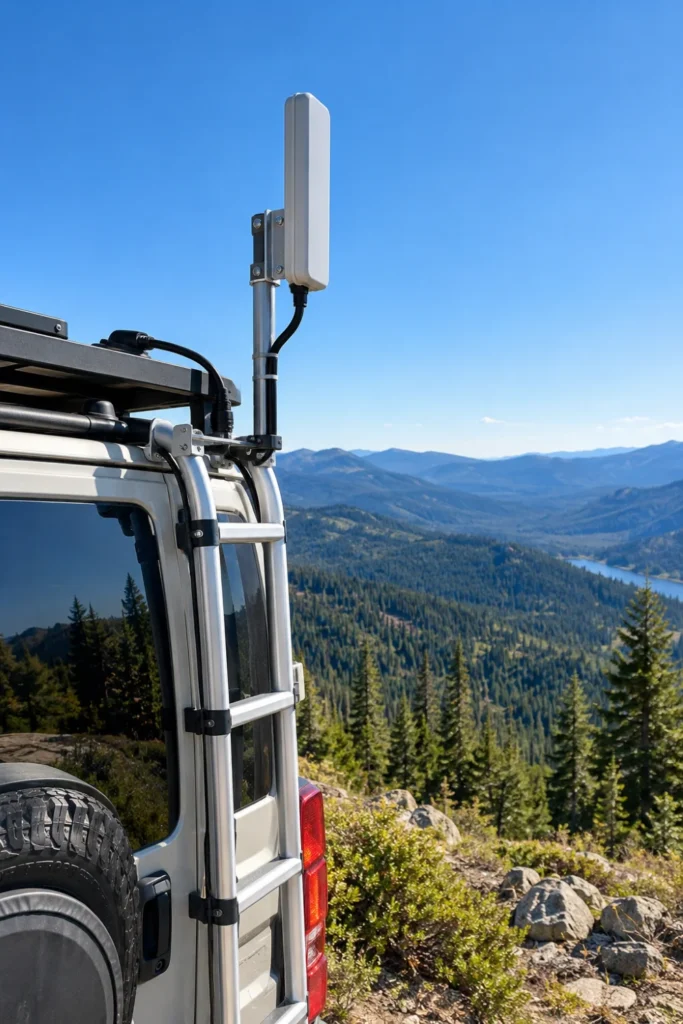
Remote public lands often have weak, usable cellular signal hanging just over tree line height. A directional exterior antenna grabs those faint signals and brings them inside your rig.
Amplified signals let you keep weather warnings updated, route around road closures, and handle necessary remote work without dropping connection.
8. Collapsible Grey-Water Tote Tank
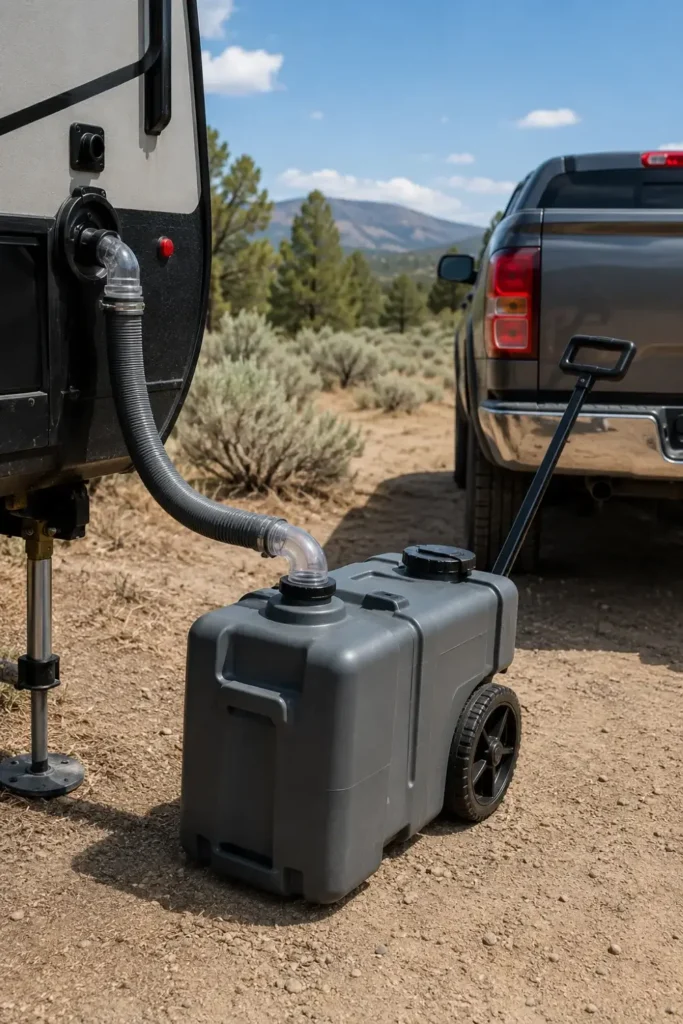
Grey water tanks almost always fill up faster than black tanks. Even with careful water habits, dishwashing and basic washing will fill standard 30-gallon tanks within four or five days.
A portable wheeled tote allows you to drain grey wastewater without moving your trailer. You can transport the tote to the nearest dump station using your truck hitch.
| Feature | Rolling Waste Tote | Bucket Hauling |
|---|---|---|
| Capacity | 15 to 35 Gallons | 5 Gallons per trip |
| Spill Safety | Sealed bayonet valves | High splash risk |
| Transport | Tows slowly behind hitch | Heavy manual carrying |
9. Portable Propane Fire Pit with Quick-Connect Hose
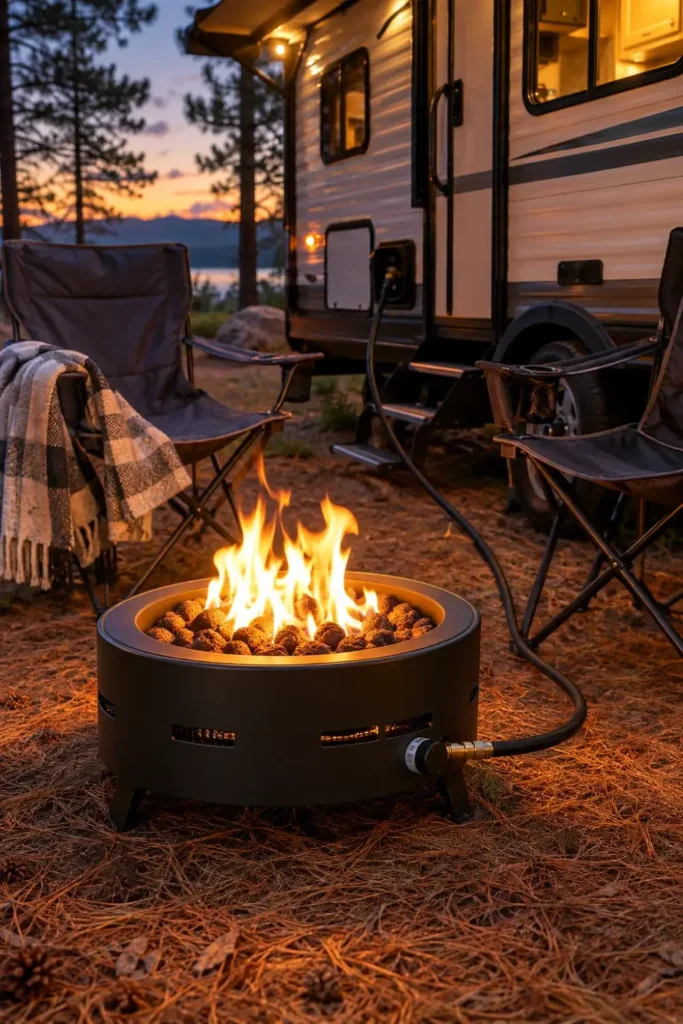
Dry summers often trigger Stage 1 or Stage 2 open-fire bans across public lands. Wood fires are usually prohibited first, leaving campers without a way to sit outside in cool evenings.
Propane fire rings produce zero flying embers and feature an immediate on/off shutoff knob, making them legal in many areas where open campfires are banned.
Always confirm local forest service fire danger stages. Propane fire rings are typically allowed during wood bans, provided they have a dedicated manual shut-off valve.
10. Inline Exterior Carbon Water Filter
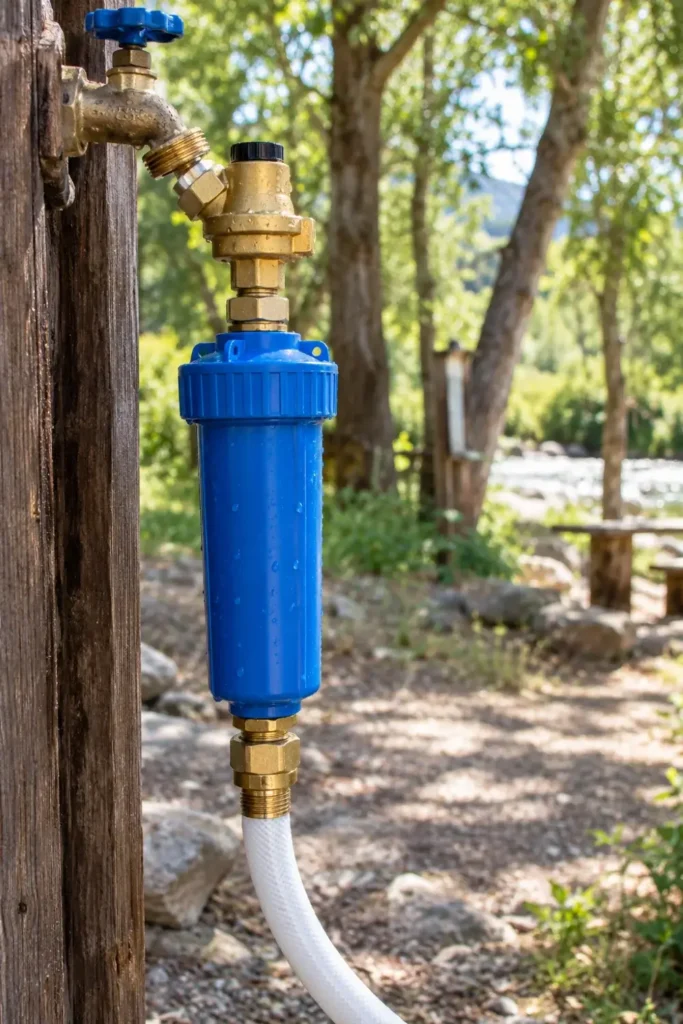
Water quality varies dramatically when filling tanks from rural fairgrounds, BLM spigots, or rustic wells. High sediment counts can ruin electric 12V pump diaphragms in a single trip.
Installing an inline carbon filter between the spigot and your hose traps grit, stops rust particles, and removes bad sulfur smells before water enters your holding tanks.
⚠️ Protect Your Pump
Fine sand and silt settle in the bottom of your camper tank and will ruin your water pump seals. Always flush your filling hose for 10 seconds before attaching the filter.
11. 12V Low-Amp Wall-Mounted Cabin Fans
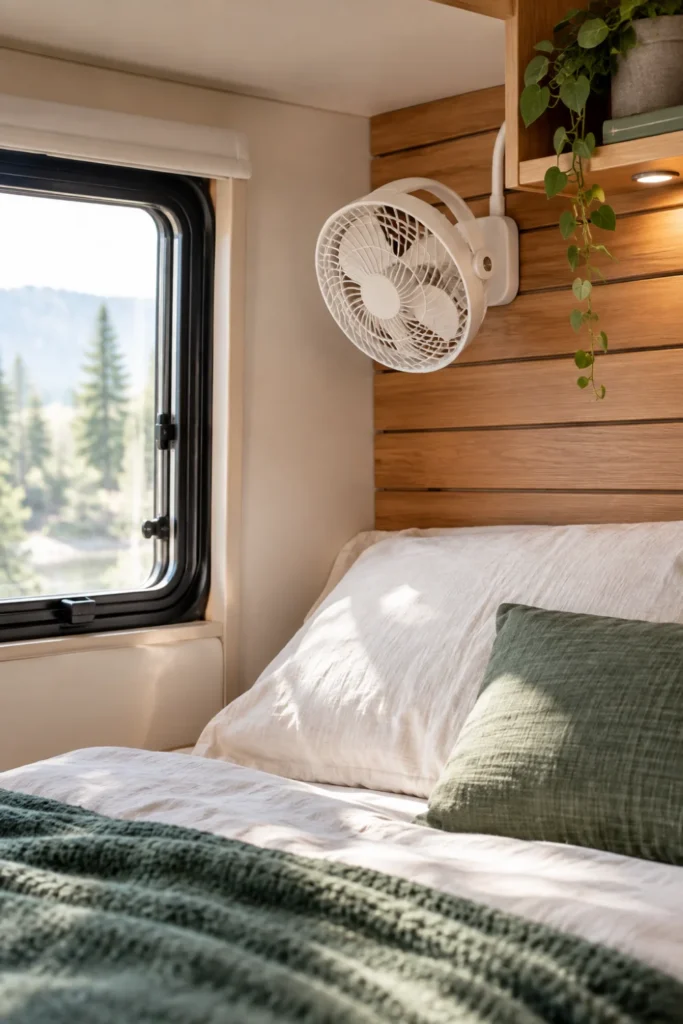
Running your roof air conditioner off-grid drains a standard battery bank quickly. Ceiling exhaust fans pull hot air out, but they do not circulate air across your sleeping area.
Gimbal-mounted 12V cabin fans swivel 360 degrees and provide direct airflow on quiet nights. They draw under 0.4 amps on medium settings, meaning you can run them all night without draining your batteries.
12. Dual Propane Regulator with Auto-Changeover
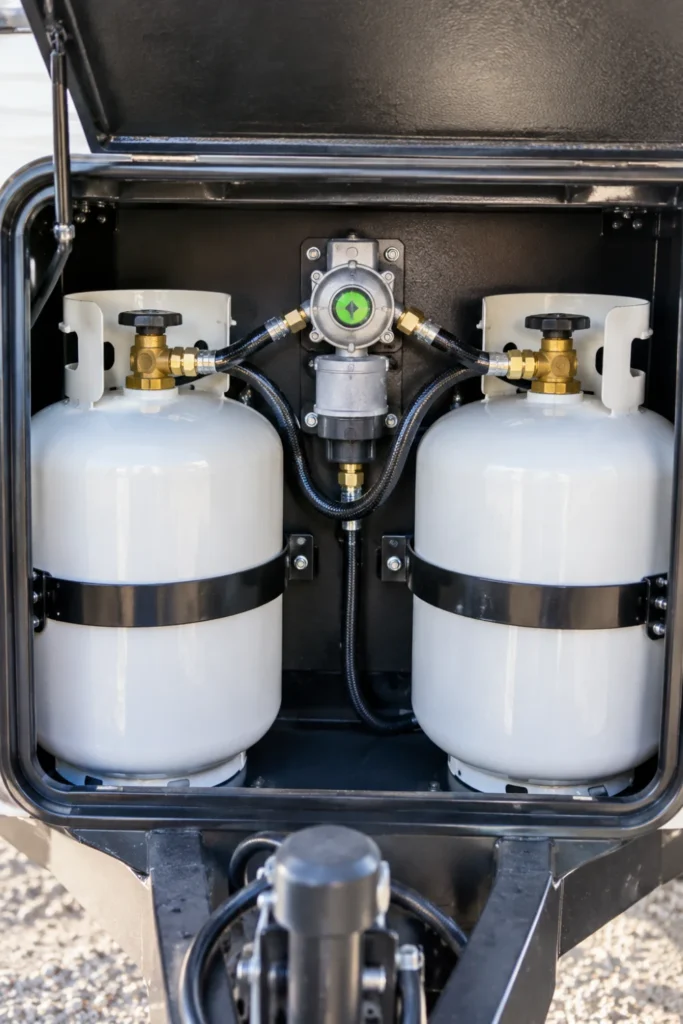
Waking up freezing at 3:00 AM because your camper furnace ran out of fuel is a common off-grid mistake. When single-tank regulators empty out, the furnace pilot cuts off immediately.
An auto-changeover dual regulator draws from your primary tank until it runs dry, then switches automatically to the reserve tank while flipping an indicator flag from green to red.
Propane Readiness Routine
13. Tire Traction Boards and Heavy-Duty Shovel
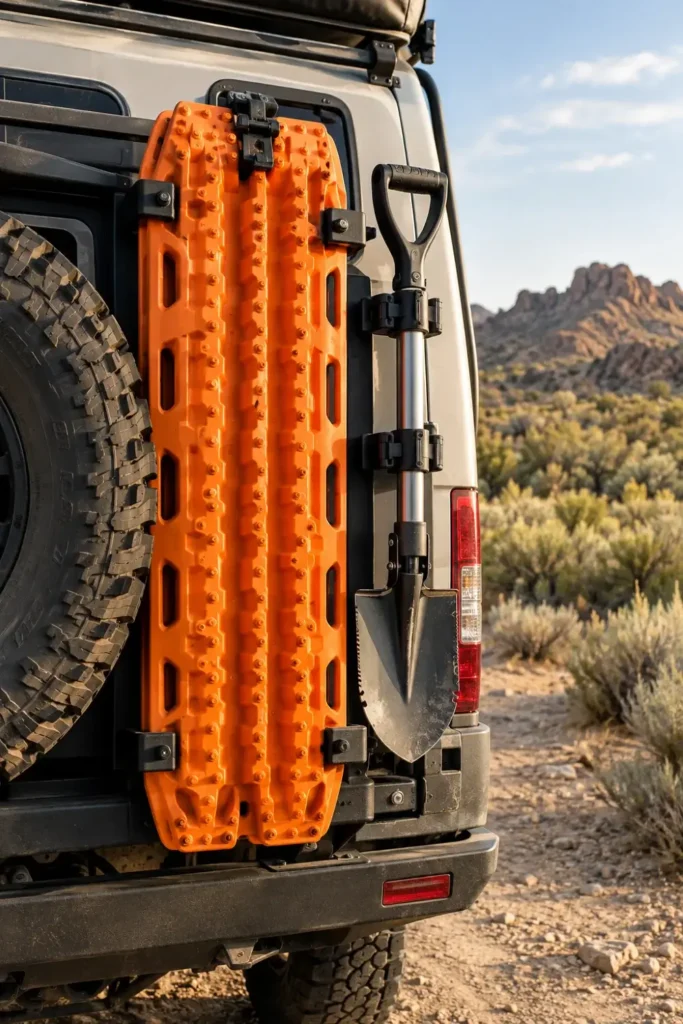
The best boondocking spots sit down unmaintained forestry tracks, soft sand washes, and wet meadow clearings. Even four-wheel-drive trucks can sink quickly when towing heavy RV weight through soft dirt.
Traction boards slide under your tires to provide instant grip when a wheel begins to spin, helping you recover your rig without waiting hours for an expensive backcountry tow.
Clear a flat path in front of sunken tires with your shovel.
Wedge the serrated edges firmly against the tire tread.
Spinning tires at high speed, which melts plastic traction teeth.
Pulling forward without checking ground clearance beneath trailer axles.
14. Emergency 12V Portable Air Compressor
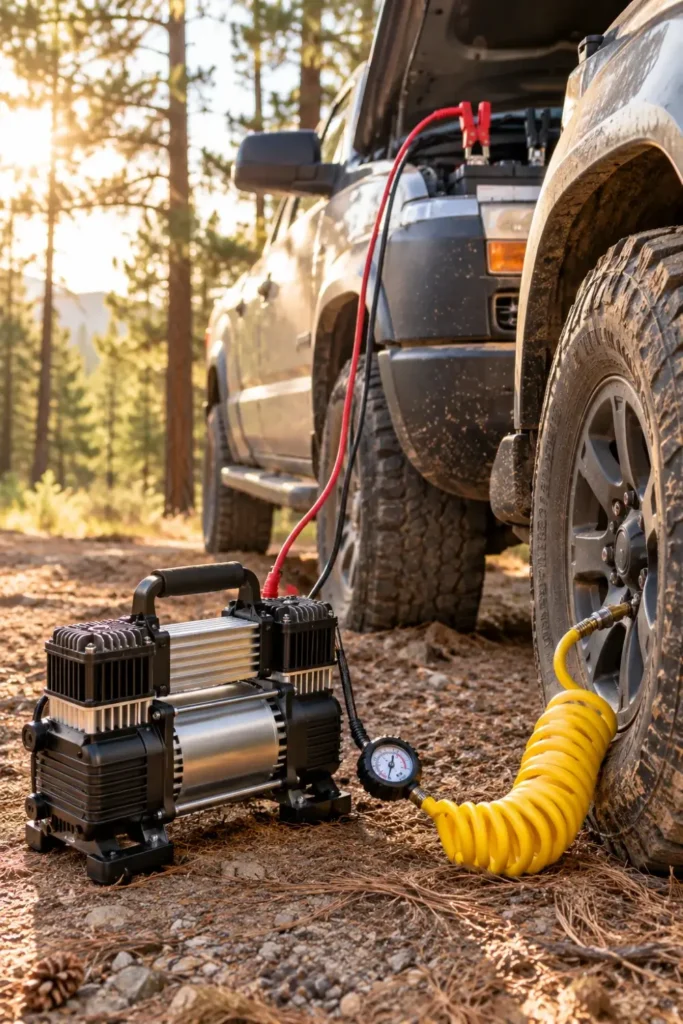
Washboard forest roads will rattle cabinets loose and stress your suspension. Lowering your tow-vehicle and trailer tire pressures by 10 to 15 PSI smooths out vibrations over rough washboard tracks.
Once you return to smooth highway pavement, you need a heavy-duty 12V compressor that clamps directly to your vehicle battery to air back up to highway pressures safely.
Air down tires slightly before driving over rough washboard dirt.
Keep your truck engine idling while running high-amp 12V tire inflators.
Inflate all tires back to full cold-load specs before highway travel.
15. Dual-Fuel Inverter Generator with RV Ready 30A Plug
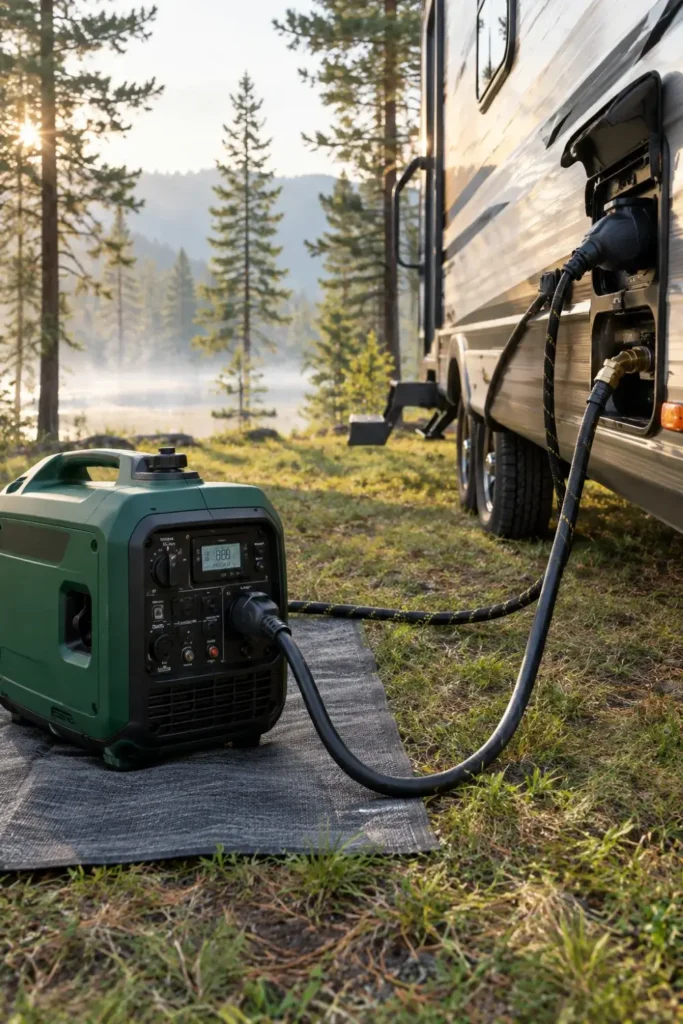
Several days of dense clouds or winter tree cover can drop solar production close to zero. A quiet, enclosed dual-fuel inverter generator provides dependable power when your batteries need an emergency bulk recharge.
Running an inverter unit on propane prevents gummed carburetor jets caused by old gasoline, letting your backup generator fire up smoothly even after sitting in storage for months.
Loud running volumes exceeding 75 decibels, disturbing nearby wildlife and fellow campers.
Quiet operating noise around 52 decibels, clean electrical sine waves, and flexible dual-fuel connections.
Heading out into the backcountry does not mean giving up comfort or risking your safety. Equipping your setup with sensible rv boondocking essentials gives you real independence from crowded hookup campgrounds, letting you focus on the open country around you.
Take the time to test each item in your driveway before your next long haul. Once your power, fresh water, and recovery setups are dialed in, you can pull off onto remote public land with complete confidence.
Pin this checklist to your RV board so you have it ready when preparing your next off-grid route.