
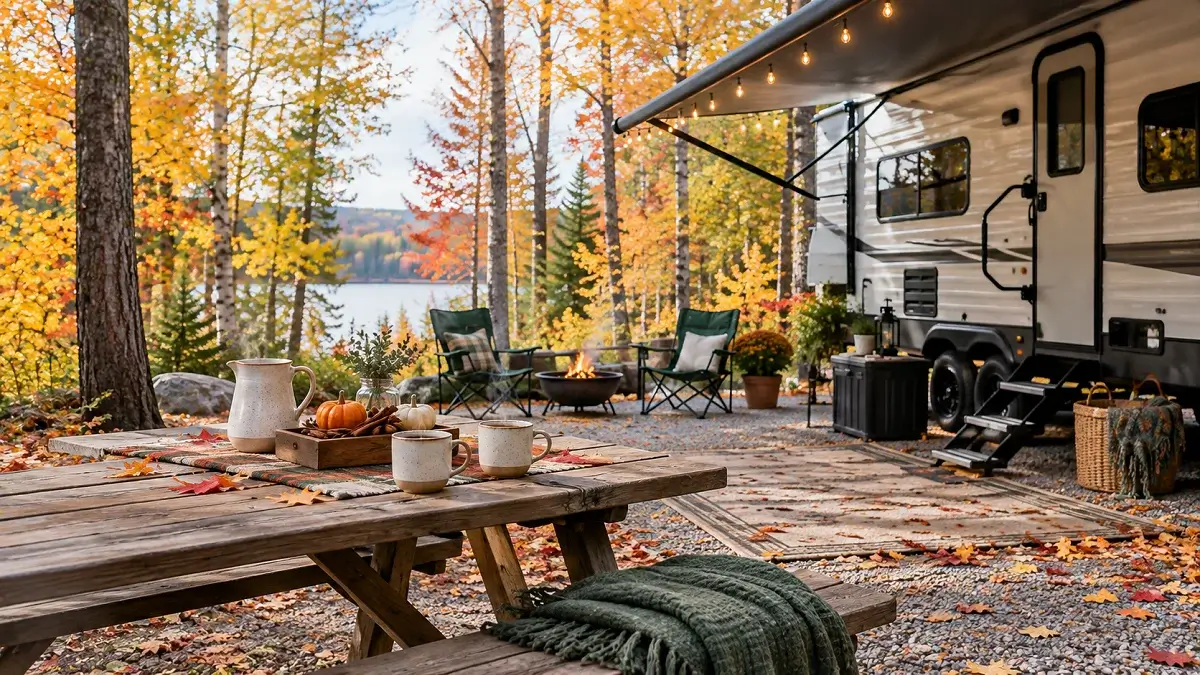
There is a quiet magic to camping once the summer rush clears out of the state parks. The campgrounds empty out, the air turns crisp in the mornings, and the trees start showing off those rich gold and rust tones.
Still, cool weather camping comes with its own learning curve. You find yourself dealing with shorter daylight hours, sudden temperature drops after sundown, and damp leaves tracked across your vinyl flooring. A trip can quickly shift from relaxing to chilly if you do not plan ahead for the change in seasons.
A few smart adjustments can keep your cabin toasty, your campsite organized, and your evenings warm. Here are 16 practical fall rv camping ideas to make your next autumn road trip comfortable, functional, and memorable.
1. Hang Amber Fairy Lights Beneath the Awning for Early Sunsets
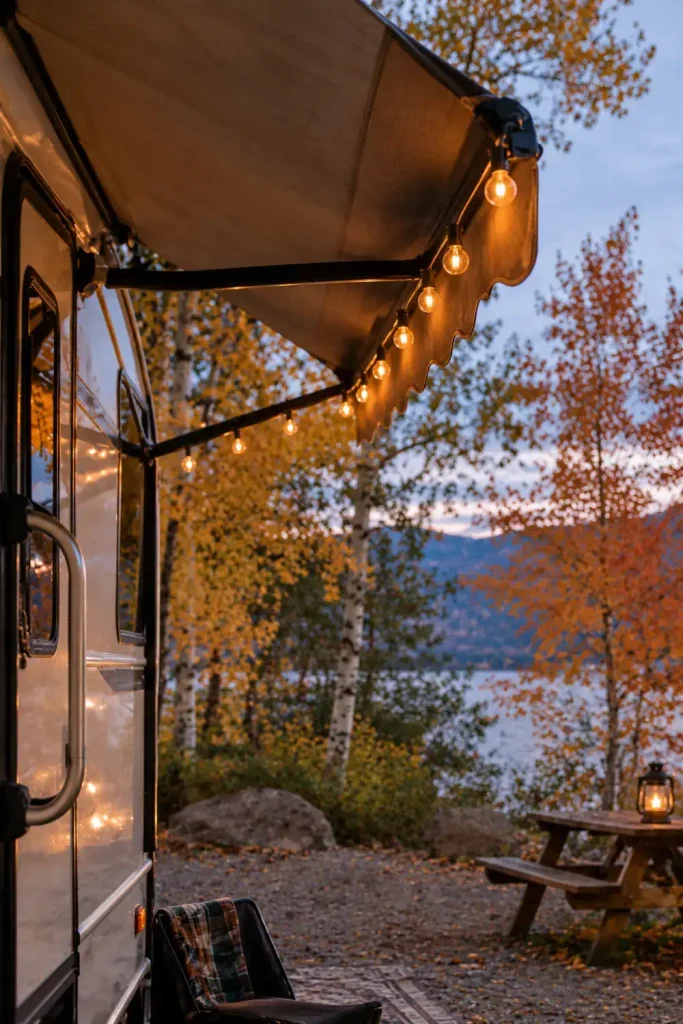
Autumn daylight fades fast once five o’clock rolls around. Bright white LED strip lights can feel harsh and clinical against a dark forest backdrop.
Swapping out standard exterior bulbs for warm amber lights creates a softer glow that makes sitting outside by the picnic table much more inviting. Amber tones also attract far fewer late-season bugs than bright white fixtures.
Here are three simple ways to rig them up quickly:
- Clip battery-powered fairy strands directly to the fabric track using plastic awning clips.
- Wrap copper wire strands around your exterior grab handle for low-glare doorway lighting.
- Use magnetic silicone ties to secure battery packs to the underside of metal awning arms.
Stick with warm tones under 2700 Kelvin so your patio area feels cozy rather than like a construction work site.
2. Simmer Mulled Cider in a Slow Cooker to Warm the Cabin Air

Cooking inside a camper during chilly weather helps warm up the living space naturally. A small 1.5 quart slow cooker on your kitchen counter uses minimal power while gently filling the entire cabin with cinnamon and clove aromas.
Fill the pot with local farm cider, two whole cinnamon sticks, and sliced oranges as soon as you hook up at your site. Keep the setting on low while you set up leveling blocks and water lines outside.
By the time you come back inside with cold fingers, you have a hot drink ready to pour without waiting for a kettle to boil on propane.
💡 Quick Tip
Crack the overhead galley roof vent about half an inch while simmering. This releases excess moisture while keeping the heat inside, which stops your front windshield from fogging up.
Wipe down the slow cooker lid right after serving so trapped steam does not drip down behind your galley stove.
3. Line Slide-Out Seams and Under-Bed Hatches with Foam Draft Stoppers
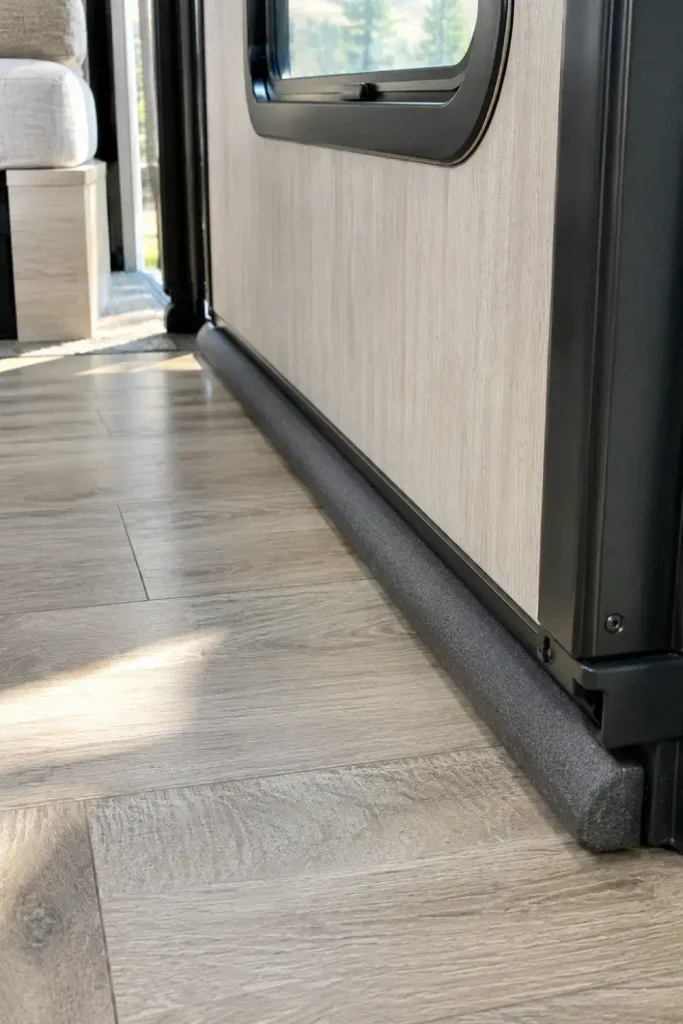
Most factory slide-out rubber seals do a fine job in mild weather. But when October winds pick up, cold air can easily seep around the base of your slide tracks and floor joins.
Under-bed storage areas that sit directly over unheated pass-through compartments can turn your mattress noticeably cold from below. Flexible foam weather stripping creates an instant thermal barrier right where draft currents enter.
Take a look at the temperature difference on your main floor:
Cold air drafts across the vinyl floor, chilling pet beds and pulling battery power as your furnace cycles constantly.
Dense foam stops cold drafts at the flooring seam, holding warm air inside and saving your propane reserves.
Tuck tubular foam insulation tubes along the bottom edge of your slides when parked for quick draft protection that lifts out in seconds on travel days.
4. Pack a Low-Profile Smokeless Fire Pit to Beat Campfire Bans
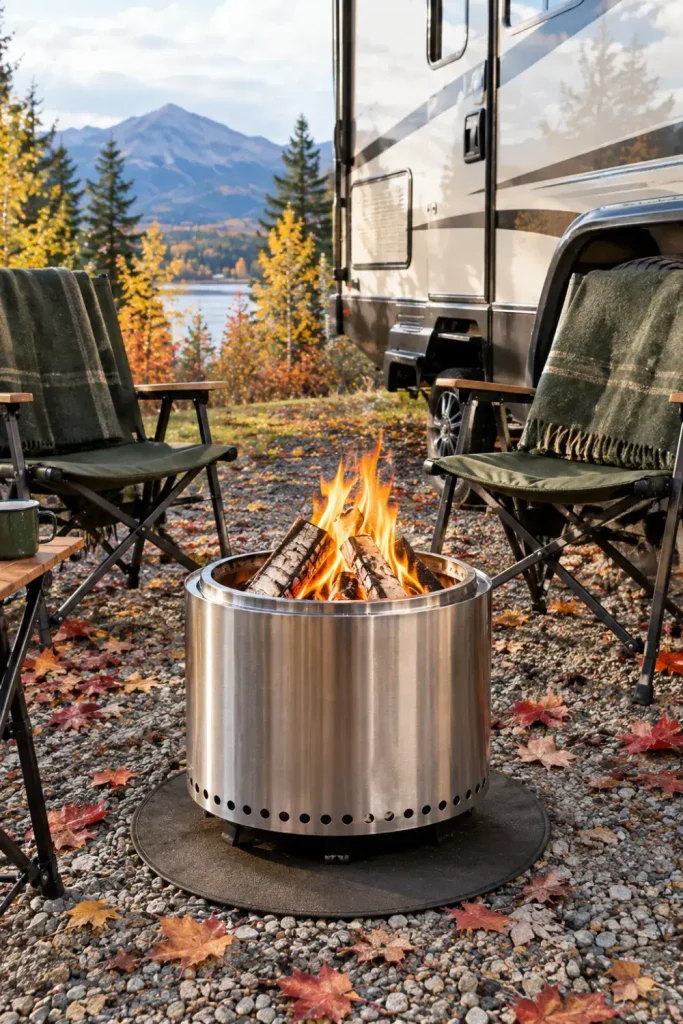
Wet wood and heavy fall air often leave regular campsite fire rings smoking out the entire loop. A portable stainless steel smokeless pit uses secondary combustion to burn wood cleanly and hot with very little smoke output.
Because the heat radiates efficiently upward and outwards, you can warm up quickly without smelling like campfire smoke the rest of the evening inside the camper.
Gather these essentials in your exterior storage bay:
What to grab for an easy campfire setup
Always verify with the camp host whether portable charcoal or wood pits meet the day’s local fire safety regulations.
5. Build a Wool Throw Basket Beside the Dinette Bench

When temperatures drop into the forties, jumping straight to firing up the noisy onboard furnace is not always necessary. Heavy wool and sherpa-lined fleece blankets offer instant warmth while relaxing at the dinette or sofa.
Placing a collapsible wire or woven storage basket near your seating area keeps your throws clean, off the floor, and ready to grab. It also keeps your main sleeping quarters uncluttered by extra day-use bedding.
Roll your blankets tightly instead of folding them flat so you can pull one out without disturbing the rest of the pile.
6. Layer Exterior Ground Mats to Stop Wet Pine Needles at the Door
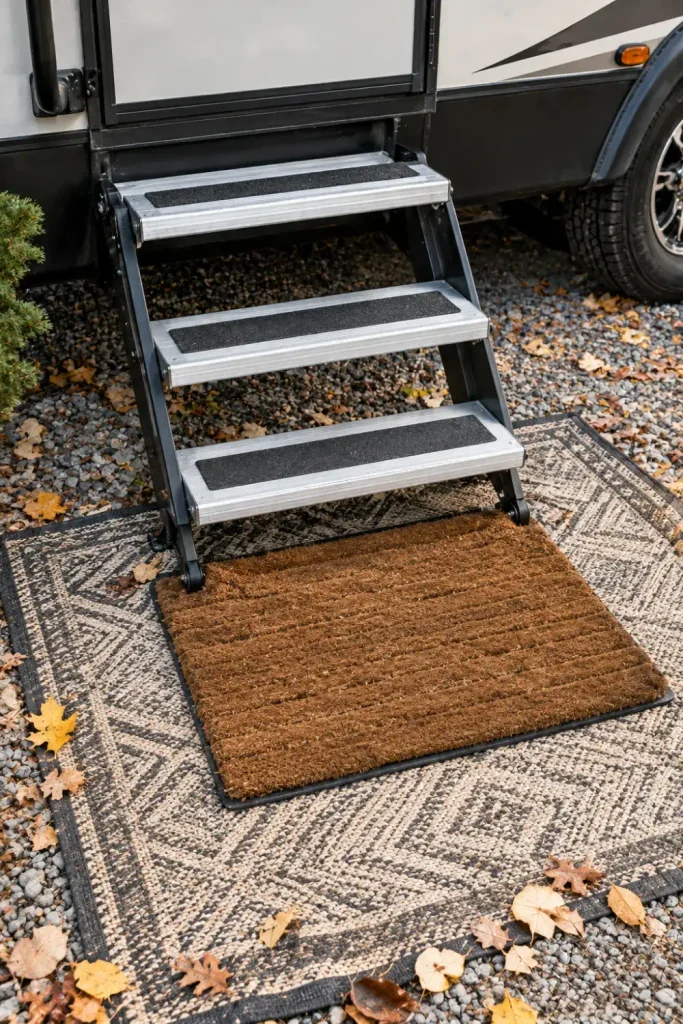
Wet autumn forest soil has a way of sticking to hiking boots and hitchhiking directly inside your doorway. A single outdoor mat rarely catches everything when leaves are soggy.
Setting up a two-stage shoe clean station right at your camper steps saves you from sweeping your main aisle floor three times a day.
| Mat Type | Best Placement | Cleaning Performance |
| Open-Weave Poly Mat | Ground level under the patio awning | Lets rain and sand sift through without pooling water |
| Coarse Coir Boot Brush | Right at the base of your bottom step | Scrapes thick mud and wet pine needles off boot treads |
| Rubber Backed Runner | Immediately inside the camper entrance | Catches remaining shoe dampness before you reach the kitchen |
Shake your outdoor rugs loose in the afternoon when dried dust and trail grit come off with less effort.
| Step Zone | Primary Job |
|---|---|
| Ground Level Poly Rug | Stops dead leaves from clinging to socks and chair legs |
| Bottom Step Scraper | Removes packed wet clay from deep hiking boot lugs |
7. Roast Cast-Iron Apple Crisp Right Over Charcoal Coals
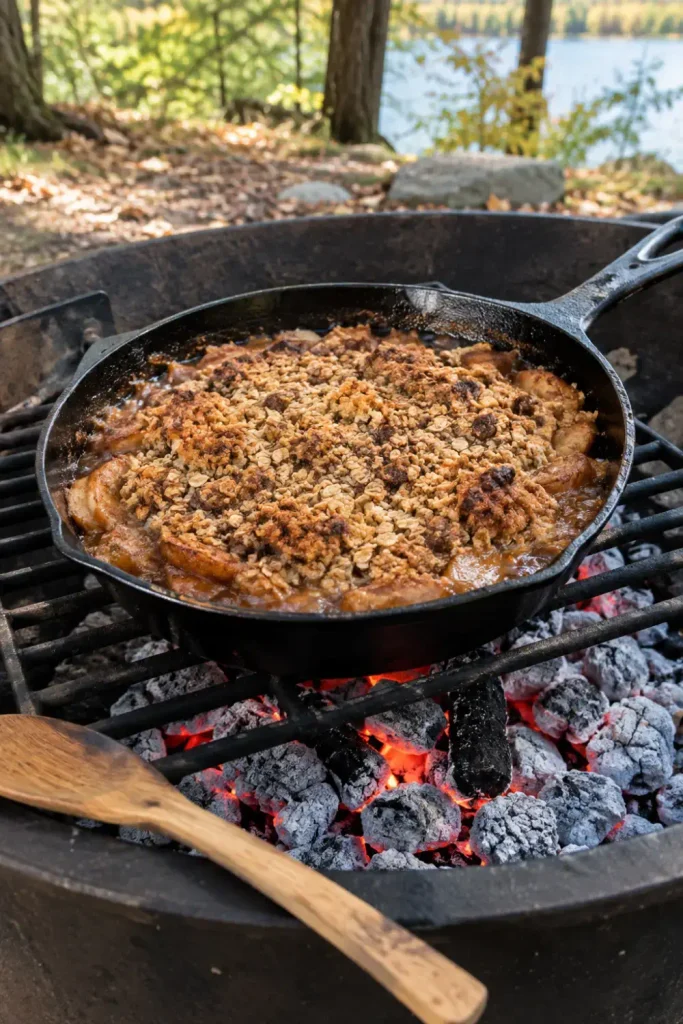
Dessert cooked outside over campfire coals feels naturally suited to fall. Sliced seasonal apples, rolled oats, brown sugar, and butter bake to a rich golden brown inside a seasoned Dutch oven or cast iron skillet.
Managing your coals is the key to getting a crunchy oat crumble without scorching the sugary apple juices at the bottom of the pan.
Place twice as many coals on top of the lid as you do underneath.
Line the skillet bottom with parchment paper for easy camp cleanup.
Do not cook directly over open roaring yellow flames.
Avoid lifting the lid every five minutes and losing trapped heat.
Let the skillet sit covered on a heatproof picnic table pad for ten minutes before serving so the spiced juices thicken nicely.
8. Insulate the RV Water Hose Before the First Night Frost

Early season freezes can catch campers by surprise when clear nighttime skies drop the mercury below freezing for three or four hours right before dawn.
A frozen freshwater drinking hose can crack brass fittings and leave you without running water when you wake up.
Follow this quick evening sequence before turning in:
- Turn off the campground water spigot completely.
- Disconnect your drinking hose from both the camper inlet and the park faucet.
- Drain all remaining water from the line and coil it neatly inside your heated storage pass-through.
- Run your interior taps off your fresh water tank and on-demand 12V pump overnight.
Shut off campground supply spigot at the utility post.
Unhook and drain your drinking hose completely to prevent internal ice blockage.
Switch over to onboard tank water until temperatures warm up by mid-morning.
Reconnecting your hose takes only two minutes once the morning sun hits your utility connections.
9. Carve Miniature Pumpkins on the Picnic Table Using Flameless Votives
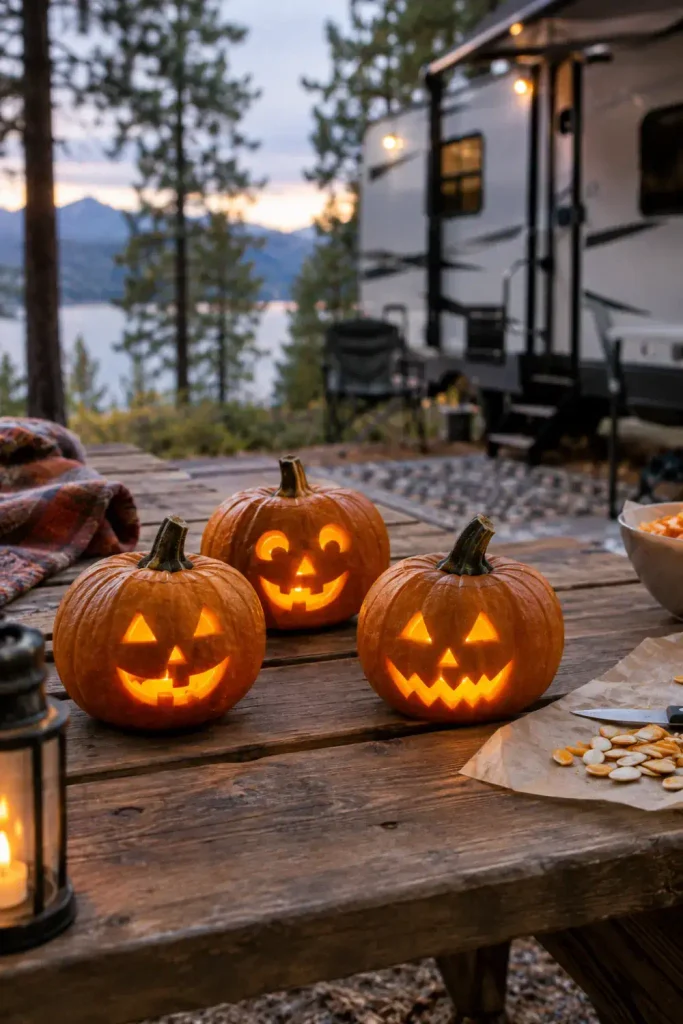
Carving small sugar pumpkins makes a fun afternoon activity at the picnic table while the midday sun is still warm. Miniature pumpkins take up minimal room in your camper grocery bin and are easy to scrape clean using an ordinary dining spoon.
Open flames from standard wax candles pose a serious safety risk around light camper curtains and dry autumn leaves blowing across your campsite. Battery-powered LED tea lights provide the same flickering look without smoke or flame hazard.
Always pack carved pumpkins inside your vehicle or camper storage bay before turning in, so local wildlife does not treat your campsite steps like a late-night snack bar.
Set your finished pumpkins along your entry steps during dinner for a welcoming seasonal touch.
10. Clip Thermal Blackout Curtains Across the Cab Bunk Curtain Track
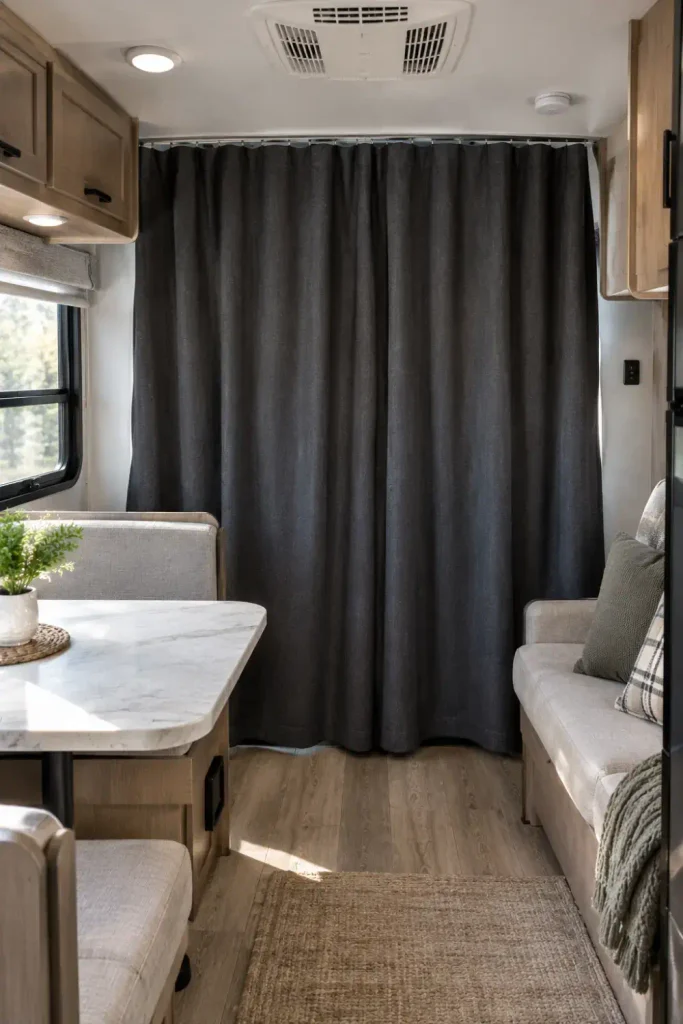
In motorhomes and travel trailers with front front-facing automotive windows, the front cab area acts like an open thermal leak. Large automotive windshield glass radiates cold into your main cabin space all night long.
Hanging a thick, insulated blackout curtain right behind the front driver and passenger seats isolates that cold air zone completely.
⚠️ Watch Out
Leaving windshield glass uncovered can cause heavy interior condensation to roll down into the dashboard electronics. Insulate the glass with foil inserts or drop a heavy thermal drape behind the cab area.
Use heavy-duty spring-loaded tension rods or sturdy curtain track glider clips to hang your thermal panels securely without drilling permanent holes.
11. Map Out Mid-Morning Scenic Loop Drives During Peak Foliage Hours
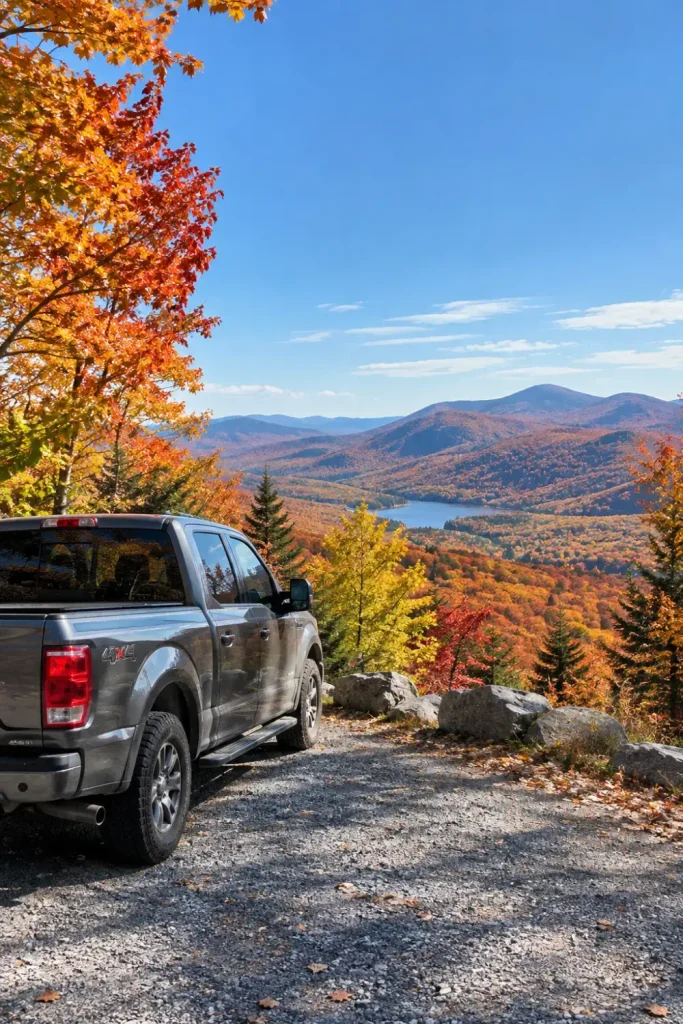
Fall leaf-peeping is best done when the sun is higher in the sky. Early morning fog often obscures ridge views, while late afternoons cast long mountain shadows across tree canopies.
Planning your unhitched loop drives between 10:00 AM and 2:00 PM gives you the brightest sunlight filtering through golden aspens and bright red maples.
Leave your travel trailer parked and secured at your campsite so you can navigate winding park roads and narrow mountain turnouts with your tow vehicle.
12. Set Up an Outdoor Cocoa and Cider Caddy with Heavy Mugs
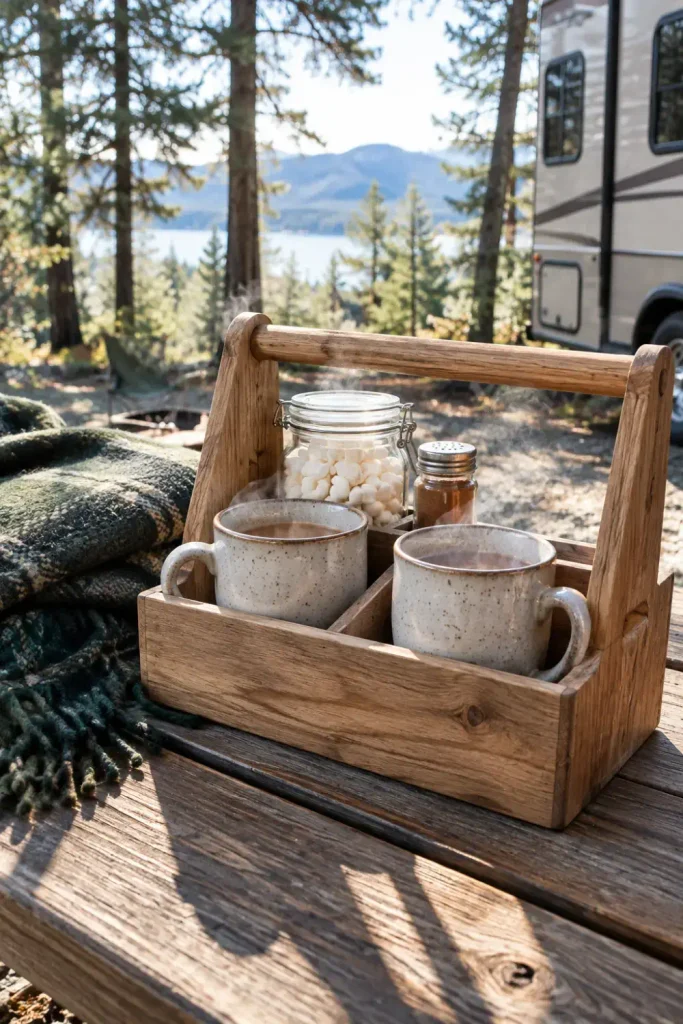
Crisp evening air calls for hot drinks, but carrying individual mugs in and out of the camper door quickly leads to spills over step thresholds.
A dedicated wire or wooden caddy keeps drink toppings, stirrers, and heavy-bottomed ceramic or enamel mugs organized in one handy spot on your picnic table.
Keep your hot drink station simple with these staples:
Fall Caddy Essentials
Pack the entire caddy inside your exterior outdoor kitchen cabinet before heading to bed to keep supplies dry from morning dew.
13. Tuck Heated Mattress Pads Under Your Sheets Instead of Space Heaters

Running a 1500W electric space heater overnight can be noisy, dries out your sinus passages, and strains 30-amp campground electrical pedestals if you run another appliance.
A 12V or low-wattage 120V heated mattress pad applies gentle warmth directly where your body rests. Because it sits under your fitted sheet and below a warm comforter, almost no heat escapes into the ceiling.
Compare the efficiency across both heating setups:
Draws 1500 watts, blows noisy hot air toward the ceiling, and shuts off abruptly, causing temperature swings.
Draws just 60 to 90 watts, runs silently, and delivers steady, soothing warmth straight to your sleeping bag or bedding.
Turn the pad on its lowest setting twenty minutes before getting into bed so your sheets are already warm when you crawl in.
14. Keep a Stiff Bristle Deck Broom in the Pass-Through for Falling Leaves
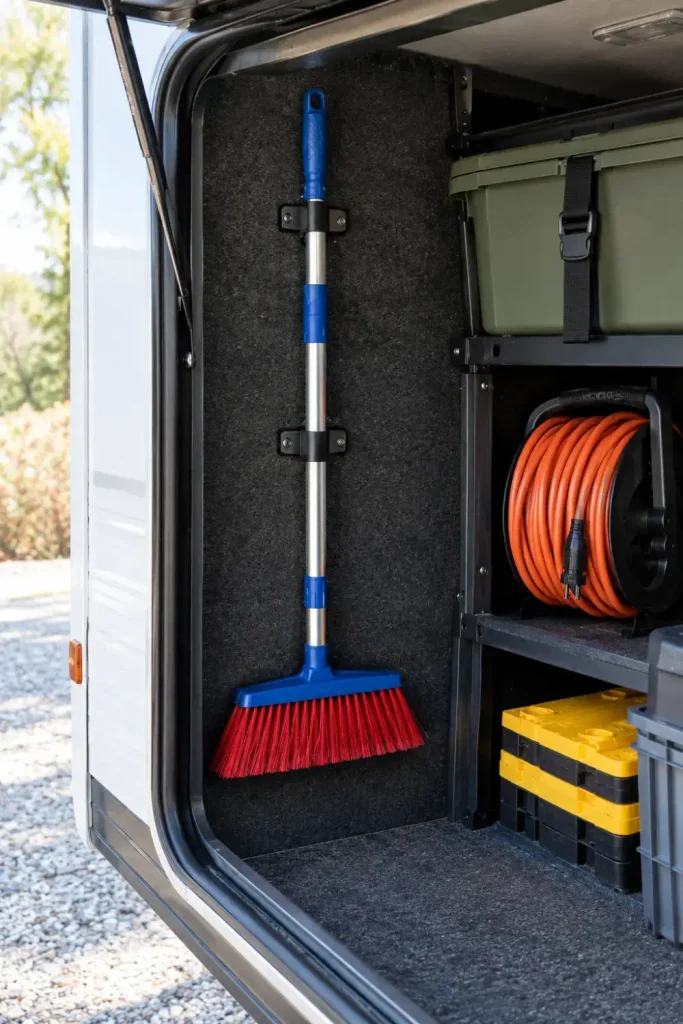
Autumn leaves look stunning on the trees, but once they fall and get wet, they turn into a slippery mess on your camper roof and entry steps.
Wet leaves trapped on top of your slide-out roofs will roll straight through your rubber slide wiper seals when you retract the room on departure morning. This can drag dirty water and pine needles directly into your interior ceiling trim.
Keep these key areas clear of leaf debris:
- ▸Slide-out roofs and topper fabric
- ▸Awning fabric grooves before rolling up
- ▸Aluminum entry steps and door sill threshold
A lightweight telescoping broom stores flat against your pass-through storage wall using two simple spring tool clips.
15. Switch to a Cedar and Amber Essential Oil Diffuser for Evening Downtime
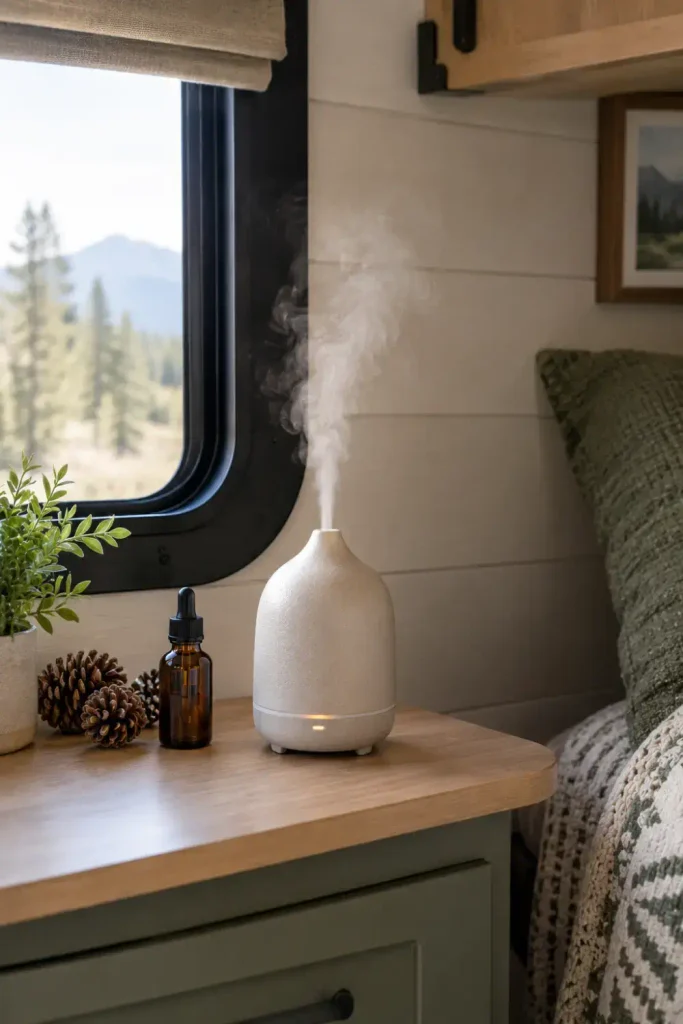
Scented wax candles are a staple of cozy fall decor at home, but burning them in the small living space of an RV creates soot and open flame hazards.
An ultrasonic cool-mist diffuser runs on a simple USB cord or 12V port, using just a couple ounces of tap water to scent the air. Natural woodsy scents like cedarwood, amber, sweet orange, and clove bring the outdoor fall atmosphere right into your rig.
Stick with four to five drops of oil at most so the scent stays subtle and gentle in the enclosed floor plan.
16. Check State Park Dump Station Closure Dates Before You Book
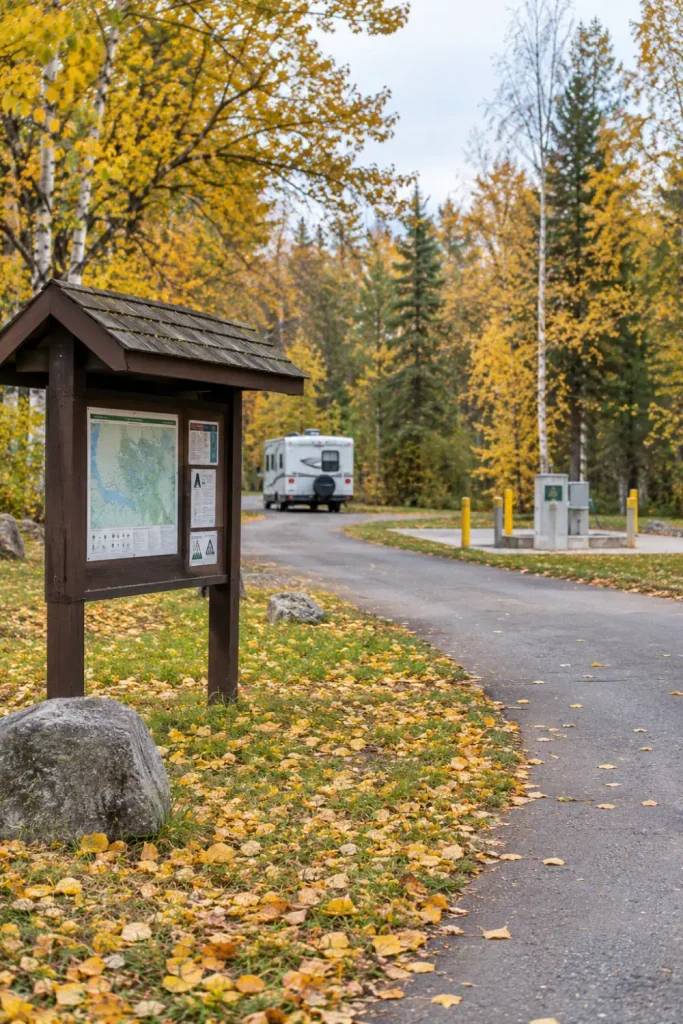
Many state and regional parks keep their campsite loops open through October or November, but shut down water towers and sanitary dump stations right after the first frost to prevent broken pipes.
Arriving at a campground expecting full utility hookups only to discover shut-off water hydrants can complicate your weekend.
| Campground Style | Typical Fall Water Status |
|---|---|
| State & County Parks | Dump stations and spigots often winterized by mid-October |
| Commercial RV Resorts | Heated hydrants and full hookup sewer open through late fall |
Call the local ranger station directly two days before your departure to confirm whether you need to arrive with a full fresh water tank.
Fall camping gives you peaceful loops, crisp evening campfires, and vibrant foliage views that summer trips simply cannot match. With a few cozy comfort touches, proper draft insulation, and an eye on nightly temperatures, your rig will stay warm and comfortable all season long. Put a few of these fall rv camping ideas to work on your next weekend getaway.
Save this list to your favorite fall RV camping board on Pinterest so you have these tips handy when packing for your next autumn trip.