
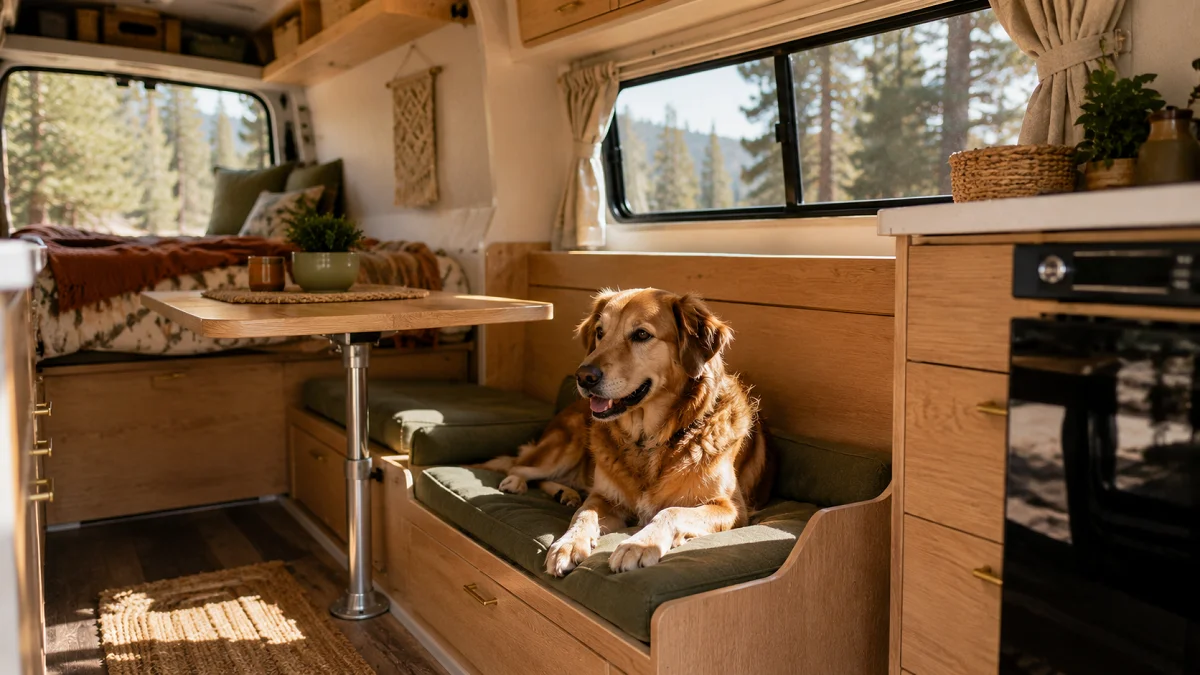
Traveling with a dog makes camping feel complete, but RV floor plans are notoriously tight. A standard dog bed dropped right in the middle of your main walkway turns into an instant tripping hazard every single time you stand up to grab a drink from the fridge.
Between thin factory flooring that lets in cold drafts and muddy paws trailing through narrow hallways, finding dedicated sleeping space takes actual planning. Traditional pet beds also tend to collect dust, trap loose hair, and slide around when you hit bumps on highway travel days.
You do not have to sacrifice your walkway or step over a massive pile of foam all night. With a few smart modifications and dual-purpose zones, your dog can get an orthopedic, cozy sleeping spot that stays completely out of your way.
Here are 18 practical, road-tested rv dog bed ideas that save square footage and keep your pup settled on the move.
1. Tuck a Custom Orthopedic Pad Inside a Dinette Bench Cutout
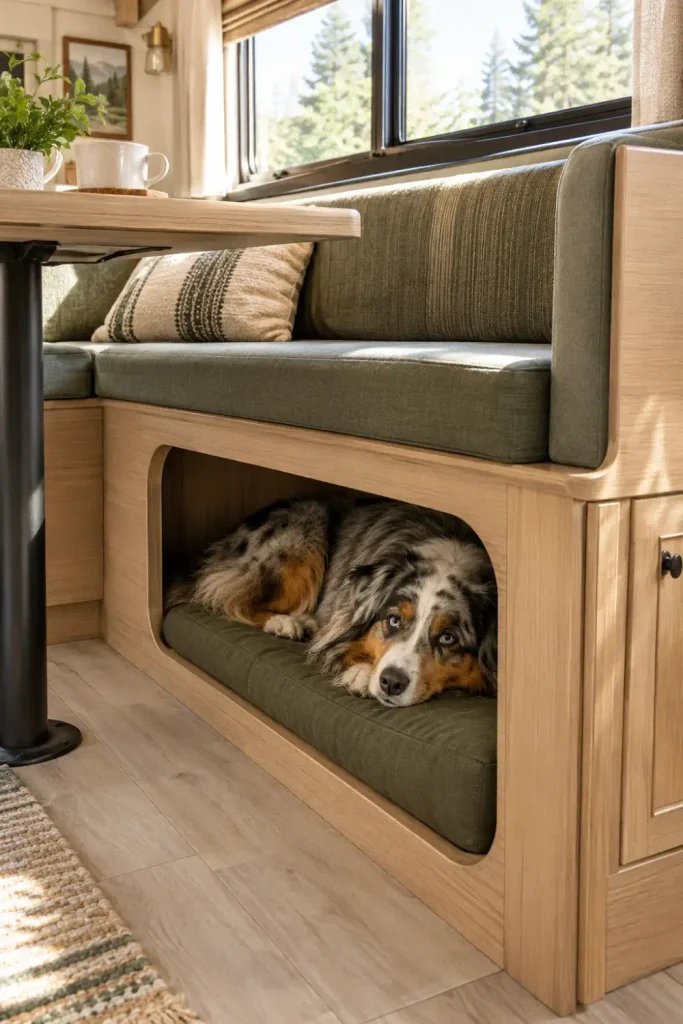
Dinette benches are famous for holding clutter you barely use, like bulky spare blankets or extra paper towels. Removing a front wood panel from one side of the bench creates a recessed sleeping cavern that protects your dog from hallway traffic.
Line the opening with heavy-duty T-molding to protect the exposed wood edges from splintering. Cut a three-inch dense foam pad to match the interior dimensions, and wrap it in a marine-grade vinyl cover that wipes down in seconds.
Your dog gets a quiet, secure den that feels naturally protected on three sides. Because the sleeping area sits flush inside the cabinetry, you will never stub your toes on stray bedding again.
2. Mount a Fold-Down Murphy Dog Bed Along the Hallway Wall
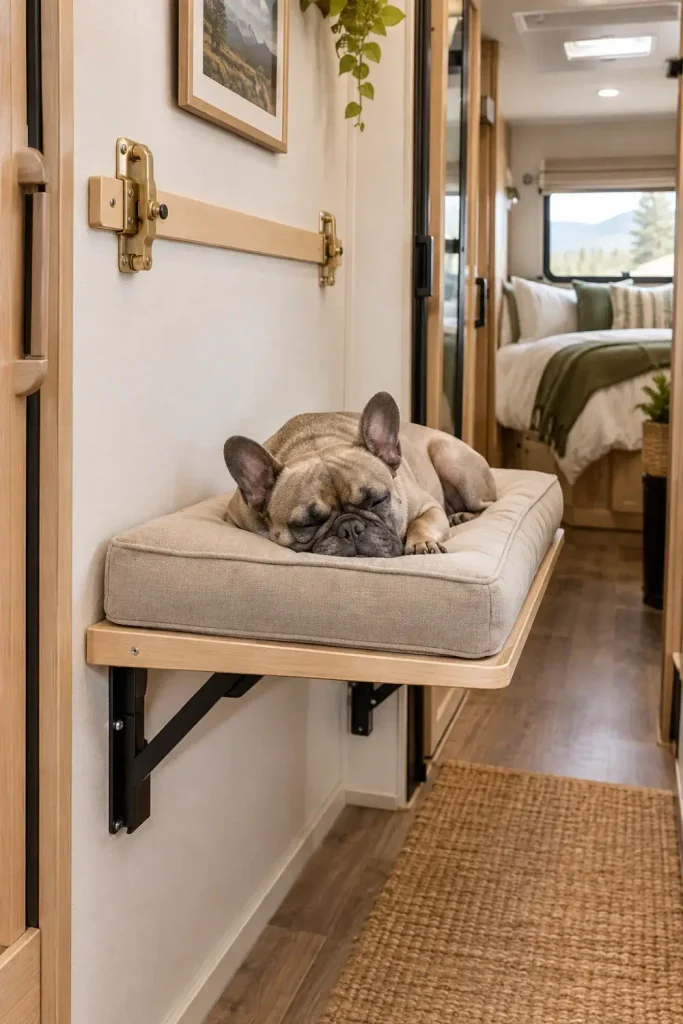
Hallways inside campers narrow down fast, especially in rigs with slide-outs retracted. A wall-mounted folding platform folds flat against the wall during daytime prep hours, then drops down to the floor at bedtime.
Use lightweight marine plywood paired with heavy-duty folding shelf brackets rated for at least one hundred pounds. Secure an elastic strap across the platform to hold the mattress securely in place while folded upright against the wall.
⚠️ Watch Out
Always verify wall stud locations with an electronic stud finder before drilling. RV interior hollow walls cannot support pet weight using drywall anchors alone.
- Mount the platform roughly three inches off the floor to dodge cold drafts running along the vinyl.
- Add a magnetic cabinet catch at the top edge to prevent the frame from rattling loose on rough logging roads.
- Pick a high-density foam insert with a removable zip cover so washing sand out takes minimal effort.
This setup works wonders for medium dogs who need joint support without permanently claiming aisle floor space.
3. Convert the Space Under a Lifted Queen Bed into a Private Den
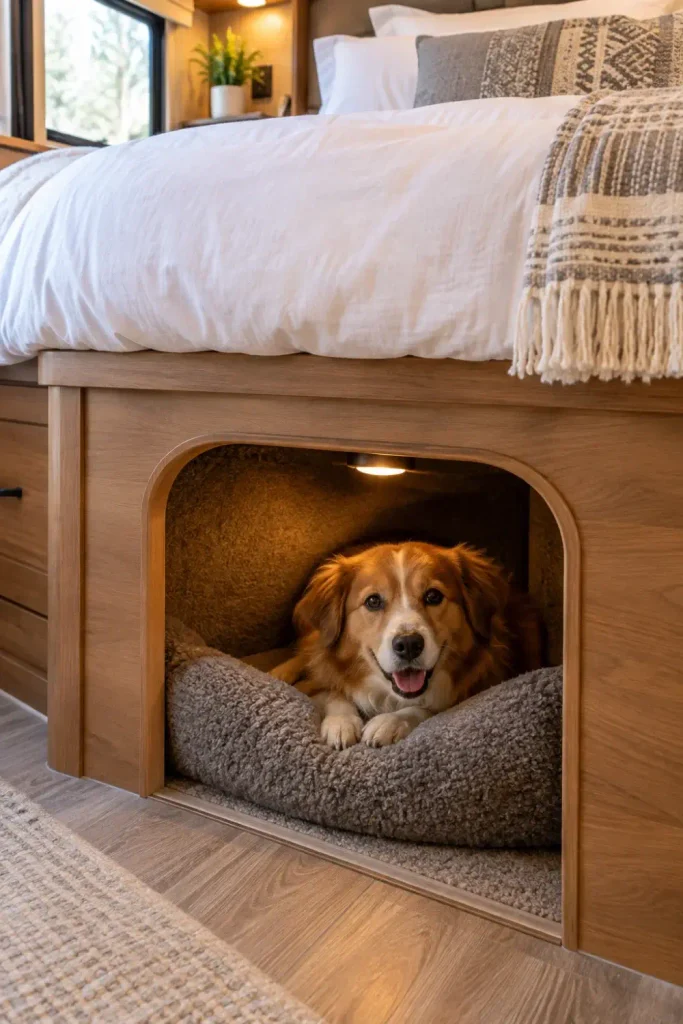
Most master RV beds sit on top of massive storage bays accessible from interior plywood lids. Dividing that bay allows you to keep exterior gear storage on one side while creating a cave-like bedroom on the other.
Cut an arched entry passage through the bottom pedestal facing the bedroom floor. Sand the opening smooth, paint it to match your factory cabinetry, and lay down an insulated foil radiant barrier beneath the dog bed.
Jumbled gear bins that collect pet fur, with a large plush bed blocking the path between the bed and closet.
A warm, isolated nook with a dedicated nightlight, leaving floor space around your mattress totally clear.
The enclosed space naturally muffles thunder, campground generator rumble, and campfire chatter. An anxious dog will quickly learn that this dark corner is their quiet refuge whenever camp gets loud.
4. Slide a Low-Profile Crate with a Fitted Cushion Under the Dinette Table
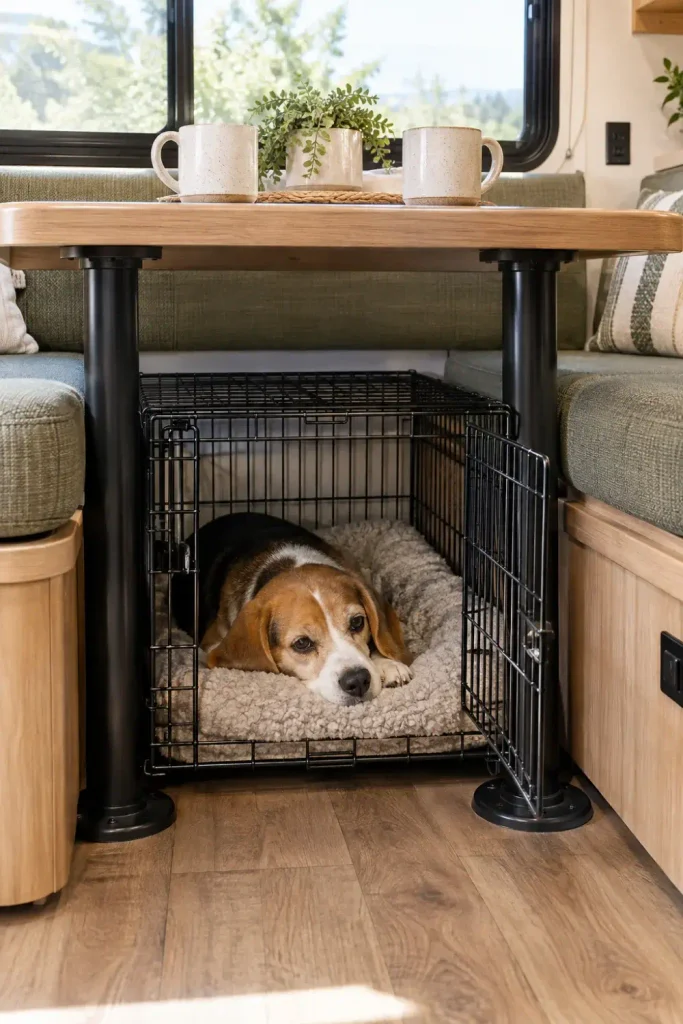
The footprint directly beneath a dinette table is almost always dead space while people are sitting or resting. Placing a wire or aluminum travel crate in that spot turns dead legroom into an organized resting zone.
Choose a crate that leaves at least two inches of clearance below the tabletop so you do not rub against the hardware. Top the inner crate floor with an orthopedic foam cushion wrapped in a stain-resistant micro-suede cover.
Crate Measurement Checklist
When dinner finishes, your pup can retreat directly beneath you without taking up the central aisle. The table overhead also provides comforting cover that helps crate-trained dogs settle down faster.
5. Anchor a Heavy Canvas Dog Cot in Front of the Passenger Swivel Seat
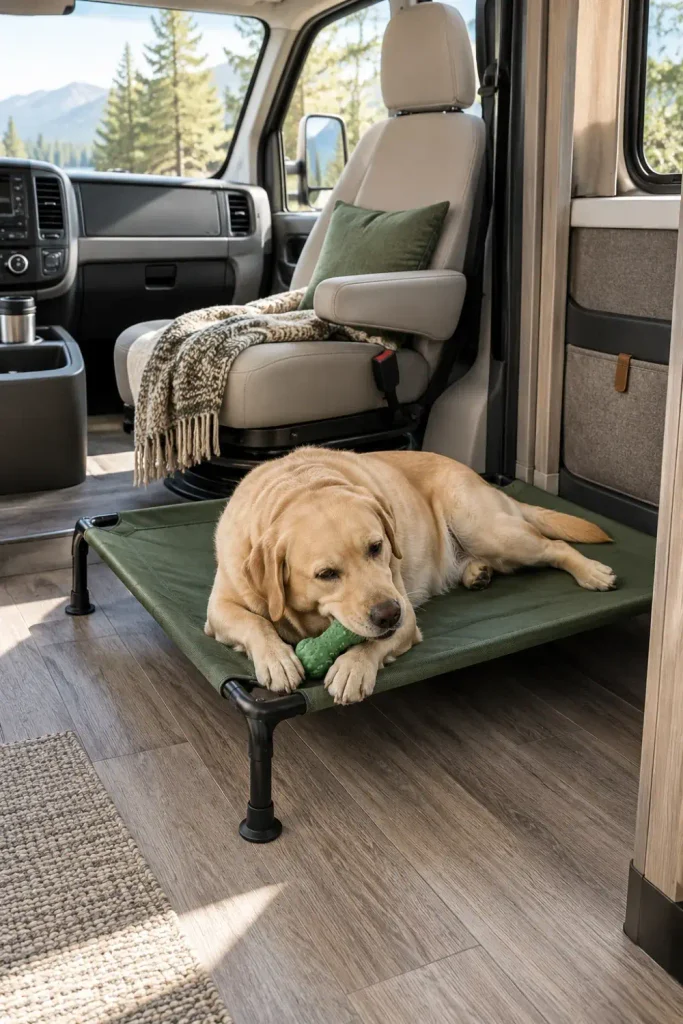
Elevated dog cots keep pets up off freezing or heat-soaked subfloors while allowing air to circulate around them. The open area created when front cockpit seats swivel into the living space provides prime real estate for a cot frame.
Because camper floors can be slick, rubberized feet on the cot legs are critical to prevent sliding during nighttime shifts. Pick a tightly woven ripstop nylon or coated canvas fabric that resists claw punctures and repels wet grass moisture.
- Swivel the front passenger seat completely toward the living room to unlock floor clearance.
- Position the cot tight against the seat base to prevent human legs from tangling with the frame.
- Lay a thin fleece blanket across the canvas mesh for cold mountain nights to block underside drafts.
During moving days, the entire cot breaks down in under a minute and slides neatly behind the sofa.
6. Swap Bulky Foam for an Easy-Wash Water-Resistant Floor Runner
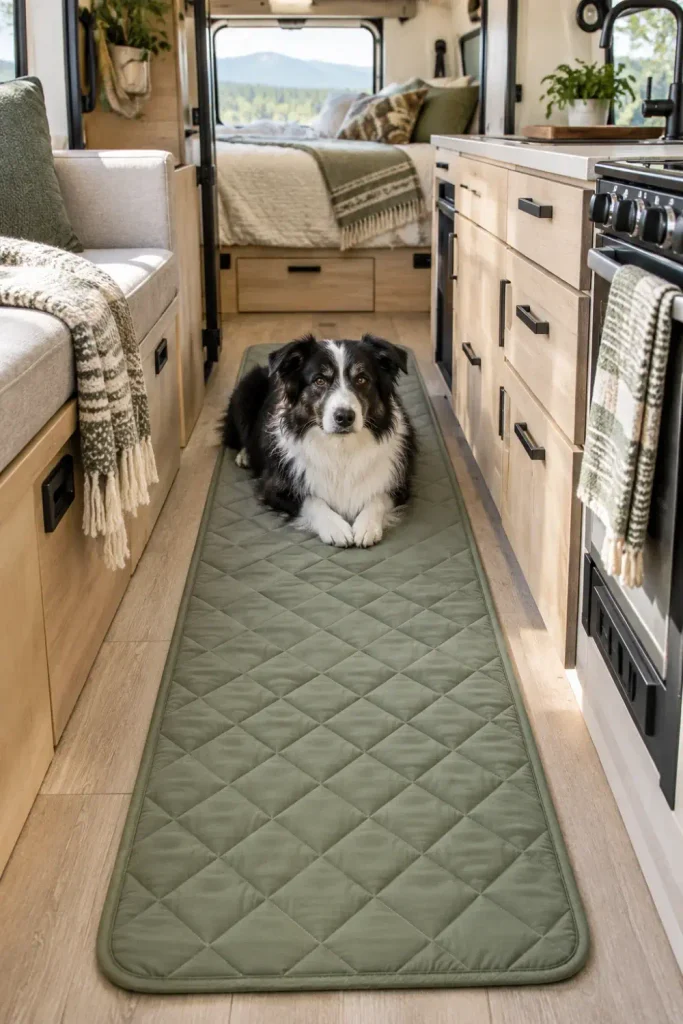
Traditional overstuffed dog beds absorb campground dust, campfire smoke, and wet lake smells like giant sponges. Replacing a pillow bed with a thick, insulated, machine-washable floor runner gives your dog a defined path to rest on while remaining easy to clean.
These runners lay flat, meaning doors and slide-out edges can pass directly over them without bunching up. They also protect your factory vinyl from grit scratches while providing continuous traction for senior dogs navigating tight turns.
| Feature | Bulky Plush Bed | Quilted Washable Runner |
|---|---|---|
| Trip Hazard | High (thick raised edges) | Minimal (lays flat to floor) |
| Drying Time | Slow (traps wet foam core) | Fast (line dries in an hour) |
| Storage Profile | Takes an entire wardrobe bin | Rolls up like a yoga mat |
Shake the runner out over the gravel outside every morning to ditch sand and pine needles. When you head home, run it through the normal spin cycle at any standard laundromat.
7. Build a Slide-Out Trundle Bed Beneath the Main Lounge Sofa
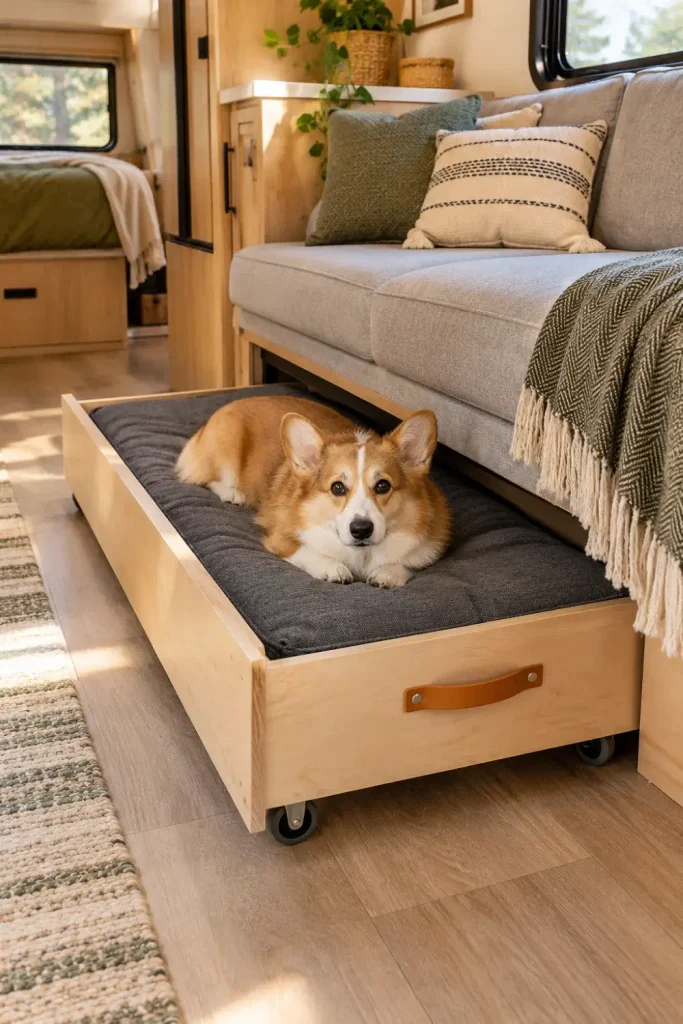
Jackknife sofas and fold-out couches often have a hollow, awkward void beneath their main support framework. You can assemble a low-profile rolling trundle that glides completely under the sofa frame when people are moving through the rig.
Mount heavy-duty locking casters to a framed rectangular tray made from half-inch birch plywood. When night falls, simply reach down, pull the trundle outward across the carpet, and lock the wheels.
Use soft polyurethane wheels that will not scuff or groove delicate vinyl floors.
Add a front barrel latch to keep the drawer from rolling open on steep curves.
Do not install tall drawer sides that scrape the sofa kickplate mechanism.
Avoid thin plywood bases that bow downward under your pet weight.
- Measure your frame height while the sofa is fully extended to ensure the tray clears both day and night positions.
- Attach a flat leather strap to the front panel so you can slide the bed out with your foot.
- Fit the base with a dense two-inch memory foam slab trimmed to fit snug inside the outer lip.
This hides your dog bed completely from view during daytime visits while keeping nighttime sleeping arrangements effortless.
8. Repurpose the Unused Cab-Over Bunk into a Dedicated Pet Loft
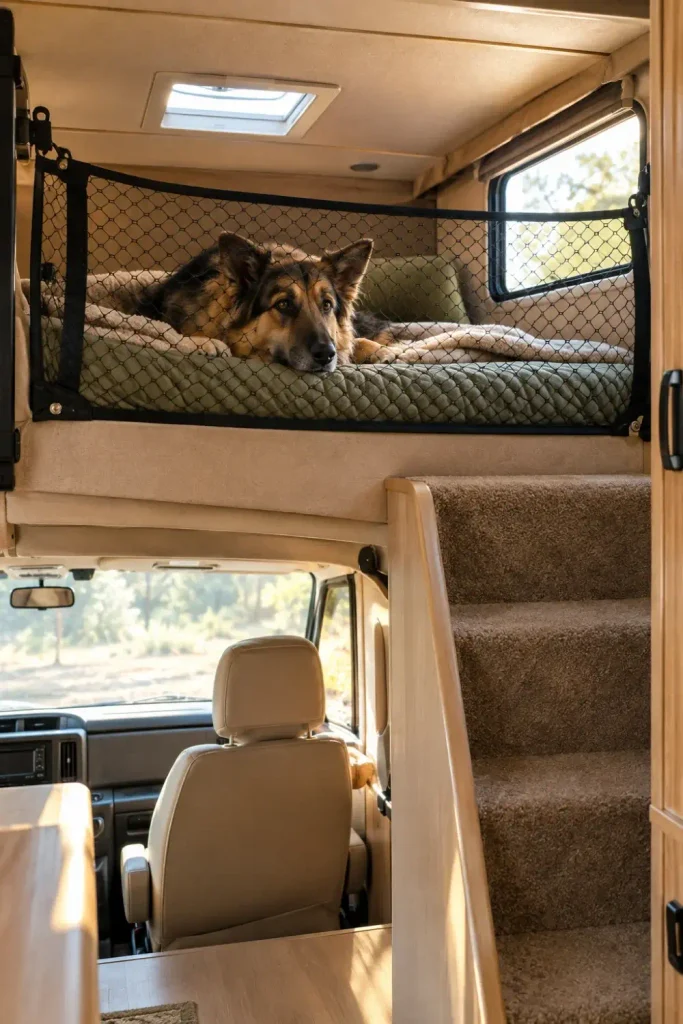
In Class C motorhomes, the space above the driving cab is huge, but it often ends up loaded with random storage boxes. If you have an athletic or medium dog, this cozy upper shelf makes an out-of-the-way suite.
Safety is the absolute priority when using elevated bunks for pets. You need a dedicated climb path and a solid barrier to prevent accidental rolling or slips during the night.
Secure a pet ramp or carpeted modular storage steps firmly against the main bunk frame.
Fasten a heavy-duty nylon cargo retention net across the front opening to form a safe railing.
Cover the bunk mattress with a washable fleece topper so fur does not embed into the factory fabric.
Lofts stay naturally warmer than chilly floors during cool shoulder-season trips. Most dogs also love the high vantage point where they can keep an eye on their pack below.
9. Secure an Elevated Bolster Perch Between the Two Front Cab Seats
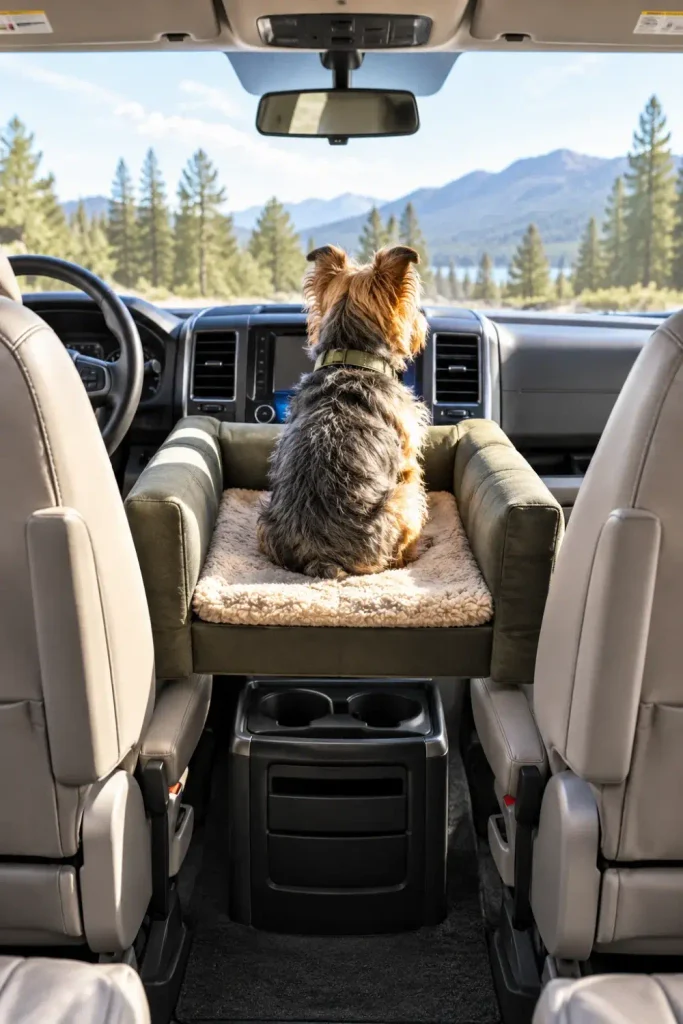
Small and toy breeds constantly try to stay level with their humans instead of sitting down in a low, lonely corner. The wide gap between driver and passenger seats is ideal for a sturdy, bridged center perch.
Build or buy a padded bridge box that braces securely between the seat armrests or console floor anchors. This turns dead cockpit space into a comfortable sleeping perch that stays usable while parked.
Always dismount and pack away loose cab platform beds before turning the ignition key to keep the emergency brake clear.
- Measure your console gap carefully so the bridge platform sits perfectly level without rocking.
- Look for dense bolster walls on three sides to give smaller dogs something secure to lean against.
- Tuck a non-slip rubber silicone pad underneath the frame so it grips the dash molding cleanly.
This keeps pint-sized pups off your furniture while still satisfying their need to stay close to where the action is.
10. Use a Roll-Up Waxed Canvas Travel Pad that Stows into a Bungee Net
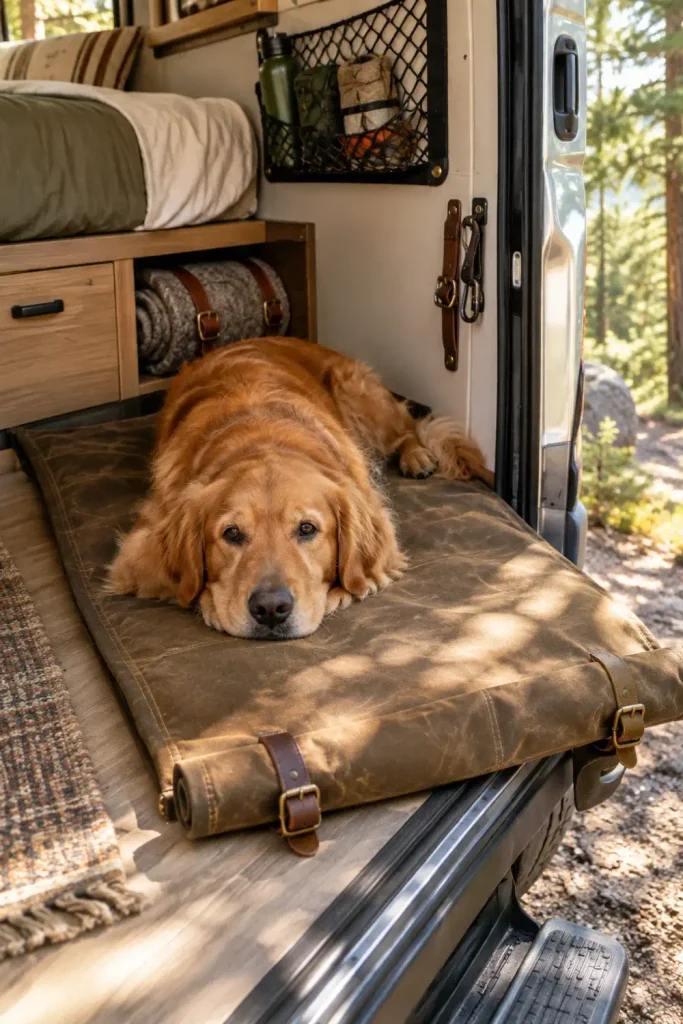
Bulky foam dog beds have no business inside smaller teardrop campers or compact camper vans. A roll-up waxed canvas pad stuffed with dense wool or recycled fleece gives dogs a protective cushion that packs tight in seconds.
Waxed cotton acts as an impenetrable barrier against damp soil, muddy dog paws, and spilled water bowls. When your dog finishes resting, roll it tightly like a sleeping bag and slide it into a wall-mounted mesh net.
💡 Pro Tip
Wipe down waxed canvas with cold water and a soft rag only. Detergents and hot water strip the protective paraffin wax finish, causing the fabric to lose its natural water resistance.
The rugged outer shell means you can toss this bed straight onto the rocky campsite dirt during the afternoon, brush it off with your hand, and unroll it right inside the van door for bedtime.
11. Retrofit a Bottom Wardrobe Cabinet with a Slat Privacy Gate
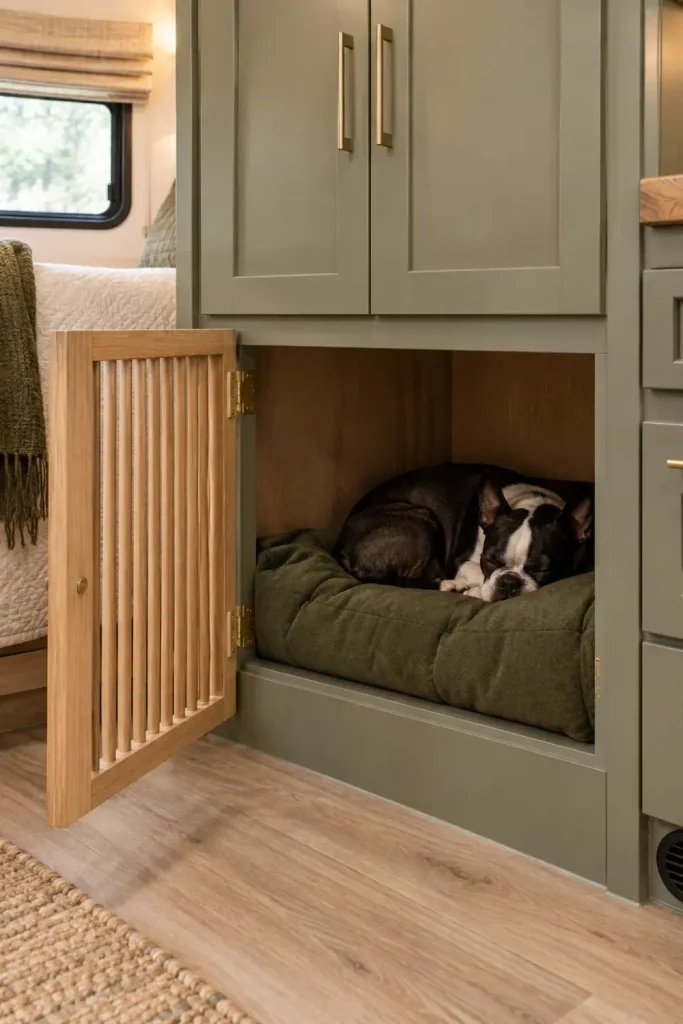
Full-length wardrobe closets in travel trailers often have low, deep cabinet cavities that end up stuffed with tangled laundry. Removing the bottom solid door and replacing it with an open wood slat gate creates an integrated resting bedroom.
Use smooth pine or oak vertical dowels spaced two inches apart across the frame to encourage full interior air cross-ventilation. A dark, quiet alcove helps overstimulated adventure dogs sleep through the noise of early camp mornings.
- Unscrew the factory lower cabinet door hinges and patch old mounting screw holes with wood filler.
- Build a custom-dimension wooden face frame holding vertical half-inch wooden dowels.
- Install a magnetic catch on the inside edge so the gate can rest swing-open against the wall during daytime hours.
This keeps your camper looking like custom interior cabinetry while giving your pet a permanent sanctuary on wheels.
12. Fit an L-Shaped Corner Cushion to Capture Dead Space by the Entryway
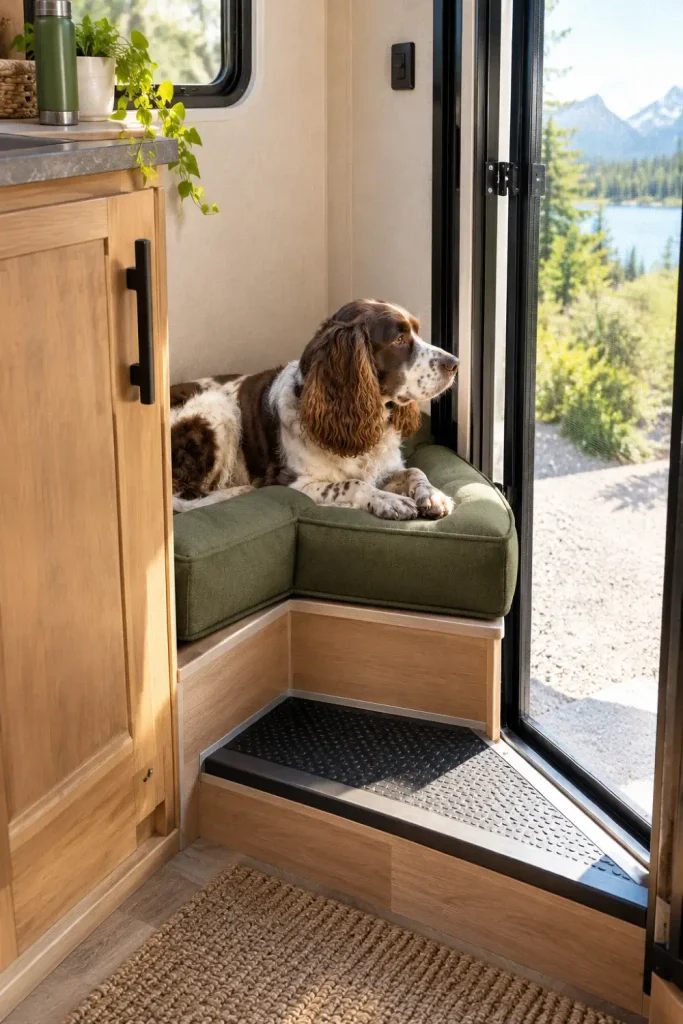
Entryway steps and sliding door tracks routinely leave strange triangular or L-shaped floor angles where standard rectangular dog beds will never fit. A wedge cushion cut to the exact shape of your side walls unlocks otherwise wasted square footage.
High-density upholstery foam can easily be shaped with an electric carving knife to wrap around cabinet bases, step wells, and wheel wells. Finish the cushion with marine canvas to endure wet boots and tracking dirt.
- ▸Use water-repellent 600D Cordura to stop wet grass and mud from seeping deep into the core foam.
- ▸Stick adhesive heavy-duty hook-and-loop strips along the underside edge to keep the cushion anchored to the floor.
- ▸Cut foam two inches wider than the base space to provide a snug compression fit against the cabinetry walls.
Because this setup takes advantage of awkward angles next to the main door, your dog can monitor the campsite through the screen door without tripping anyone inside.
13. Layer an Outdoor-Rated Cooling Mat Over an Insulated Base Layer
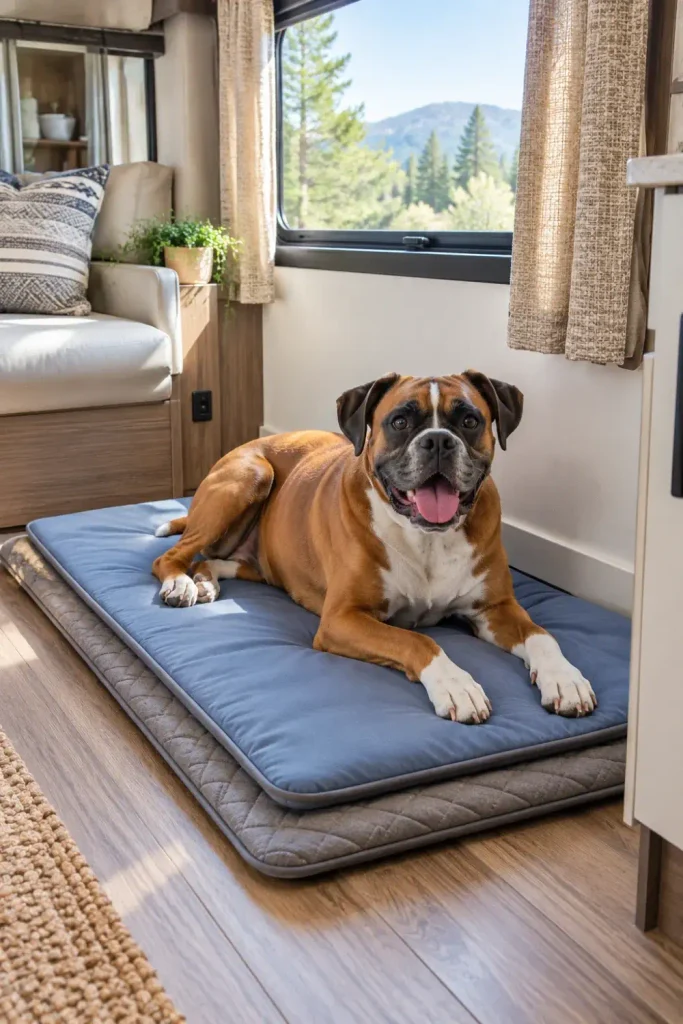
Summers inside an RV can become stifling, especially for thick-coated breeds lying directly on radiant camper floors. Conversely, uninsulated winter slide floors stay icy cold all night long.
A layered pad system lets you regulate sleeping temperatures across all four seasons. Use an insulated reflective base underneath to block freezing floor temperatures, topped by a pressure-activated cooling gel mat for hot days.
Place a reflective foil barrier directly on cold vinyl subfloors during frosty autumn trips.
Lay down a pressure-activated phase-change gel mat near the air-conditioning return vents in summer.
Do not leave gel pads in direct sun through RV windows, which degrades the internal cooling core.
Never skip a waterproof protective barrier when placing cooling mats directly on untreated carpet.
Your dog gets relief from hot summer trails without you having to run the generator and air conditioning all night long.
14. Hang a Soft Canvas Hammock Bed Across the Cockpit Seat Bases
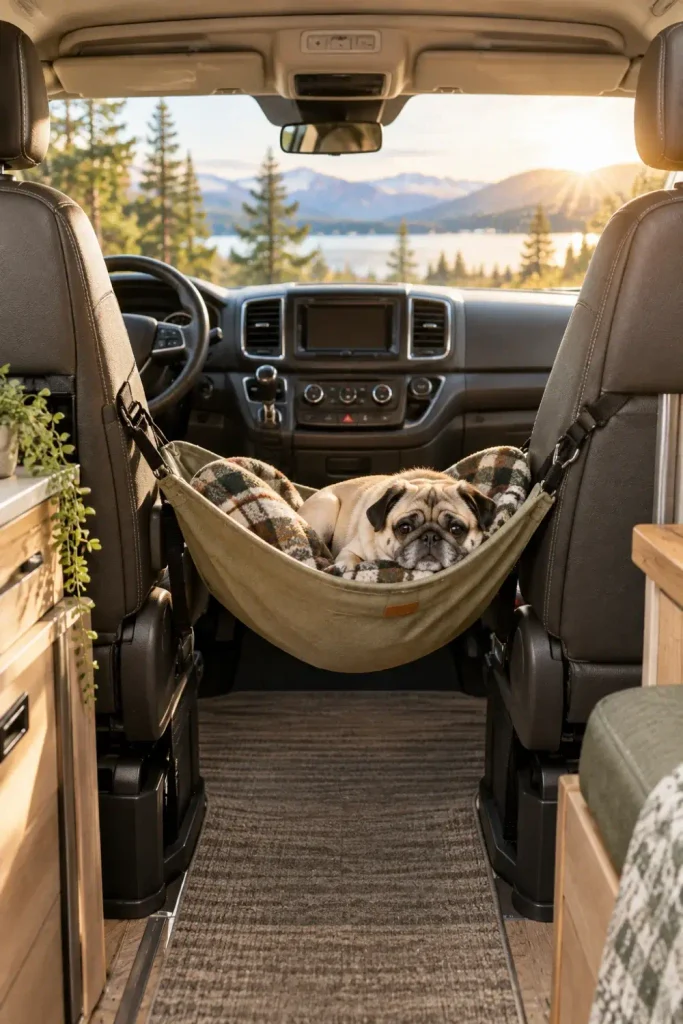
In Class B camper vans and smaller motorhomes, the cockpit cab contains plenty of vertical volume that goes completely unused when you are parked at camp. A heavy canvas sling bed stretched between the front seats creates a floating perch.
Heavy nylon webbing straps loop around the headrests or base frames of both swivel seats. This suspends your pet off the uneven floor, keeping them away from the cold drafts that leak in around driver pedals.
Slide both front cockpit seats fully back on their tracks to maximize horizontal span.
Click the heavy buckle straps around the seat bases and cinch down until taut.
Drop a washable Sherpa fleece blanket into the center sag to create an inviting nest.
- Best for small to medium dogs under thirty-five pounds who like being cradled.
- The entire assembly unclips and rolls into a compact bundle that fits inside your glove compartment.
- The suspended design means dirt falling off your dog collects in the canvas instead of grinding into the floor.
15. Build a Drop-Down Step Platform that Doubles as a Nighttime Rest Area
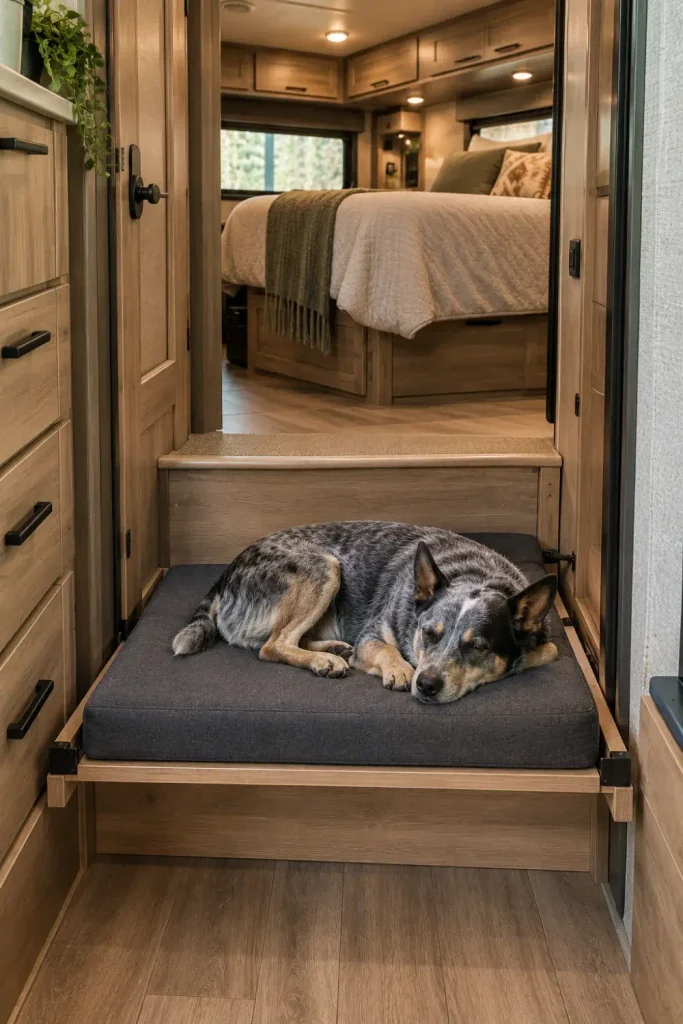
Travel trailer floor plans frequently have a two-step transition up into the master bedroom suite. By building a hinged plywood lid over the lower step cavity, you can turn that transition into a wide, flat lounge area at night.
During daytime hours, the platform folds flat against the riser, keeping the steps clear and safe for human footing. At bedtime, fold it down, drop an upholstered cushion on top, and give your pet a front-row spot next to your bed.
A dog bed dumped directly on the narrow bedroom steps, creating an ankle-twisting hazard when getting up at night.
A level, dedicated sleeping ledge that preserves foot clearance and keeps your pet level with your mattress.
Your dog stays close enough to hear your breathing without claiming valuable bedroom floor space, helping anxious campers settle down peacefully.
16. Slide a Flat Memory Foam Pad Beneath the Folded Sofa-Bed Frame
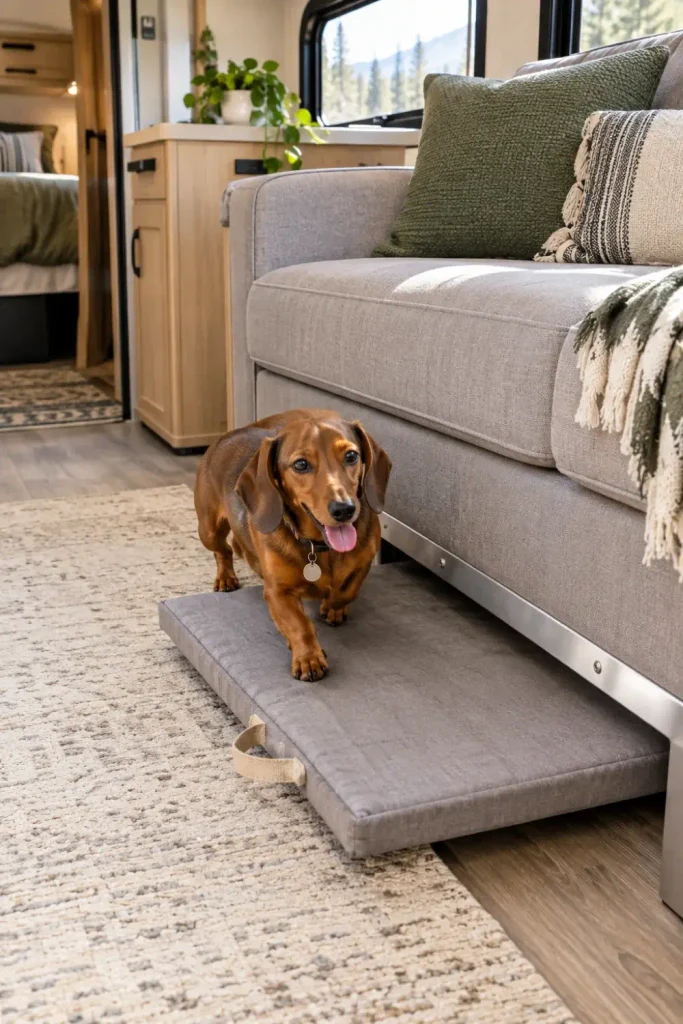
If you prefer clean lines and zero daytime clutter, look beneath your camper sofa or fold-out couch. The cavity between the metal sofa support legs is often wide enough to store a streamlined memory foam pad flat on the floor.
Instead of rolling or folding a bulky bed each morning, simply kick the flat pad straight under the couch skirt. When it is time for bed, slide it out into the main cabin using a sewn webbing handle.
| Configuration | Fixed Pet Crate | Under-Sofa Slide Pad |
|---|---|---|
| Floor Space Use | Permanent six square feet loss | Zero daytime floor footprint |
| Set Up Time | Zero (always in the way) | Two seconds with a pull strap |
| Cost to Implement | Eighty to two hundred dollars | Thirty to fifty dollars |
- Pick a high-density two-inch foam pad so it provides adequate joint protection without snagging on sofa crossbars.
- Select an anti-static microfiber cover that releases pet hair with a quick flick of your hand.
- Ensure the underside material features a non-skid textured backing so the pad stays put when your dog changes positions.
17. Use a Self-Inflating Camping Pad with a Rugged Canvas Slipcover
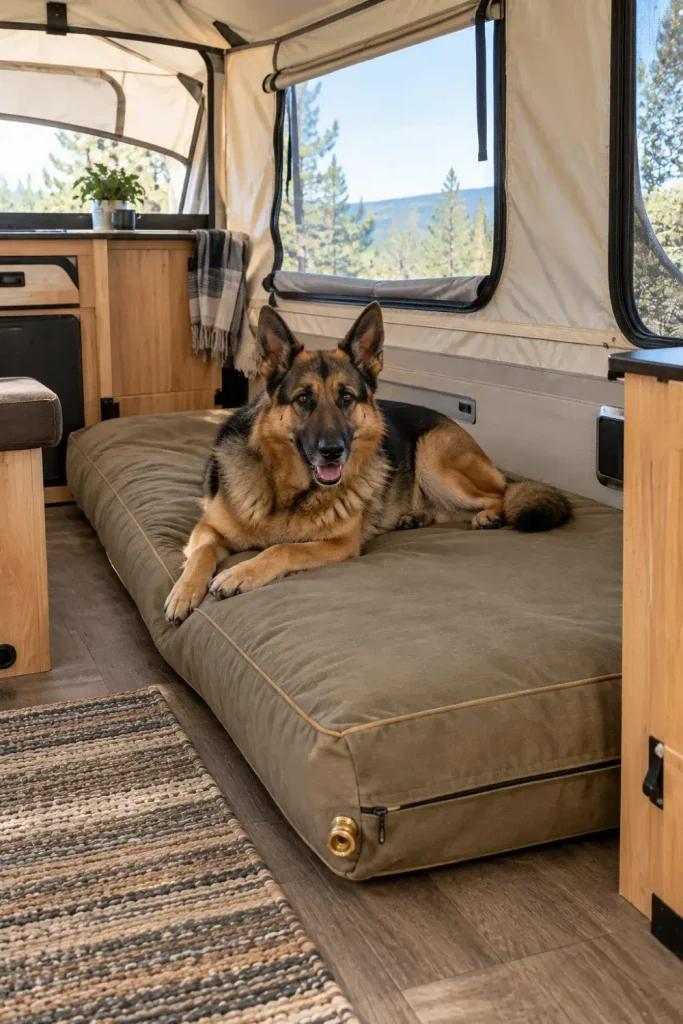
Self-inflating outdoor sleeping pads provide exceptional thermal resistance and high-density cushioning while packing down into a soda-bottle-sized bundle. They are tough enough for rough outdoor use and adapt well to RV living.
Slip an open-cell foam self-inflating pad into a custom canvas sleeve to protect against puncture wounds from sharp dog claws. Twist the brass valve open to fill the mattress in minutes, and deflate it flat whenever you pack down camp.
- Unroll the pad onto your camper floor and twist the intake valve counterclockwise.
- Allow the internal open-cell foam to expand for five minutes, then add two quick breaths for firmness.
- Zip the pad inside a washable duck-canvas cover and set it down wherever your dog chooses to lie down.
When morning arrives, twist the valve open, roll the pad up to push the air out, and stow it inside a cabinet drawer.
18. Tuck a Round Donut Calming Bed into the Shower Pan on Dry Camp Nights
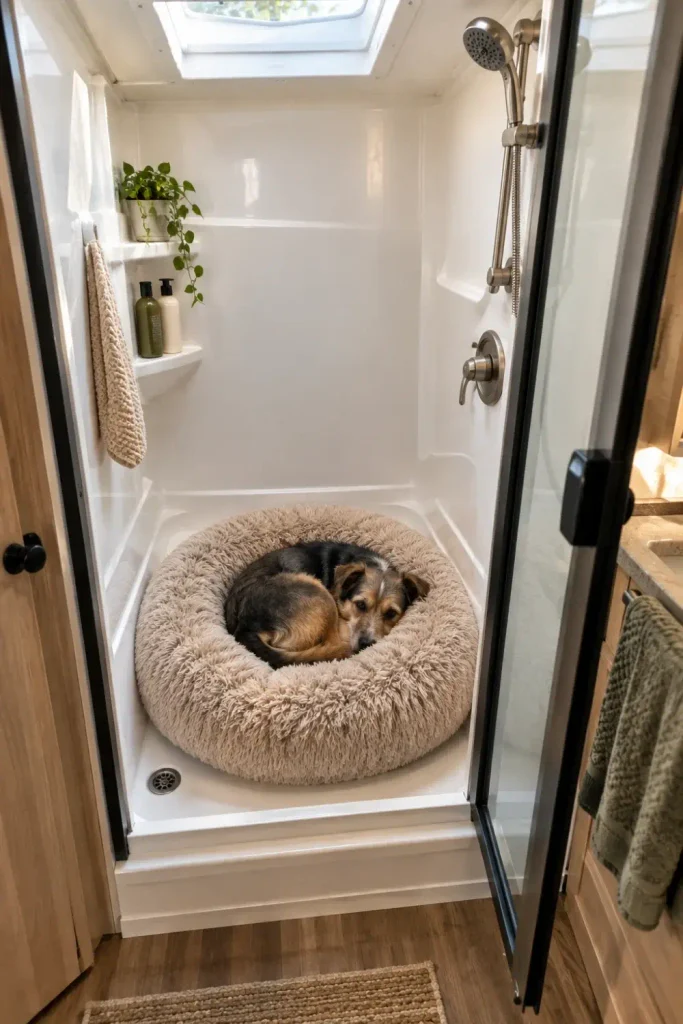
While boondocking or dry camping without city water hookups, your RV shower stall sits dry and empty for days. Placing a plush, round shag calming bed right inside the shower pan turns an unused fixture into a quiet nesting cave.
Shower stalls feature high walls on all sides, blocking out flashing campsite headlights, wind buffeting the exterior walls, and thunder claps. Many dogs naturally seek out the bathroom because its thick, enclosed fiberglass walls feel safe and quiet.
Shower Pan Nesting Checklist
If your dog gets muddy out on the hiking trail, any loose grit stays contained within the fiberglass basin rather than getting tracked across your living room rugs.
Final Thoughts on Road-Ready Pet Comfort
Sharing your camper with a dog does not mean having to kick aside oversized foam pads or squeeze past beds blocking your hallway. Picking the right setup comes down to your dog’s sleeping style and the hidden spaces your layout already has.
Whether you cut an open den under a dinette bench, convert dead space between cockpit chairs, or roll out a quick-wash runner, keeping their resting spot dedicated makes every travel day smoother. When your dog has a settled, quiet corner to recharge, everyone enjoys life on the road that much more.
Save these rv dog bed ideas to your travel board so you have practical floor plan fixes ready before your next road trip.