
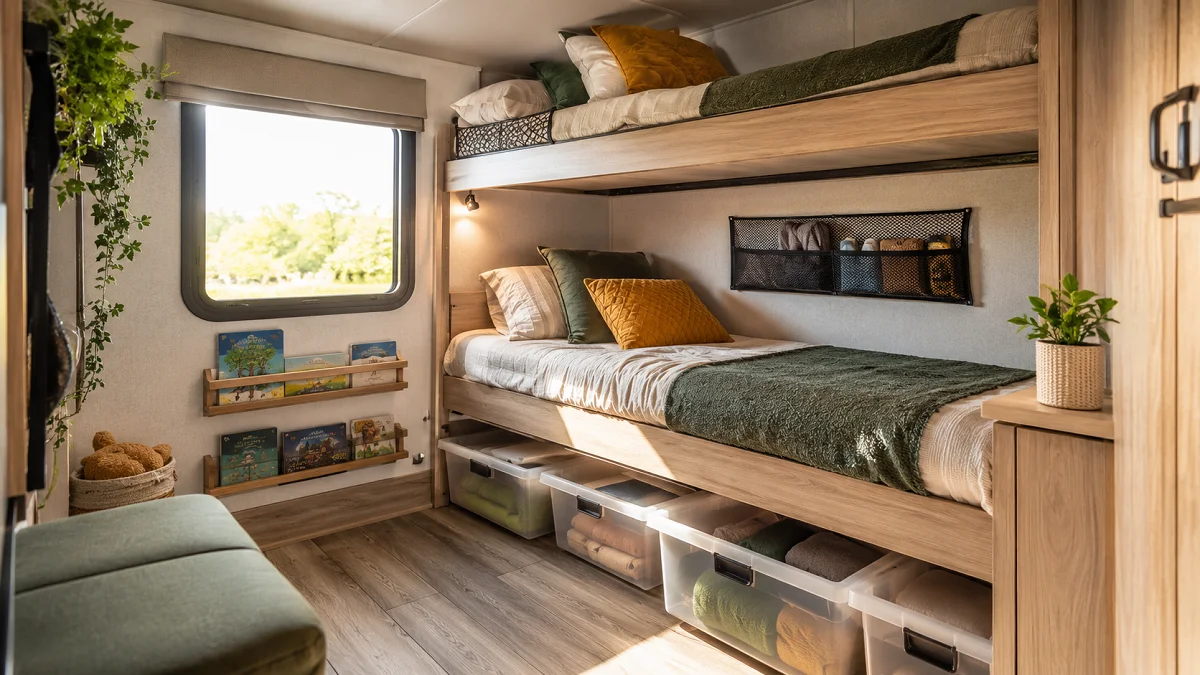
Traveling with family or hosting guests in an RV bunkhouse is a great way to make memories on the road. The trouble starts about two hours into the trip when shoes, charging cables, extra hoodies, and toys begin piling up across the floor. In a compact camper footprint, even a small amount of clutter quickly blocks the narrow central hallway and makes bedtime routines feel chaotic.
Most factory bunk setups offer flat sleeping pads and very little built-in organization. Adding heavy shelving or bulky plastic furniture is rarely an option because camper walls are thin and every pound counts toward your cargo carrying capacity.
The secret to a calm, functional camper is taking advantage of unused vertical surfaces, deep corners, and hidden cavities beneath the beds. These practical rv bunkhouse storage ideas help you organize the space without drilling large holes or crowding the floor.
1. Mount Flexible Mesh Cargo Nets Along the Foot of Each Bed
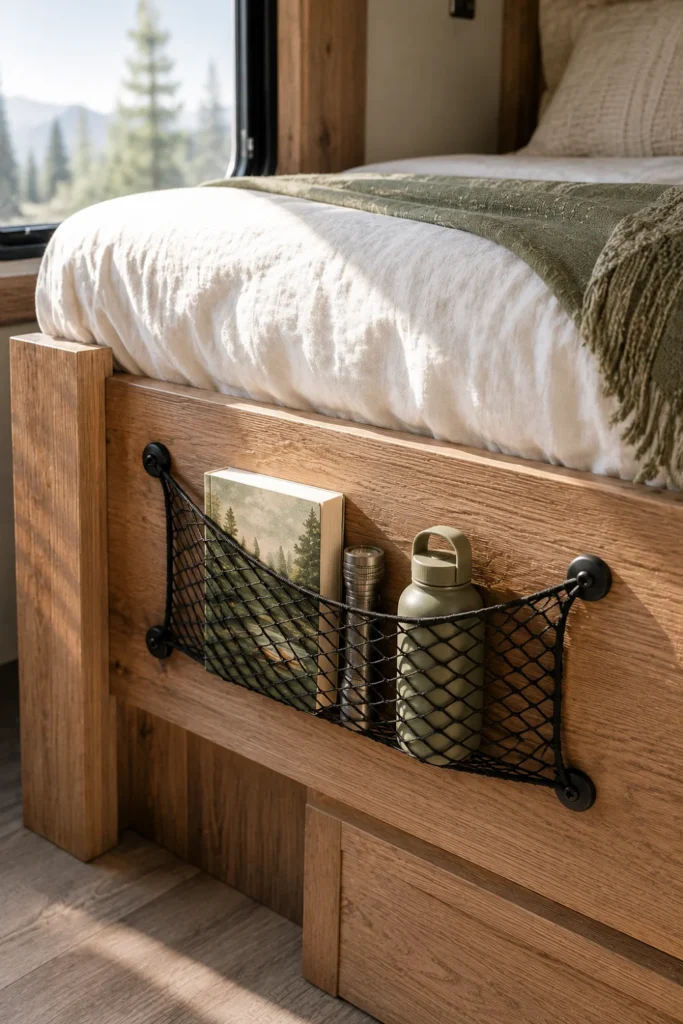
The open footwall of a camper bunk often goes completely unused. Installing an elastic mesh net turns that blank wall into an instant drop zone for bedtime essentials.
Because the netting stretches, kids can slide books, flashlights, water bottles, and extra socks inside without anything tumbling out during sharp highway turns. These nets sit completely flush against the mattress end, preserving full legroom inside smaller twin bunk spaces.
- Choose a three-pocket elastic net designed for automotive or marine cargo trunks.
- Anchor the four mounting corners using three-quarter-inch pan-head screws directly into the solid bunk perimeter frame.
- Reserve the mesh slots for lightweight gear under five pounds so the elastic stays taut throughout years of camping trips.
💡 Quick Tip
Camper interior wall paneling is usually only one-eighth-inch thick luan. Always anchor net hardware into the solid wood bed framing or corner trim rather than hollow wall panels to avoid pull-out damage.
2. Hang Heavy-Duty Canvas Shoe Organizers on the Bunk End Walls
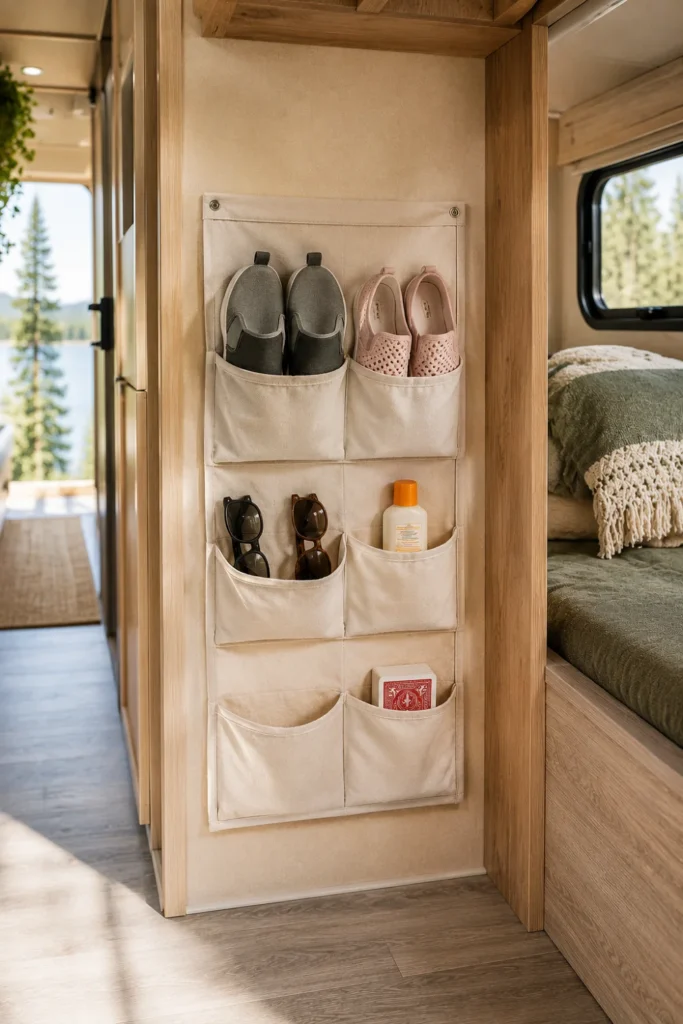
A classic over-the-door shoe organizer is one of the most versatile tools for small RV spaces. Instead of letting flip-flops and sneakers pile up at the camper entrance, mount a trimmed organizer directly on the outer bunk partition wall.
Clear vinyl pockets let kids locate their belongings immediately, while durable canvas pockets provide a uniform, clutter-free look. You can assign two rows of pockets per child for footwear, sunglasses, sunblock, and card games.
- Measure the exact width and height of the bunk outer wall and trim the organizer with sharp shears.
- Seal the cut canvas edge with heavy-duty iron-on seam tape or hem tape to prevent fraying.
- Secure the top grommets using heavy-duty adhesive hooks or wide-head screws paired with small washers.
Shoes, sunscreen bottles, sunglasses, and charging cords scattered across the narrow walkway.
Every child gets an assigned row of labeled pockets for daily footwear, accessories, and outdoor gear.
3. Slide Felt Bedside Caddies Between the Mattress and Plywood Base
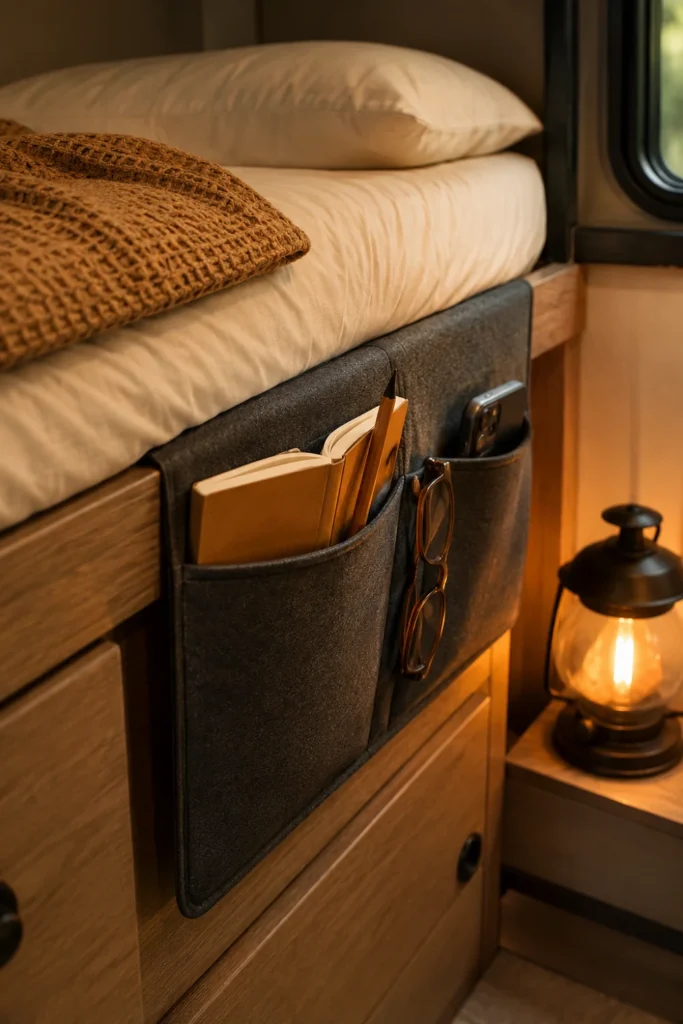
Standard RV bunks rarely have room for nightstands, leaving kids to sleep with glasses, phones, and water bottles rolling around their beds. A bedside felt pocket solves this problem by utilizing the downward weight of the mattress to lock itself securely in place.
These organizers feature deep inner compartments paired with exterior phone slots. They keep delicate items protected from being accidentally crushed or kicked during the night.
Nightstand Essentials Checklist
4. Slide Latch-Lid Clear Totes Under the Lower Bunk Cavity
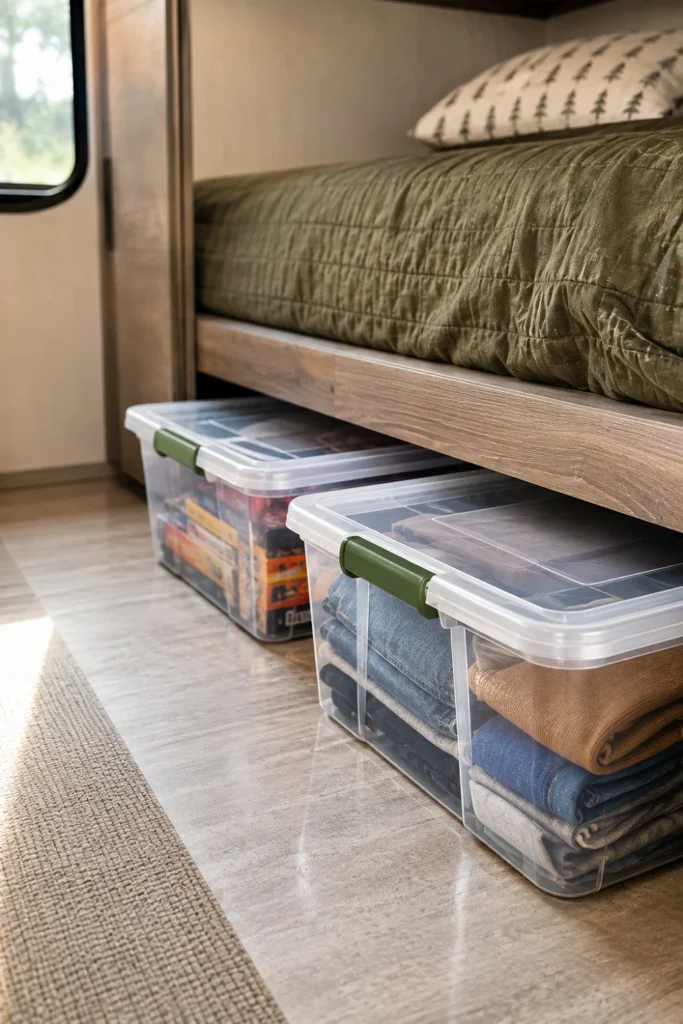
The space beneath the bottom bunk often turns into an awkward catch-all for loose items. Measuring this cavity and outfitting it with uniform clear plastic totes brings immediate order to bulky travel supplies.
Look for totes that include robust latching handles and grooved lids that stack securely. This prevents bins from sliding forward or popping open during bumpy road transitions.
5. Add Foldable Fabric Storage Cubes to Open Closet Cubbies
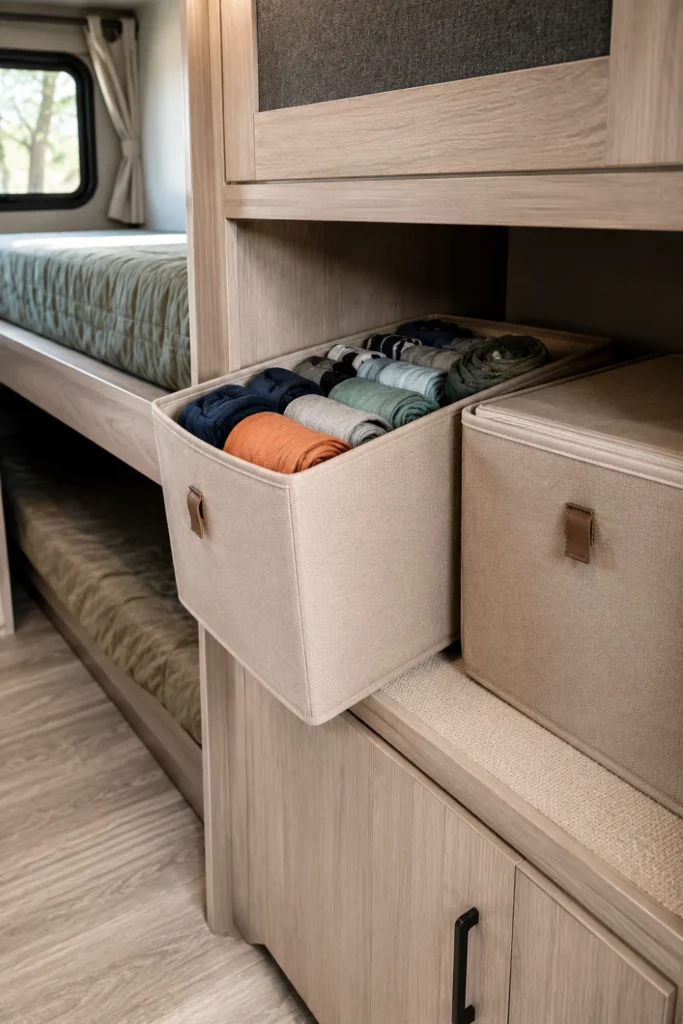
Many travel trailers feature deep, open wardrobe shelving next to the bunk area. Without internal dividers, tall stacks of folded t-shirts and shorts topple onto the floor on travel days.
Collapsible canvas bins act like lightweight slide-out drawers. They protect clothes from rubbing against rough cabinet interiors and make packing at home as simple as carrying the bins straight into the camper.
Measure the interior opening height, depth, and width of your factory shelving unit.
Lay textured silicone shelf liner across the wood base to stop bins from sliding forward.
Fit fabric cubes snugly side-by-side so they support each other during transit.
6. Screw Heavy-Duty Swivel Hooks into Solid Trim for Jackets and Daypacks
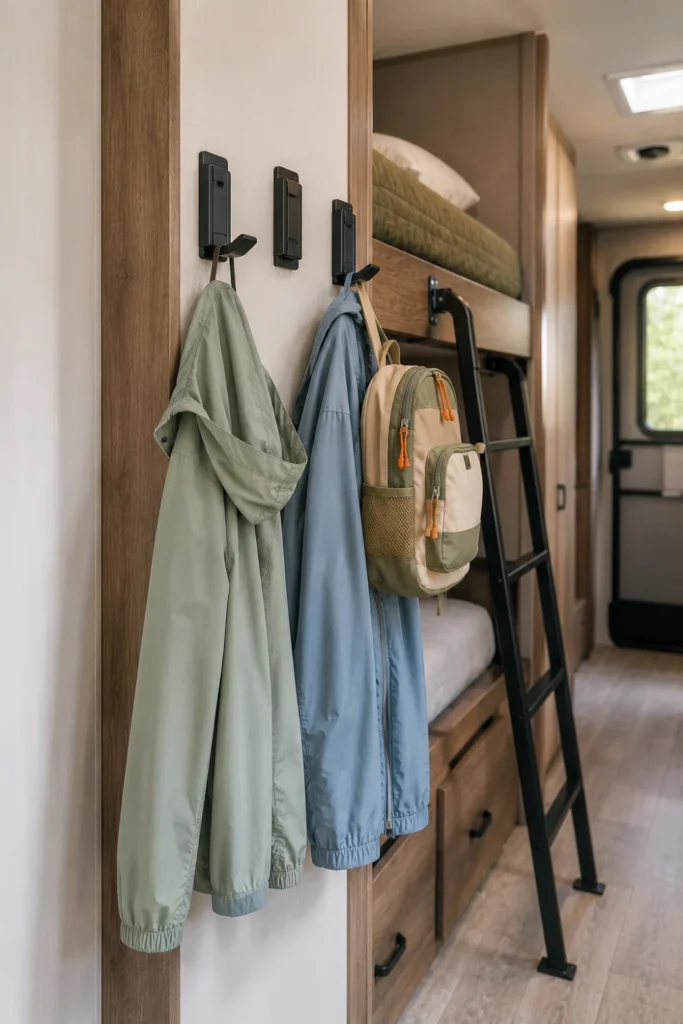
Jackets, wet swim towels, and daypacks usually end up tossed across empty bunks when kids return from daytime hikes. A row of sturdy hooks gives every item an immediate home off the beds.
Swivel hooks are particularly useful in tight camper hallways because the prongs fold flat against the wall when empty. This prevents accidental snagging on clothing or shoulders when passing through the narrow aisle.
Fasten hooks into the thick solid wood frame surrounding the bunk door or ladder.
Use folding or swivel hooks that sit completely flush when not holding gear.
Never screw directly into hollow hollow-core interior bathroom doors.
Avoid sharp, fixed metal utility hooks that stick out into tight walkways.
7. String Corner Macrame or Mesh Hammocks for Stuffed Animals
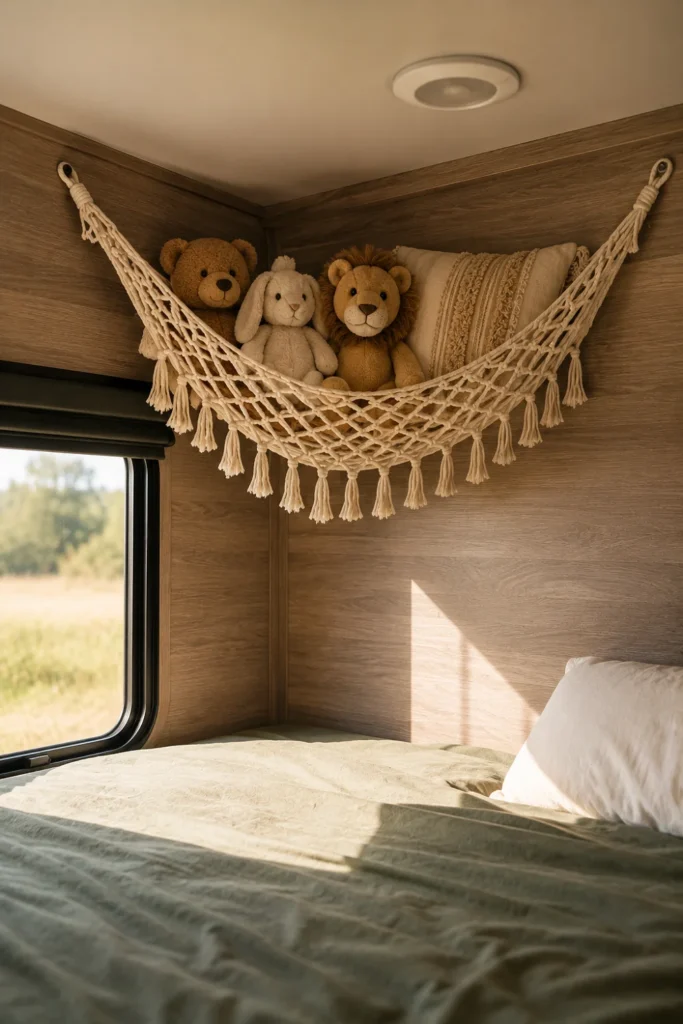
Plush toys, travel pillows, and light sleeping throws consume valuable mattress space on narrow RV bunks. A three-point corner hammock takes advantage of the empty triangular space high near the ceiling.
These nets keep favorite comfort items accessible for bedtime while preventing them from falling into narrow crevices behind the mattresses during transit.
| Ceiling Corner Hammock | Hanging Stuff Sack |
|---|---|
| Utilizes dead ceiling corner space | Hangs vertically down usable wall space |
| Items remain visible and easy to grab | Hides clutter completely inside fabric |
| Zero interference with sitting up in bed | Can swing into sleeping area while driving |
8. Mount Wooden Picture Ledges as Slim Bedside Book and Tablet Rails
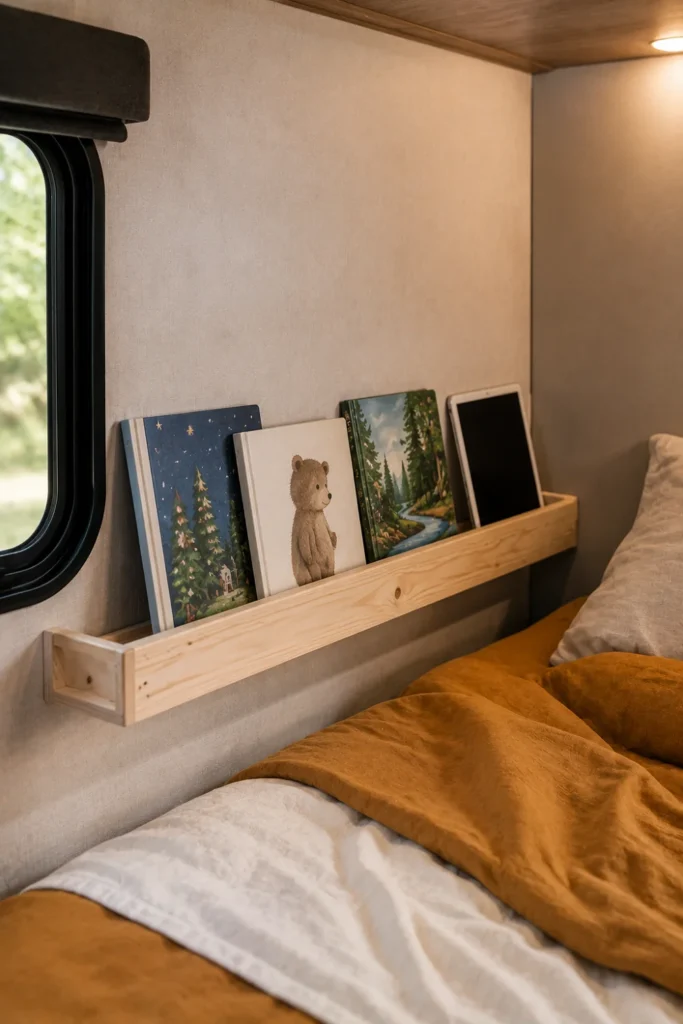
Standard bookshelves are far too deep for an RV bunk, sticking out right where people need to sit up or climb in. Picture ledges with a raised front lip provide a shallow, low-profile alternative.
The front guard keeps notebooks, coloring pads, and tablets standing upright, preventing them from sliding off the ledge when the camper tilts or banks on curves.
9. Stick Silicone Cable Drops and Adhesive Wall Pockets Beside USB Outlets
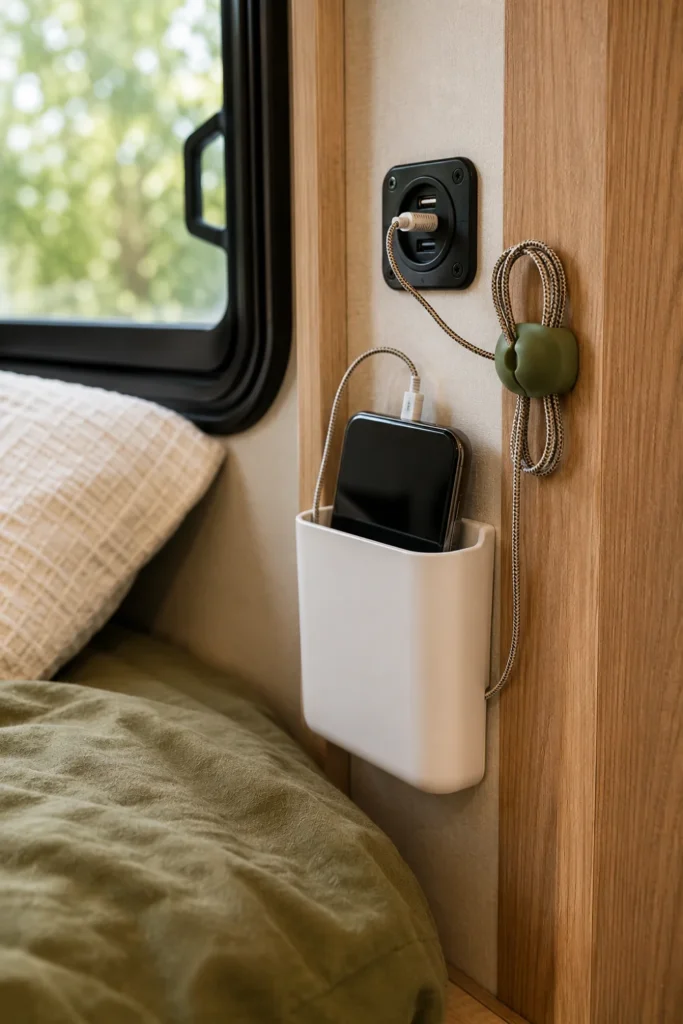
Charging cables often slip down into the dark gap behind the bunk mattress, leading to frustrating searches in the middle of the night. Small adhesive silicone cable drops keep the plug anchored right beside the charging outlet.
Pairing these clips with a shallow wall pocket gives smartphones and audio players a secure resting place directly beside the 12-volt USB ports.
📌 Good To Know
Always clean camper paneling with rubbing alcohol and let it dry completely before mounting peel-and-stick accessories. Factory vinyl wall finishes carry light oils that cause adhesive strips to release prematurely.
10. Assign Color-Coded Drawstring Duffle Bags for Dirty Laundry and Extra Blankets
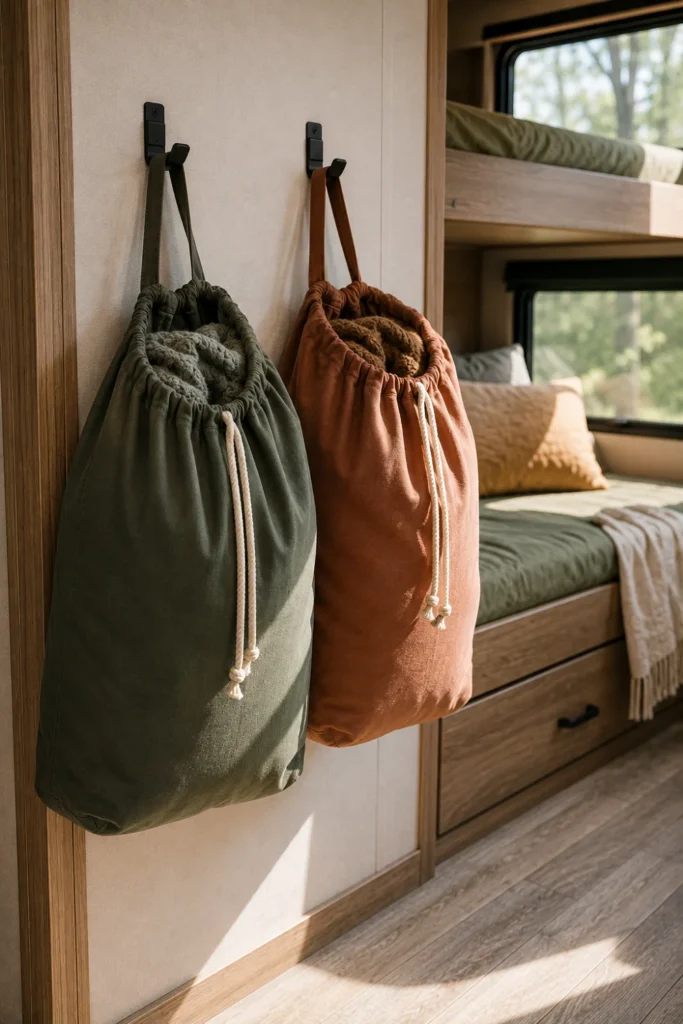
Loose laundry is one of the quickest ways to turn a neat bunkhouse into a cluttered mess. A single communal laundry basket takes up excessive floor space and fills up within forty-eight hours on family trips.
Assigning each family member their own lightweight, breathable drawstring bag keeps dirty clothes consolidated. When it is time to visit the campground laundromat, each person simply grabs their own bag.
Keep laundry off the floor on wall-mounted hooks to maintain a clear path to lower cabinets and emergency escape windows.
11. Tuck Slim Hanging Organizers Over the Bathroom-Facing Bunk Wall
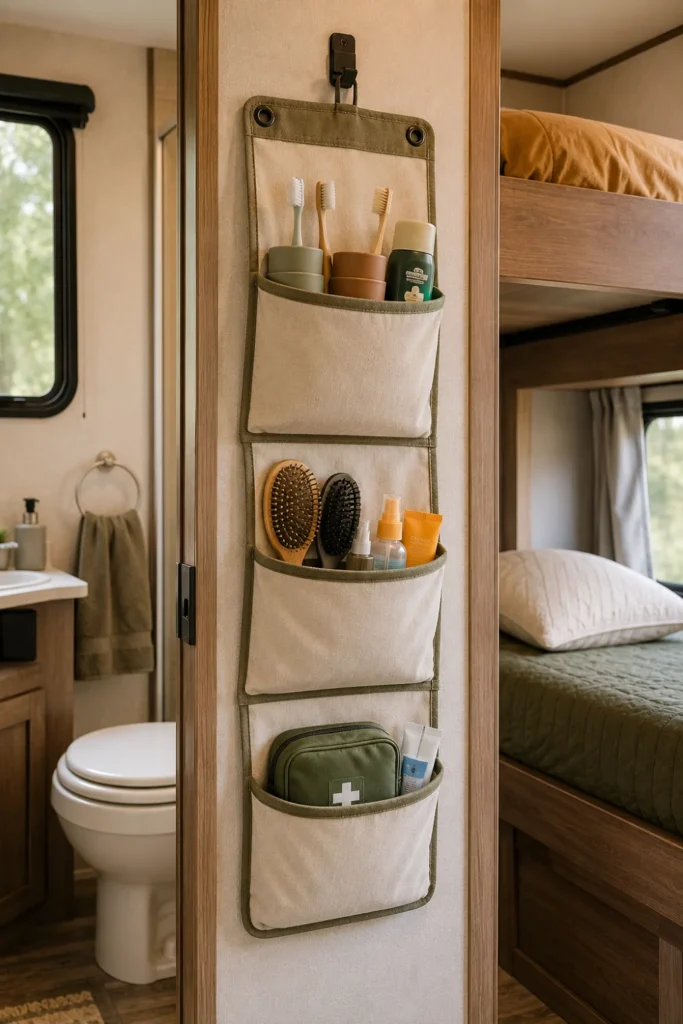
The exterior wall separating the bunkhouse from the camper bathroom offers extensive flat surface area. Installing a slim multi-tier organizer here creates a centralized station for shared toiletries and morning items.
This layout clears out the compact bathroom medicine cabinet and lets kids handle their morning routines without forming a line at the sink.
Morning Station Layout
12. Set Spring-Loaded Tension Rods Across Open Shelf Fronts
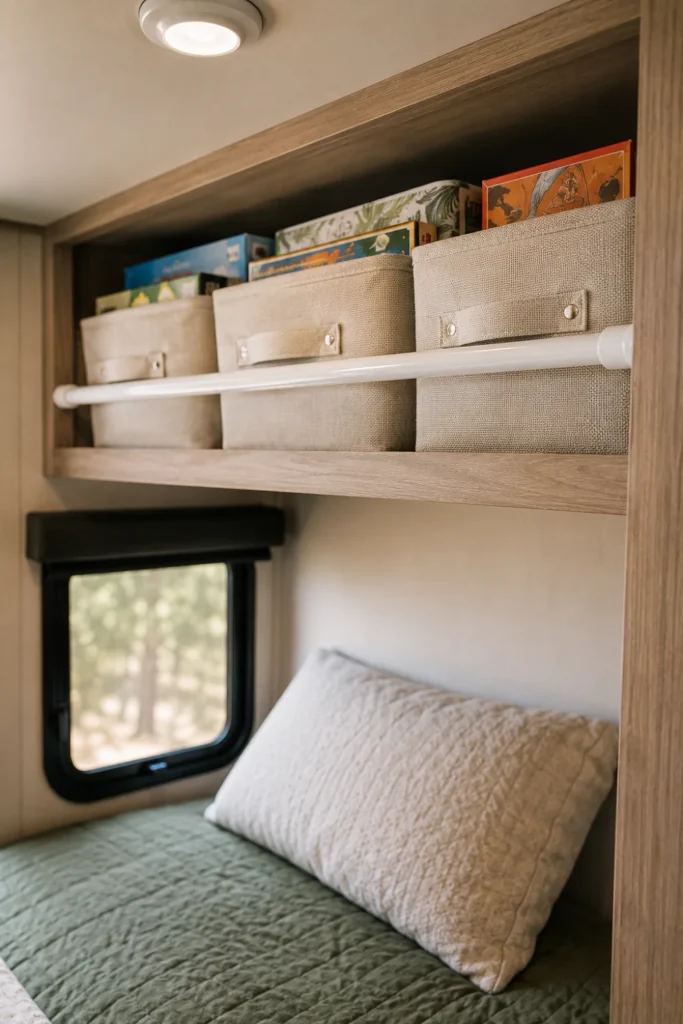
Camper cabinets and open display cubbies are prone to discharging their contents during travel. Even a minor dip in the road can send plastic bins sliding off high shelves.
Adjustable spring-loaded tension rods create a quick, damage-free safety rail across any open shelf lip, keeping cargo secure until you arrive at your destination.
Opening the camper door to find storage bins, board games, and snack boxes tumbled across the hallway.
Tension bars lock storage bins tightly in place behind an adjustable, zero-drill retention barrier.
13. Apply Heavy-Duty Hook-and-Loop Fasteners to Puck Lights and Fan Remotes
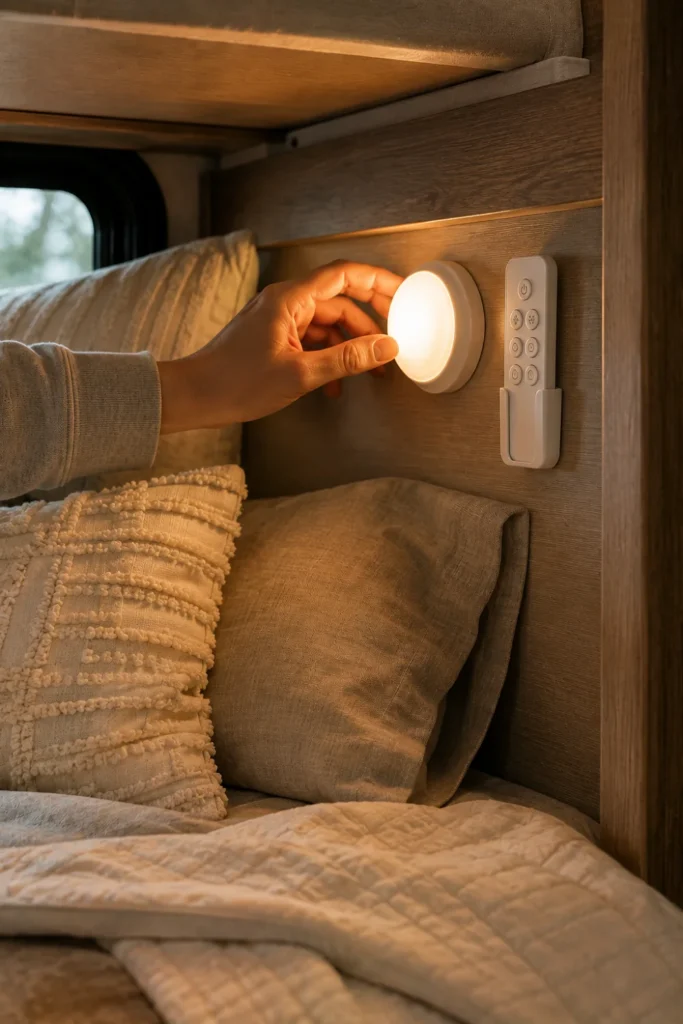
Small accessories like vent fan remotes, ambient nightlights, and audio controllers easily get buried under thick duvets or lost between bunk cushions.
Affixing heavy-duty interlocking fastener strips to the back of each device allows you to mount them directly to the wall trim next to the head of each bed.
Wipe the wall panel and the device backing with an alcohol wipe to clear grease and dust.
Press interlocking fastener tape in place and allow the adhesive backing to bond for one hour.
Dock remotes and tap-lights at eye-level within comfortable reach of the sleeping area.
14. Hang Multi-Tier Soft Shelves from the Factory Wardrobe Closet Rod
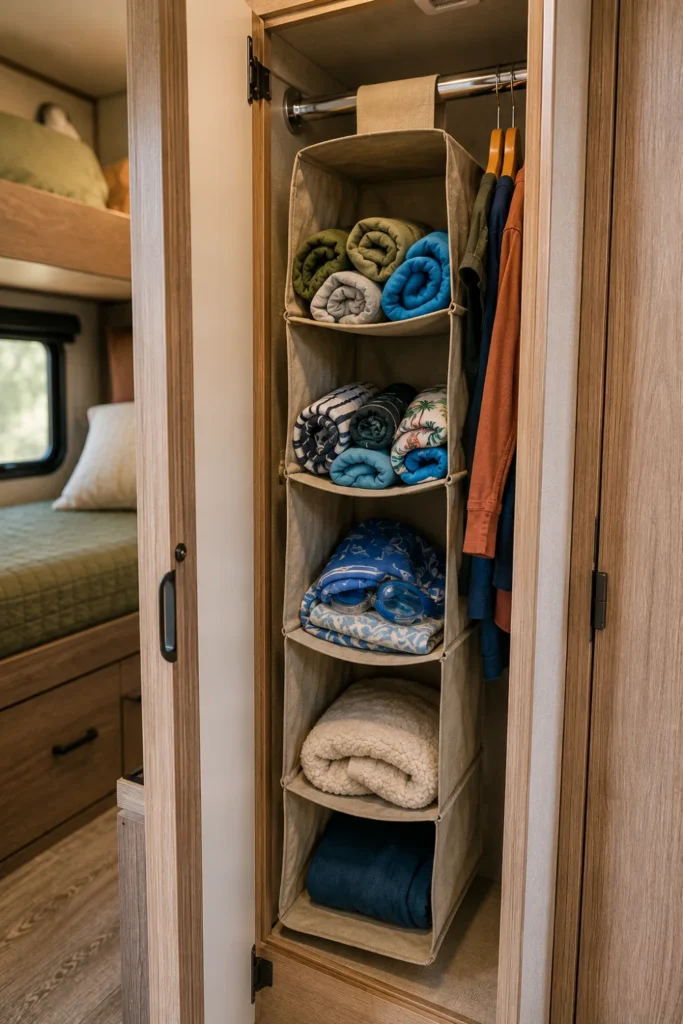
Tall wardrobe closets in RV bunkhouses are inefficient for folding clothes, leaving significant empty air beneath short hanging shirts.
Suspending a fabric vertical shelf unit from the factory clothes rod instantly converts unused hanging space into compartmentalized shelving for rolled clothing.
15. Install Ceiling Bungee Webbing for Bulky Jackets and Sleeping Bags
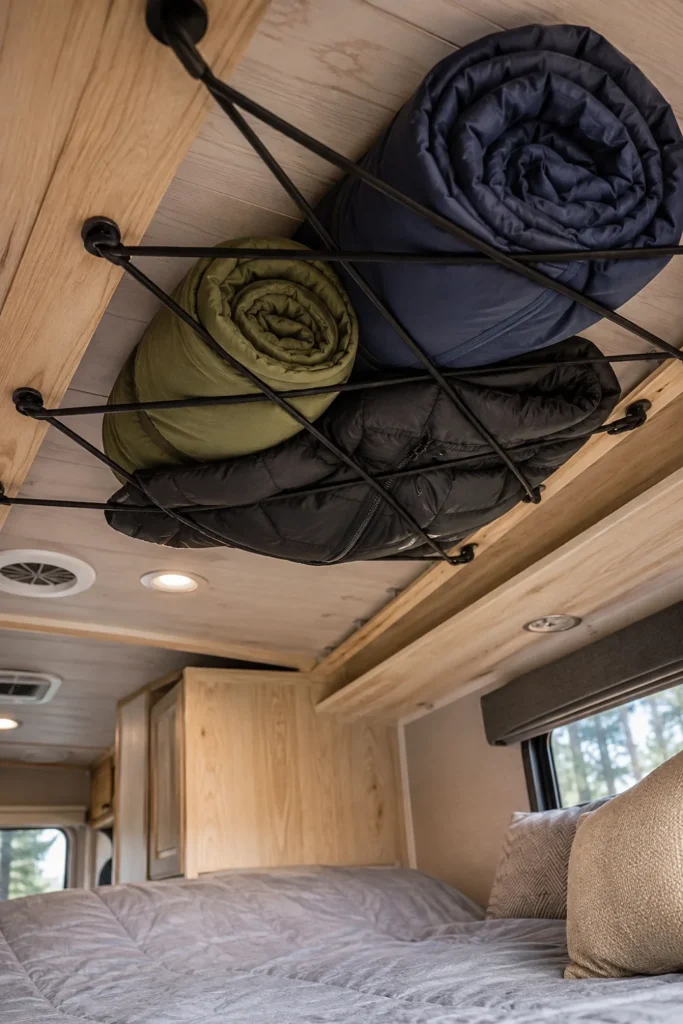
The upper head space directly below the camper ceiling is one of the most overlooked areas in a bunkhouse. Crisscrossing heavy elastic bungee cords between ceiling framing studs provides a lightweight cargo loft.
This suspended net is ideal for storing soft, lightweight items like winter puffer coats, extra sleeping bags, or foam pad inserts that otherwise fill precious closet space.
| Ceiling Bungee Webbing | Under-Bed Bulky Storage |
|---|---|
| Best for lightweight, high-volume soft goods | Best for heavy tools, boots, and hardware totes |
| Zero floor or cabinet space required | Can crowd walkway when sliding containers out |
| Instant visual confirmation of stored gear | Requires opening under-bed cabinet doors to inspect |
16. Tuck Flat Canvas Zipper Bags Under the Lower Mattress for Spare Linens
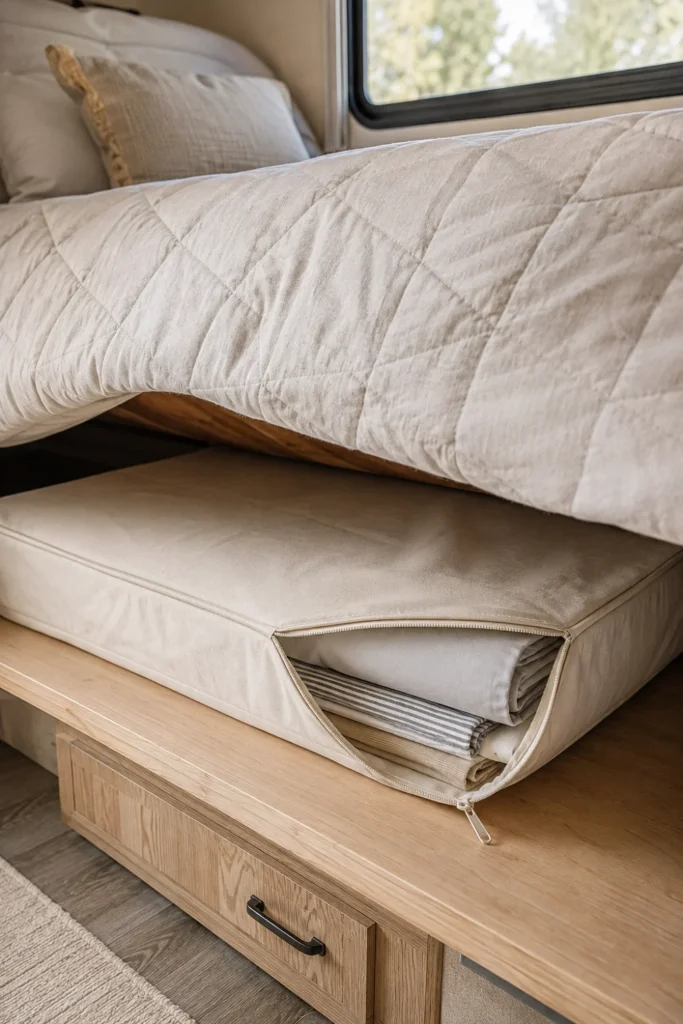
Extra sheet sets, waterproof mattress pads, and spare pillowcases are travel essentials, but they quickly crowd primary dresser drawers.
Flat canvas storage bags slide smoothly between the bunk mattress and the plywood support platform. They keep replacement bedding completely flat, clean, and out of sight until laundry day.
Use breathable cotton or natural canvas bags to maintain airflow around folded linens.
Ensure spare blankets are completely dry before sliding them under the mattress.
Never store damp items under beds where trapped moisture can cause musty odors.
Avoid non-breathable vinyl cases that hold humidity during summer camping trips.
17. Mount a Tension Shower Pole in the Corner for Hanging Hats and Wet Towels
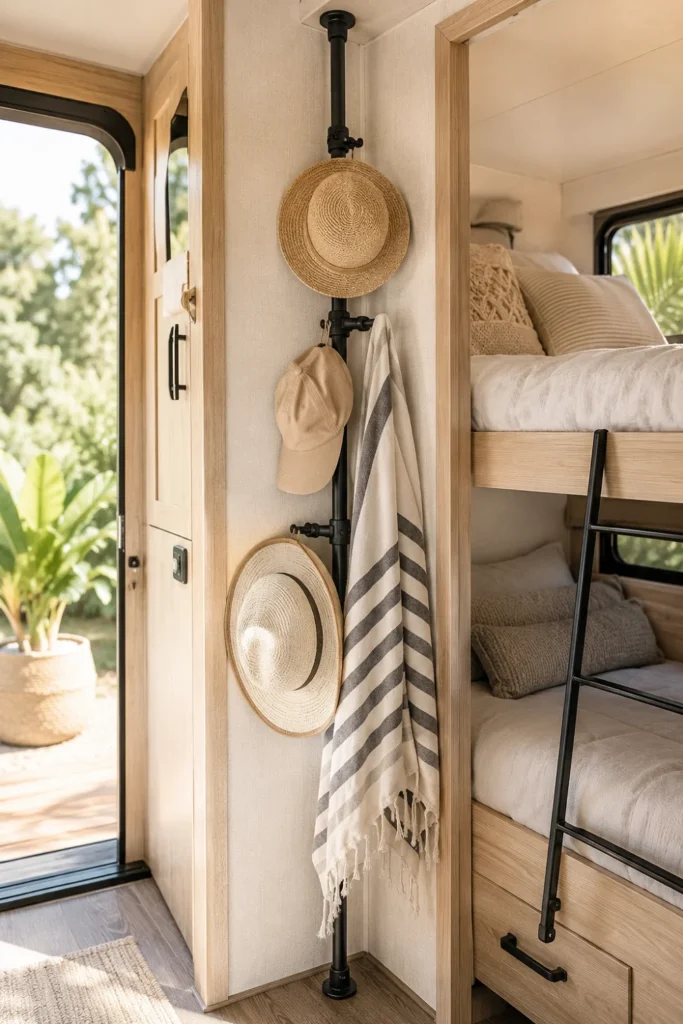
A floor-to-ceiling tension shower pole fitted into an unused bunkhouse corner creates an instant, heavy-duty vertical storage tree without drilling a single hole into your camper walls.
The adjustable hooks can be positioned at lower heights for kids’ rain jackets and baseball caps, with upper tiers dedicated to drying damp towels after a day on the water.
Maintaining a calm and tidy camper does not require major renovations or expensive custom cabinetry. By taking advantage of vertical walls, mattress edges, and corner gaps, you can keep floor paths open and give every family member a dedicated place for their gear. Pick two or three of these rv bunkhouse storage ideas to set up before your next road trip, and enjoy a much more functional living space on the road.
Save this list to your RV organization board on Pinterest so you have these tips handy when prepping for your next camping adventure.